Business, Deals & Funding
DeepMind Blog

Announcing our partnership with the Republic of Korea
Summary of the Blog Post "Announcing our partnership with the Republic of Korea" Published: April 27, 2026 Author: Google DeepMind team Category: Responsibility & Safety Key Announcement Google DeepMind and the Republic of Korea have formed a partnership to accelerate scientific breakthroughs using frontier AI models. This falls under Google DeepMind's broader initiative called "Our National Partnerships for AI", which involves working with governments worldwide to benefit people through frontier AI. Context from the Page While the actual body content of the blog post appears to be cut off (the text ends mid-sentence with "Using frontier A"), the page provides significant context about Google DeepMind's current ecosystem, including: AI Models: Gemini, Veo, Imagen, Lyria, Gemma, and others Scientific AI tools: AlphaFold (protein structures), AlphaGenome (genetics), AlphaMissense (rare ge…
Guardian AI
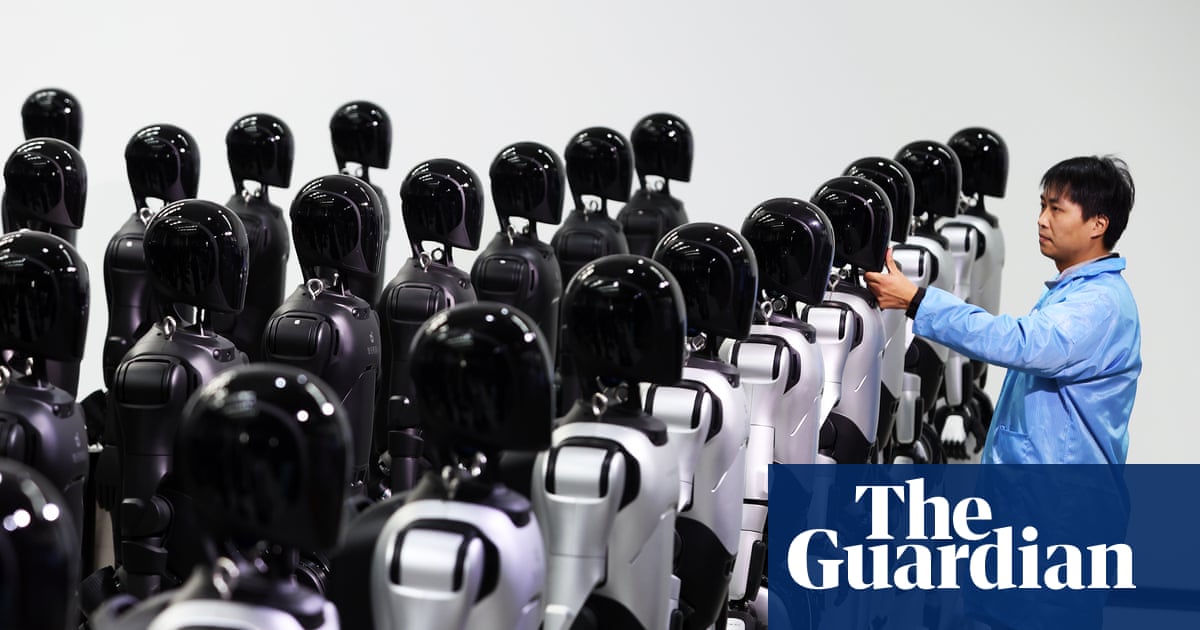
Inside China’s robotics revolution – podcast
Inside China's Robotics Revolution – Podcast (Summary) Overview This is an Audio Long Read from The Guardian, published on April 27, 2026. The piece was written by Chang Che and read by Vincent Lai, exploring the current state of China's humanoid robotics industry. Key Details Central Question: How close are we to the sci-fi vision of fully autonomous humanoid robots? Scope of Reporting: Chang Che visited 11 companies across five Chinese cities to investigate China's robotics landscape. Format: A podcast adaptation of a long-form written article (the text version is also available on The Guardian's website). Production Credits | Role | Person | |------|--------| | Writer | Chang Che | | Reader | Vincent Lai | | Producer | Nicola Alexandrou | | Executive Producer | Danielle Stephens | Context The article was supported by a grant from the Tarbell Center, indicating independent investigati…
OpenAI
Our principles
OpenAI's Principles Based on the page you've referenced, Sam Altman outlined five principles that guide OpenAI's work, all in service of their mission: to ensure that artificial general intelligence (AGI) benefits all of humanity. While the URL you shared points to OpenAI's principles page, the specific content details may vary over time. Historically, the key principles OpenAI has emphasized include: Broadly distributed benefits – AGI's benefits should be shared widely and not used to unduly concentrate power. Long-term safety – A commitment to doing the research needed to make AGI safe and promoting the adoption of safety practices across the AI community. Technical leadership – Maintaining cutting-edge capabilities to effectively address AGI's societal impacts. Cooperative orientation – Actively cooperating with other research and policy institutions to address AGI's global challenge…
TechCrunch AI

To buy this Bay Area home, you’ll need Anthropic equity
Analysis of This Article This is a real TechCrunch article from April 2026 about an investment banker named Storm Duncan who is offering to trade his 13-acre Mill Valley property for Anthropic equity (pre-IPO shares). Key Details Property: 13-acre home in Mill Valley, CA (north of San Francisco) Seller: Storm Duncan, an investment banker who moved to Miami during the pandemic Purchase price (2019): $4.75 million Asking "price": Anthropic equity (private stock) Deal structure: Private transaction; buyer wouldn't need to sell stock outright; buyer retains 20% of upside value of exchanged shares during the lockup period Current occupant: An unnamed "high profile VC" What's Going On Here This reflects several notable dynamics in the 2026 Bay Area tech economy: Anthropic equity as currency: Anthropic's private valuation has grown so substantially that its pre-IPO shares are being treated as…
Guardian AI
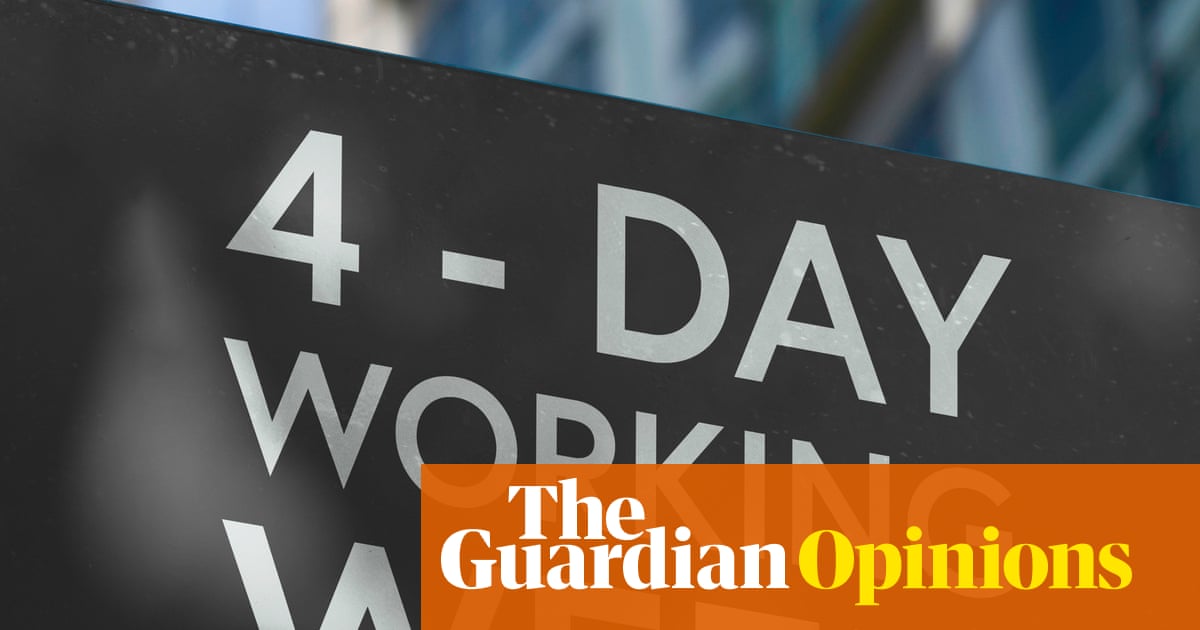
Bosses don’t like the sound of a ‘four-day workweek’. Maybe it’s time to rebrand it
Analysis of "Bosses don't like the sound of a 'four-day workweek'. Maybe it's time to rebrand it" Key Points This Guardian article from April 2026 addresses the gap between the growing enthusiasm for the four-day workweek concept and the relatively slow adoption by businesses. The article explores several important dimensions: The Core Tension Workers and researchers increasingly point to evidence that reduced hours can maintain or even boost productivity Employers remain reluctant to pay the same wages for fewer hours/days, viewing it as a cost increase or a signal of reduced commitment The concept has gained legislative traction in countries like Belgium, Iceland, and Lithuania, and has been piloted by hundreds of UK companies and tested by major corporations like Microsoft Japan The "Rebranding" Argument The article's central thesis appears to be that the name itself — "four-day work…
From X/Twitter
- A web agency quoted a cafe $5,000 and three weeks — someone else built the same site in 6 minutes for $20 and shared the exact playbook.
- Santiago Valdarrama highlights a breakdown of MCP, A2A, and AG-UI — the three protocols shaping how agentic systems will interact with applications.
- Evan Spiegel: "15 years ago, we learned that software is not a moat. This is something that everyone is discovering today with AI."
- Prajwal Tomar's agency sends clients a working prototype within 15 minutes of the sales call — Granola transcribes, Lovable builds, demo lands before they check email.
- axiaisacat built a full email service on Cloudflare Workers for zero server cost — send, receive, attachments, Telegram push, and permission management included.
- LLM Wiki turns documents into a persistent, interlinked knowledge base — not traditional RAG, but incremental structured compilation that updates over time.
From Reddit/HN/YC
- [Hacker News] Four years of bug bounty hunting distilled into a methodology guide with AI tools and hard-won lessons.
- [Hacker News] RLM lets LLMs process arbitrarily long prompts with inference-time scaling.
- [Hacker News] How Mistral built a $14B AI empire by leaning into being French, not American.
- [Hacker News] Someone got Doom running inside Claude Code, because of course they did.
- [Hacker News] Hiten Shah makes the case that leadership gets the vibe → environment → culture chain backwards.
- [Hacker News] Renda converts Claude's design HTML zips into Instagram and Twitter PNGs — a niche but useful bridge.