Business, Deals & Funding
DATAVERSITY Smart Data

Lessons Learned from Implementing AI Governance
This article discusses lessons learned from implementing AI governance, based on a DATAVERSITY webinar by Kelle O'Neal and Lisa Wintrick of First San Francisco Partners. It highlights that AI is scaling faster than governance, with only 38% of organizations having AI policies. The article covers four key lessons: (1) Determine AI Roles — organizations should define what roles AI will play (assistant, coder, autonomous agent) and consider HR-centric approaches including performance reviews for AI, making HR a new stakeholder in AI governance alongside IT; (2) Align AI for Impact — AI's value should be measured by business impact, but there is a significant disconnect between what leaders expect and what is actually being built and deployed. The article emphasizes that AI governance must embrace uncertainty as a feature rather than a flaw, and organizations need new decision-making proces…
Why it matters
This article presents a thoughtful and practical perspective on AI governance that goes beyond typical compliance-focused discussions. The idea of treating AI agents through an HR lens — giving them performance reviews and defining their organizational roles — is a creative and useful framework that acknowledges how fundamentally AI is changing workplace dynamics. The statistic that only 38% of organizations have AI policies underscores the urgency of the topic. However, the article feels incom…
TechCrunch AI

Peter Sarlin’s QuTwo reaches $380M valuation in angel round
QuTwo, a Finnish AI lab founded by former AMD Silo AI CEO Peter Sarlin, has raised a €25 million ($29 million) angel round at a €325 million ($380 million) valuation. The company's core product, QuTwo OS, is an orchestration layer that routes tasks to classical, quantum, or hybrid computing architectures, focusing on 'quantum-inspired' computing for enterprise AI use cases. QuTwo has already secured approximately $23 million in committed revenue through design partnerships with companies like Zalando. Sarlin deliberately chose a modest angel round over larger VC funding, aiming for a 5-to-10-year horizon to build what he envisions as the globally leading AI company for the next computing paradigm. Sarlin, who previously sold Silo AI to AMD for $665 million in 2024, noted that Europe missed the current AI era and wants QuTwo to lead the next one.
Why it matters
This is a strategically interesting play that stands out from the current trend of billion-dollar AI fundraises. Sarlin's track record with Silo AI lends credibility, and the deliberate choice of a smaller angel round suggests disciplined capital management rather than hype-chasing. The 'quantum-inspired' orchestration layer positioning is clever — it lets QuTwo ride the quantum computing narrative while delivering practical value on classical hardware today, hedging against the uncertain timel…
TechCrunch AI

Marc Lore says that AI will soon enable anyone open a restaurant
Marc Lore, founder of Wonder, announced Wonder Create, an AI-powered initiative that lets anyone design and launch a virtual restaurant brand in under a minute using a simple prompt. The AI generates the name, branding, descriptions, pictures, pricing, health information, and recipes. The virtual restaurant then goes live across Wonder's network of 120 tech-enabled kitchen locations (expected to reach 400 next year). These kitchens are 'programmable cooking platforms' capable of operating as 25 different cuisine types, featuring a 700-ingredient library, robotic arms, conveyors, and an upcoming 'infinite sauce machine.' Wonder recently acquired Spice Robotics and is increasingly automating its all-electric kitchens. Lore described the concept as a 'Shopify front-end with an AI prompt,' targeting food entrepreneurs and social media influencers who want to create restaurant brands without…
Why it matters
This is a genuinely interesting convergence of AI, robotics, and food service infrastructure, but it raises significant questions. The 'anyone can open a restaurant' framing is classic Silicon Valley hyperbole — what Lore is really describing is anyone can create a brand that runs on Wonder's proprietary infrastructure, making creators entirely dependent on Wonder's platform, pricing, and quality control. It's more like opening a Shopify store than opening a restaurant. The real innovation here…
Guardian AI

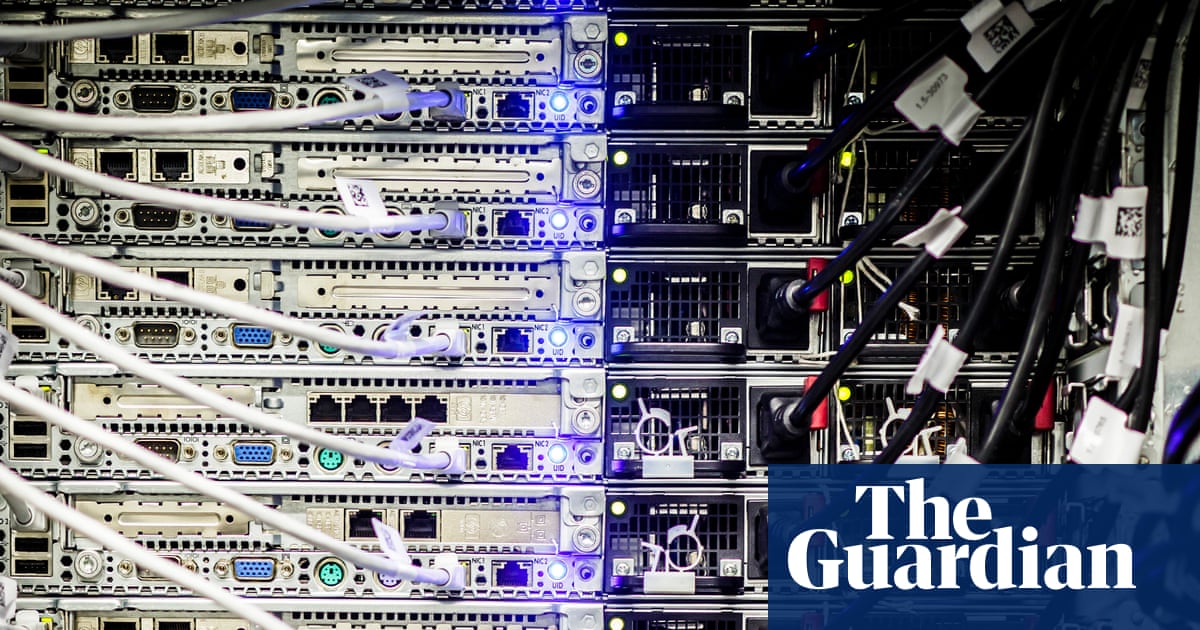
‘RAMageddon’: is the era of cheap phones and laptops over?
The article discusses how the era of affordable consumer electronics may be ending, as the cost of key computer components—particularly memory chips (RAM)—has surged due to competition from the AI industry. Major manufacturers like Microsoft, Samsung, and Dell have begun raising prices and discontinuing cheaper models of laptops, phones, and gaming consoles such as MacBooks and PS5s. The price increases are not driven by devices becoming more advanced, but rather by AI's growing demand for memory chips, which is driving up component costs across the electronics industry.
Why it matters
This is a significant and concerning development for consumers worldwide. The AI boom's ripple effects on everyday electronics pricing highlights how interconnected the global tech supply chain has become. While AI advancement brings many benefits, the unintended consequence of making basic computing devices less affordable could widen the digital divide, particularly affecting lower-income consumers and developing markets. It raises important questions about whether the tech industry and polic…
Guardian AI
Global finance watchdog warns over private credit industry fuelling AI boom
The Financial Stability Board has issued a warning that the private credit industry's growing role in financing the AI boom could lead to 'sizeable' losses if a sharp correction occurs. The global watchdog's report identified the technology, healthcare, and services sectors as the largest borrowers of private credit, raising concerns about financial stability risks associated with this rapidly expanding and less regulated lending market.
Why it matters
This is a significant and timely warning. The private credit market has exploded in recent years, often operating with less transparency and regulatory oversight than traditional banking. Its deep entanglement with the AI sector — which is experiencing speculative exuberance and massive capital expenditure — creates a potentially dangerous feedback loop. If AI investments fail to deliver expected returns or if a broader market correction occurs, the concentrated exposure in private credit could…
NY Times
Elon Musk Wanted OpenAI to Go Commercial, Greg Brockman Testifies
Greg Brockman, OpenAI's president, testified during the trial between Elon Musk and OpenAI that Musk himself was eager to shift OpenAI away from its nonprofit structure toward a commercial model. This testimony appears to counter Musk's legal arguments against OpenAI's transition to a for-profit entity, suggesting that the world's richest man had previously supported the very changes he is now challenging in court.
Why it matters
This testimony, if credible, significantly undermines Musk's legal position against OpenAI's commercial pivot. It paints a picture of Musk as someone who supported commercialization when he was involved but opposed it once he was no longer in control — suggesting his lawsuit may be more about sour grapes and competitive strategy (given his own AI venture, xAI) than genuine concern about OpenAI's mission. Brockman's testimony as a co-founder and president carries substantial weight, though his o…
Science Daily

AI lets chemists design molecules by simply describing them
Researchers at EPFL, led by Philippe Schwaller, have developed Synthegy, an AI framework that combines large language models with traditional search algorithms to help chemists plan molecular synthesis using natural language instructions. Rather than directly generating chemical structures, the system uses LLMs as reasoning tools that evaluate and score possible synthetic pathways generated by conventional retrosynthesis software. Chemists can simply describe their strategic preferences in plain language—such as requesting a specific ring be formed early or avoiding protecting groups—and Synthegy converts candidate pathways into text, has the language model assess how well each matches the instructions, and provides explanations for its rankings. The system also applies this approach to reaction mechanisms, breaking reactions into electron movement steps and steering searches toward che…
Why it matters
This is a genuinely compelling application of large language models—using them not as black-box generators but as evaluators and reasoning layers on top of established computational chemistry tools. The natural language interface addresses a real bottleneck: the gap between a chemist's strategic intuition and the brute-force enumeration of computational retrosynthesis. By keeping the human in the loop through conversational guidance rather than replacing expert judgment, Synthegy seems well-pos…
TechCrunch AI

SAP bets $1.16B on 18-month-old German AI lab and says yes to NemoClaw
SAP announced plans to acquire 18-month-old German AI startup Prior Labs, committing €1 billion ($1.16B) over four years to build an AI lab focused on structured/tabular data relevant to enterprise applications. The deal reportedly included over half a billion dollars in cash upfront for the founders. Simultaneously, SAP updated its API policy to prohibit unauthorized AI agents from accessing its products, allowing only SAP-endorsed architectures including its own Joule Agents (still in beta) and Nvidia's NemoClaw, which is built on Nvidia's Agent Toolkit already integrated with SAP's Joule. The moves come amid SAP's stock decline in 2026 and broader 'SaaSpocalypse' concerns, as the company tries to position itself in the agentic AI era while protecting its enterprise software ecosystem.
Why it matters
This is a strategically significant but defensive play by SAP. The Prior Labs acquisition makes genuine sense — tabular foundation models are a natural fit for SAP's database-centric enterprise products, and investing in structured data AI could differentiate SAP from competitors chasing LLM-based approaches. However, the agent lockdown policy is more concerning. Blocking unauthorized agents like OpenClaw while only permitting SAP-endorsed ones (including Nvidia's NemoClaw) looks like classic p…
From X/Twitter
- Pawel Huryn says browser-use agents are 45x more expensive than structured APIs — every action sends a fresh screenshot to the model and loops back.
- Claire Vo takes the contrarian position that fewer managers, more AI code, and broader spans of control will produce higher-quality work over the long haul.
- Notion launched an Agent Hall of Fame — a curated gallery of the best custom agents their customers have built, complete with copyable prompts.
- Meta found that forcing an LLM to show step-by-step reasoning with proof drops code patch error rates by nearly 50%.
- Stripe created a role that didn't exist 12 months ago — Forward Deployed AI Accelerator — paying multiple six figures to embed AI-native people inside marketing teams.
- Armano flags what might be the real AI play for enterprises: sleeper integrations for legacy orgs.
From Reddit/HN/YC
- [Hacker News] Mark Cuban argues OpenAI will never return the $1T it's investing — and explains why the math doesn't work.
- [Hacker News] Q8 KV cache lets a 30B model fit 100K context on a single 24 GB RTX 5090.
- [Hacker News] Trupositive tags Terraform and CloudFormation resources with the Git commit SHA that created them.
- [Hacker News] Rdprrap is a Rust port of RDPWrap that enables multi-session RDP on Windows desktops.
- [Hacker News] One of Apple's first employees looks back at 50 years with the company.
- [Hacker News] AWS now lets agents drive virtual desktops — at a potential cost of 500k tokens per click.