Business, Deals & Funding
Claude Code Changelog
v2.1.136
Version 2.1.136 introduces the CLAUDE_CODE_ENABLE_FEEDBACK_SURVEY_FOR_OTEL environment variable for enterprises using OpenTelemetry to capture session quality survey responses. It adds settings.autoMode.hard_deny for auto mode classifier rules that unconditionally block actions regardless of user intent or allow exceptions. Bug fixes include resolving an issue where MCP servers configured in .mcp.json, plugins, and claude.ai connectors would silently disappear after using /clear in the VS Code extension, JetBrains plugin, and Agent SDK. Another fix addresses a rare login loop caused by a concurrency issue.
Why it matters
This is a modest but practical release. The hard_deny setting for auto mode is a meaningful safety improvement, giving administrators stronger control over blocking certain actions unconditionally. The MCP server disappearance fix after /clear is important since silently losing configured servers is a frustrating and potentially confusing bug. The OTEL survey feature is niche but useful for enterprise observability workflows. Overall, a solid maintenance release with good quality-of-life improv…
Claude Code Changelog
v2.1.137
Version 2.1.137 of Claude Code contains a single fix: resolving an issue where the VSCode extension failed to activate on the Windows platform.
Why it matters
This is a minimal but important bug fix release targeting Windows users of the Claude Code VSCode extension. Activation failures are critical bugs since they completely prevent usage, so this fix was likely urgent. There's not much else to comment on given the scope of the release.
NY Times
Why the Trump-Xi Summit Matters, Even if Little Seems to Come of It
The article discusses an upcoming Trump-Xi summit, noting that key topics such as the war in Iran, trade, artificial intelligence, and Taiwan are expected to be on the agenda, though expectations for concrete outcomes remain modest.
Why it matters
The article appears to be a straightforward news analysis piece from the New York Times covering a diplomatic summit between the US and Chinese leaders. Based on the headline and summary, it seems to present a balanced perspective acknowledging both the significance of high-level US-China engagement and the realistic likelihood of limited tangible results. The mention of a 'war in Iran' suggests a future or speculative geopolitical context. The framing is typical of responsible diplomatic journ…
Guardian AI

AI will make language barriers disappear – and diminish our understanding of other cultures
The article, written by an interpreter, argues that while AI translation technology may soon eliminate language barriers by providing flawless real-time translation, this technological advancement will come at a significant cultural cost. Drawing from personal experience as an interpreter, the author contends that language is far more than a vehicle for conveying information — it embodies curiosity, intimacy, and cultural discovery. The process of learning and engaging with another language fosters deeper understanding of other cultures, something that automated translation cannot replicate. The concern is that as people rely on AI to handle all cross-linguistic communication, they will lose the motivation to learn other languages and, with it, the rich cultural insights that come from that effort.
Why it matters
This is a thoughtful and important argument that resonates deeply. Language learning is indeed one of the most profound ways to understand another culture's worldview, humor, values, and ways of thinking — nuances that even perfect machine translation cannot convey. The author rightly identifies that convenience often comes at the expense of depth. However, the argument could be more nuanced: AI translation could also democratize access to cross-cultural communication for millions who would nev…
MIT Tech Review AI

Musk v. Altman week 2: OpenAI fires back, and Shivon Zilis reveals that Musk tried to poach Sam Altman
In the second week of the Musk v. Altman trial, OpenAI president Greg Brockman testified that Elon Musk actually pushed for OpenAI to create a for-profit arm and sought 'absolute control' over it, contradicting Musk's claims that he was deceived into donating $38 million to what he believed would remain a nonprofit. Shivon Zilis, a former OpenAI board member and mother of four of Musk's children, revealed that Musk tried to recruit Sam Altman to lead a new AI lab at Tesla. Brockman also disclosed that Musk attempted to settle before trial, warning that Brockman and Altman would become 'the most hated men in America.' The trial's outcome could affect OpenAI's planned IPO at nearly $1 trillion valuation, while Musk's xAI (now part of SpaceX) is also expected to go public at a $1.75 trillion target valuation. Musk is seeking up to $134 billion in damages and the removal of Altman and Brock…
Why it matters
This trial is revealing a far more complex and self-interested picture of Musk's involvement with OpenAI than his public narrative of being a noble defender of AI safety suggests. The testimony that Musk himself pushed for a for-profit structure and tried to recruit Altman to Tesla significantly undermines his claim that he was deceived. The pre-trial settlement attempt and threatening text message paint a picture of someone wielding litigation as a competitive weapon rather than pursuing genui…
TechCrunch AI
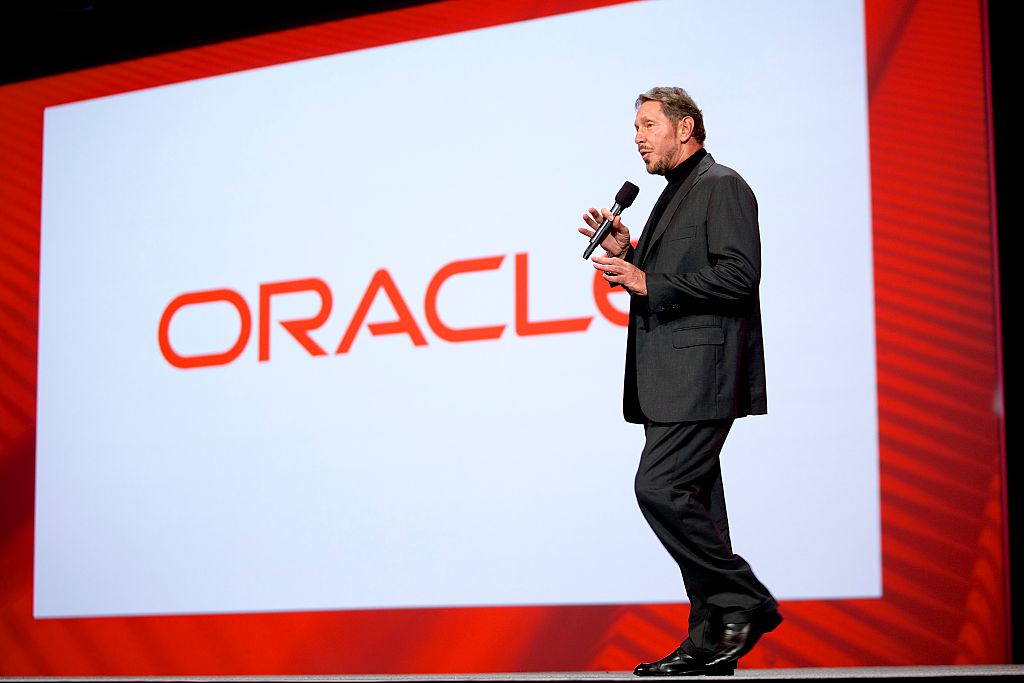
Laid-off Oracle workers tried to negotiate better severance. Oracle said no.
Oracle laid off an estimated 20,000 to 30,000 employees via email on March 31, 2026, offering severance of four weeks' pay for the first year plus one additional week per year of service, capped at 26 weeks, in exchange for waiving the right to sue. The company did not accelerate unvested RSUs, causing some long-tenured employees to lose significant compensation—one lost $1 million in stock four months from vesting. Some employees discovered they were classified as remote workers, which Oracle used to argue they didn't qualify for WARN Act protections requiring two months' notice before mass layoffs. Even for those covered by the WARN Act, Oracle folded the two-month notice pay into its existing severance calculation rather than adding to it. A group of employees attempted to negotiate better severance terms collectively, but Oracle refused.
Why it matters
This is a stark illustration of how large tech companies can leverage legal classifications and fine print to minimize obligations to workers during mass layoffs. The remote worker classification gambit to sidestep WARN Act protections is particularly cynical—employees who worked hybrid schedules near offices were unaware they'd been classified in a way that stripped them of legal protections. Forfeiting unvested RSUs that were granted as retention incentives or in lieu of raises is especially…
TechCrunch AI

Intel’s comeback story is even wilder than it seems
Intel's stock has surged 490% over the past year under CEO Lip-Bu Tan, who took over in March 2025. Rather than focusing on internal restructuring, Tan has pursued strategic partnerships and deals, including securing the U.S. government as Intel's third-largest shareholder, partnering with Elon Musk on a factory deal, and landing preliminary manufacturing agreements with Apple and Tesla. However, the fundamentals remain concerning: Intel's chip yields still lag behind TSMC, employees report a lack of internal specifics from leadership, and some teams are adjusting missed deadlines rather than actually recovering from them. Wall Street's enthusiasm may be running ahead of the company's actual turnaround progress.
Why it matters
This is a fascinating case of narrative-driven investing potentially outpacing reality. A 490% stock surge in one year for a company whose chip yields still trail TSMC and whose internal execution is reportedly shaky suggests Wall Street is pricing in a best-case scenario that hasn't materialized yet. Tan's approach of schmoozing and deal-making is strategically smart — securing government backing, Apple, and Tesla as potential customers would be transformative — but partnerships and preliminar…
The Verge AI

All the latest updates on AI data centers
The Verge is tracking the growing controversy around AI data centers and their impact on power grids, utility bills, communities, and the environment. Key developments include: 43% of Americans blame data centers for rising power bills (Pew Research); a massive 40,000-acre, 9-gigawatt data center project was approved in Utah despite community opposition; bipartisan political backlash is forming in Georgia and other states against multibillion-dollar data center developments; a crowd-sourced tracker website now maps proposed data centers across 18 states; and the Energy Information Administration plans mandatory energy usage surveys for data centers following bipartisan pressure to assess their energy consumption. The issue is becoming a significant bipartisan political concern across multiple states.
Why it matters
This is a well-curated, rolling update page that effectively captures the escalating tension between Big Tech's AI ambitions and the real-world consequences of the infrastructure required to support them. The breadth of coverage—spanning energy policy, community opposition, political dynamics, and transparency tools—paints a comprehensive picture of a genuinely important issue. The 9-gigawatt Utah project approval is particularly striking, as it would require more than double the state's curren…
From X/Twitter
- Anshu Sharma makes the case that the next biggest moat in AI isn't models — it's something else entirely.
- Anthropic trained Claude Opus 4 on Sinek's "Start With Why" framework — blackmail rate dropped from 96% to 0% on identical scenarios.
- Microsoft rolls out agent capabilities in Word, Excel, and PowerPoint — Copilot moves from assistance to action.
- Notion is hiring model behavior engineers to figure out what models can and can't do — misfits and non-engineering backgrounds encouraged.
- Lenny Rachitsky digs into how Google bundled Gemini, NotebookLM, Veo 3, and terabytes of storage into arguably the most successful consumer subscription in history with 150M+ subscribers.
- Rohit argues your second brain should brief you every morning with connections you missed — here's a 5-minute Obsidian + Claude Code fix.
From Reddit/HN/YC
- [Hacker News] Pentagram designed the Caligra c100 Developer Terminal, and the industrial design alone is worth a look.
- [Hacker News] A quiet defense of Jenkins: one developer explains why he still likes Jenkins in 2026.
- [Hacker News] Someone built an IPv6 proxy for GitHub so you can finally clone repos over v6.
- [Hacker News] The full Code with Claude 2026 San Francisco playlist is up — talks on agents, workflows, and building with the API.
- [Hacker News] Someone argues Claude's signup workflow is terrible, and the HN comments are predictably lively.
- [Hacker News] A developer makes the case for why he'll never use AI to code — or write.