Business, Deals & Funding
Guardian AI
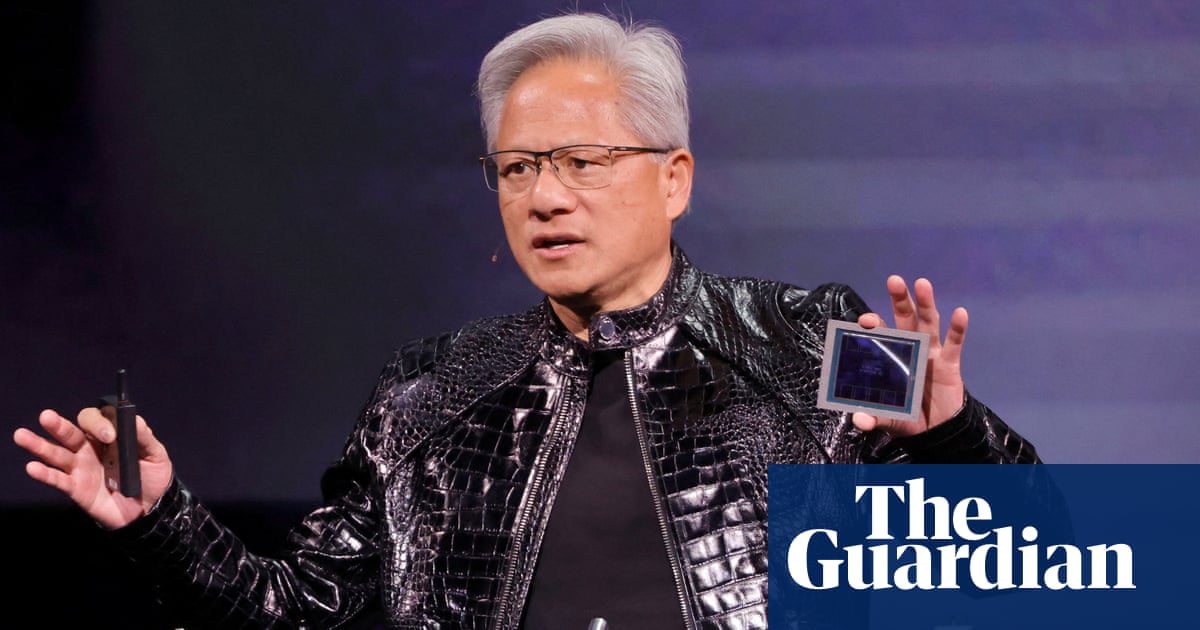
Nvidia’s Jensen Huang joins Trump as tech dominates China trip
Nvidia CEO Jensen Huang has joined Donald Trump's delegation to China after a last-minute invitation, joining other major tech and business leaders including Elon Musk, Tim Cook, and Goldman Sachs' David Solomon for a 36-hour meeting, underscoring the central role of AI and technology in US-China relations.
Why it matters
This delegation composition speaks volumes about the current geopolitical landscape, where AI chip technology has become a critical lever in US-China relations. Huang's inclusion is particularly significant given Nvidia's central role in AI hardware and the ongoing US export controls on advanced chips to China. Having the heads of Nvidia, Tesla, Apple, and Goldman Sachs together signals that Trump is using corporate diplomacy as a key tool, but it also raises concerns about potential conflicts…
Claude Code Changelog
v2.1.140
Version 2.1.140 of Claude Code includes improvements to Agent tool subagent_type matching (now case- and separator-insensitive), an updated agent color palette, and several bug fixes: /goal command no longer silently hangs when certain hook settings are enabled, symlinked settings files no longer cause spurious ConfigChange hooks during hot-reload, and claude --bg no longer fails.
Why it matters
This is a solid maintenance release with practical quality-of-life improvements. The case-insensitive subagent_type matching is a nice usability enhancement that reduces friction. The bug fixes address real pain points — silent hangs and broken background mode are particularly frustrating issues for users. The symlinked settings fix shows attention to edge cases in developer workflows. Overall a well-rounded minor update.
NY Times
Anduril Raises $5 Billion in Funding and Is Valued at $61 Billion
Anduril, a startup that develops AI-backed weapons and defense technology, has raised $5 billion in a new funding round, achieving a valuation of $61 billion—double its valuation from a year ago.
Why it matters
This massive funding round and rapid valuation growth reflect the increasing appetite among investors for defense technology companies, particularly those leveraging AI. While the financial success is notable, it also raises important ethical questions about the growing role of private startups in developing autonomous and AI-driven weapons systems. The doubling of valuation in just one year suggests both strong market demand and potentially a broader shift in how governments and militaries pro…
Guardian AI

Chelsea flower show garden designers clash over use of AI
Award-winning garden designer Matt Keightley has sparked controversy at the Chelsea flower show by using artificial intelligence in designing his exhibit and launching an app that can automate garden design. Other horticulturalists and designers at the traditionally genteel event have expressed alarm and opposition to the use of AI in garden design, leading to a clash among participants at this year's show.
Why it matters
This article highlights a fascinating cultural tension that is playing out across nearly every creative field as AI tools become more capable. Garden design, like architecture, art, and other creative disciplines, involves a blend of technical knowledge and artistic vision that practitioners have spent years cultivating. The concern from traditional designers is understandable — they worry about the devaluation of expertise and the homogenization of design. However, AI tools in garden design co…
Guardian AI
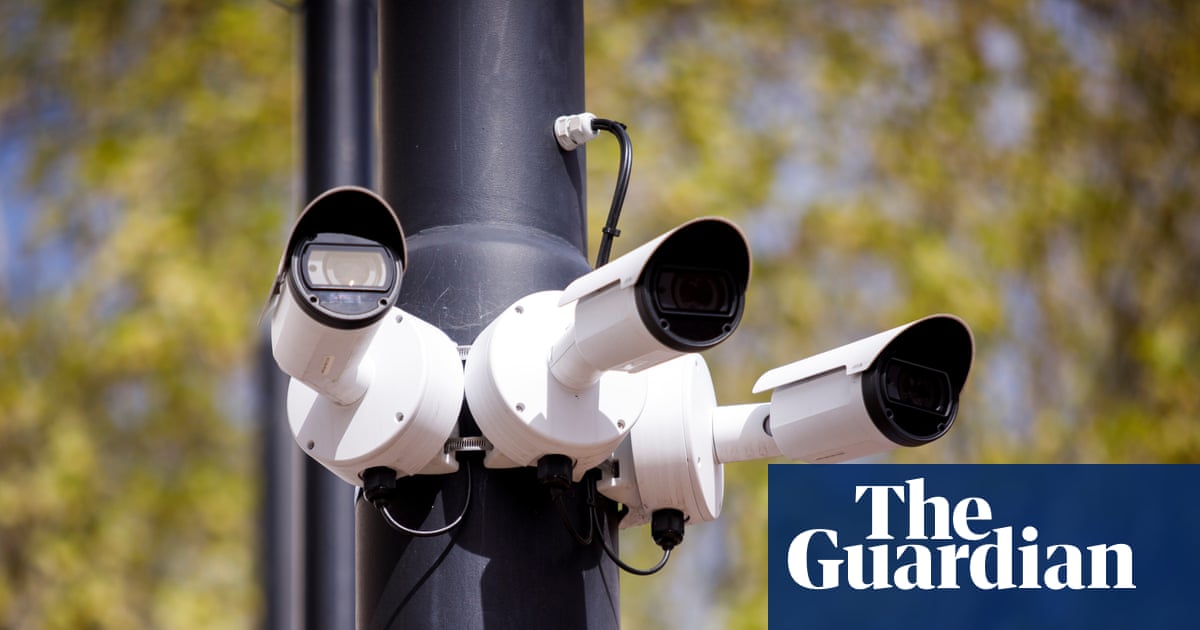
Is Big Brother watching you shop? – podcast
The article discusses the growing use of live facial recognition technology by both police and private retailers, from supermarkets to corner shops, as a tool to combat shoplifting and crime. Guardian correspondent Jessica Murray examines this trend, noting that while retailers and law enforcement hail it as a powerful new frontier in fighting crime, there are significant concerns about surveillance, privacy, and the broader implications of deploying AI-powered facial recognition systems in everyday shopping environments.
Why it matters
This is a legitimate and important piece of journalism covering a real and growing societal concern about the expansion of facial recognition surveillance technology into retail spaces. The topic raises genuine questions about the balance between security and civil liberties, the privatization of surveillance, and the potential for misuse or bias in AI systems. It is not propaganda or misinformation; rather, it is investigative reporting on a technology trend with significant implications for p…
TechCrunch AI

Medicare’s new payment model is built for AI, and most of the tech world has no idea
Medicare's new ACCESS program, a 10-year CMS initiative launching July 5, 2026, creates a payment model that rewards health outcomes rather than clinician time, effectively opening a federal mechanism to pay for AI-driven patient care between visits. Pair Team, a healthcare company serving chronically ill patients facing social challenges like housing instability and food insecurity, is among 150 participants selected. Unlike traditional Medicare reimbursement, ACCESS enables payment for AI agents that monitor patients, coordinate referrals, and ensure medication adherence. Pair Team, which has raised about $30 million and employs roughly 850 clinical professionals, has built its model around addressing the full context of patients' lives, with peer-reviewed evidence supporting its community-integrated approach blending medical, behavioral, and social care.
Why it matters
This is a genuinely significant policy development that deserves the attention the headline claims it isn't getting. The shift from time-based reimbursement to outcome-based payment in Medicare is a structural change that could fundamentally reshape how AI is deployed in healthcare. The fact that CMS is explicitly creating payment mechanisms that don't require a human clinician to be on the clock is a massive opening for AI-native care models. Pair Team's positioning seems strong — they've spen…
The Verge AI

Sam Altman was winning on the stand, but it might not be enough
Sam Altman testified in the Musk v. Altman trial after two weeks of witnesses portraying him negatively. On the stand, Altman adopted a humble demeanor and pushed back against accusations of stealing a charity (OpenAI), stating they created a large charity through hard work and that Musk tried to kill it twice. His lawyer William Savitt guided the testimony. While the article suggests Altman performed well during his testimony, the headline indicates it may not be sufficient to overcome the damage done, and that Elon Musk may have inflicted more lasting reputational harm on the OpenAI CEO regardless of the trial's outcome.
Why it matters
This article provides an engaging courtroom narrative but is frustratingly incomplete — the content cuts off mid-description of Altman's testimony. From what's available, Elizabeth Lopatto's writing is vivid and colorful, capturing the courtroom dynamics well with phrases like 'lying snake' (clearly reflecting the opposing side's characterization). The piece seems to offer a balanced assessment, acknowledging Altman performed well on the stand while noting it might not matter. The trial itself…
Guardian AI
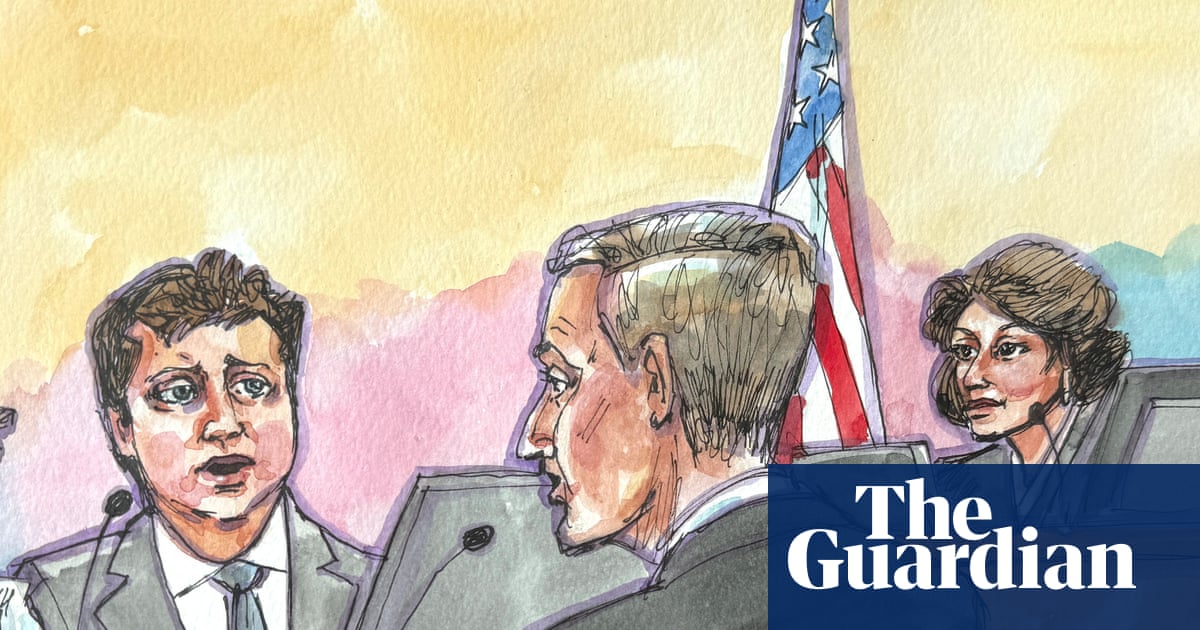
Sam Altman defends OpenAI in courtroom showdown with Elon Musk
Sam Altman testified in court to defend himself and OpenAI against Elon Musk's lawsuit, which accuses Altman and OpenAI of breaking the company's founding agreements. Altman rejected claims that he deceived Musk. The trial, described as a high-stakes courtroom showdown between two powerful tech figures, is nearing its end, with Altman being one of the final witnesses.
Why it matters
This trial represents a significant moment in the AI industry, as it publicly exposes the deep rift between two of its most influential figures. Regardless of the legal outcome, the case highlights important questions about corporate governance, the tension between nonprofit missions and for-profit structures in AI development, and accountability among tech leaders. The spectacle of Musk and Altman battling in court underscores how personal relationships and power dynamics can shape the traject…
From X/Twitter
- Mark Gurman says iOS 27 will bring design overhauls to Weather, Safari, Image Playground, and tab bars system-wide.
- Cursor is now available in Microsoft Teams — mention it in any channel to delegate tasks or pull information directly into your workflow.
- Ben Wills tracked 29,562 domains across 145 industries and 105k+ ChatGPT prompts to build what may be the most comprehensive LLM ranking factors analysis yet.
- Boris Cherny's favorite Claude Code feature isn't /remote-control — it's a different way to remote-control the agent that most users don't know about.
- A Google Cloud AI engineer showed how to go from idea to deployed app in 26 minutes using Claude and Google Cloud. Free walkthrough, worth more than any paid course.
- Eric Schmidt argues that if you really want to make money right now, the move is to found an agentic AI company.
From Reddit/HN/YC
- [Hacker News] A code review guide written for humans, now repurposed as a prompt — the lifecycle of documentation in 2026.
- [Hacker News] Grid2Poster lets you design posters showcasing your country's electrical grid — unexpectedly beautiful infrastructure dataviz.
- [Hacker News] Shotglass lets you record screen demos that look like Apple commercials — no motion graphics degree required.
- [Hacker News] Hysteria is a QUIC-based proxy designed to resist censorship, and it's gaining traction on GitHub.
- [Hacker News] Recursant is a mesh-based control plane for AI agents — think service mesh, but for coordinating autonomous systems.
- [Hacker News] Khronos releases OpenCL 3.1, keeping the GPU compute standard alive alongside the Vulkan wave.