Business, Deals & Funding
Guardian AI
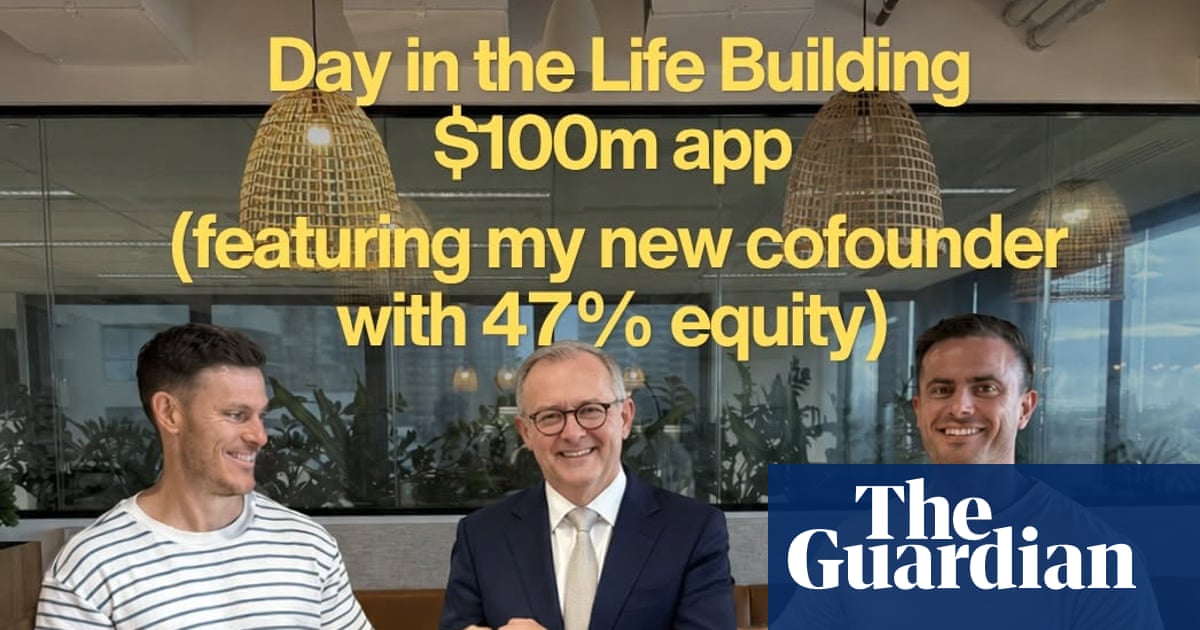
Pocock urges CGT changes as Albanese laughs off AI meme campaign
Independent senator David Pocock has warned that proposed capital gains tax (CGT) changes in the Australian federal budget could drive tech investment offshore. Meanwhile, Prime Minister Anthony Albanese has dismissed an AI-generated meme campaign created by startup founders opposing the CGT reforms, joking about the 'very flattering' doctored images of himself. Independent politicians representing startup-heavy areas have expressed concern about the potential impact of the budget reforms on Australia's technology sector.
Why it matters
This article highlights the growing tension between the Albanese government's tax reform agenda and Australia's startup ecosystem. The PM's lighthearted dismissal of the AI meme campaign, while politically savvy, risks appearing tone-deaf to legitimate concerns from the tech sector about capital gains tax changes that could discourage investment and entrepreneurship. David Pocock's warning deserves serious consideration — Australia already struggles to retain tech talent and investment compared…
Claude Code Changelog
v2.1.144
This changelog entry for claude-code v2.1.144 describes several feature additions and improvements: support for resuming background sessions (started via `claude --bg` or agent view) alongside interactive ones, elapsed duration display for background subagent completion notifications, last-updated timestamps in the plugin browse/discover panes, a change to `/model` command behavior so it only affects the current session (with a new 'd' shortcut to set defaults), and a rename from 'extra usage' to 'usage credits' (text appears truncated).
Why it matters
This is a solid incremental release with quality-of-life improvements. The background session resume support and elapsed duration notifications are particularly useful for users running long-running tasks. The `/model` change to session-only scope with an explicit default-setting mechanism is a sensible UX improvement that prevents accidental persistent configuration changes. The changelog entry appears truncated, which is slightly frustrating as the full scope of changes isn't visible.
MIT Tech Review AI

Here’s why Elon Musk lost his suit against OpenAI
In the case Musk v. Altman, a jury delivered a unanimous advisory verdict that Elon Musk's lawsuit against OpenAI was filed too late, with his claims barred by statutes of limitations. US District Judge Yvonne Gonzalez Rogers accepted the verdict. Musk had brought two claims: breach of charitable trust (with a three-year statute of limitations) and unjust enrichment (with a two-year statute of limitations) against OpenAI CEO Sam Altman and president Greg Brockman. Musk argued they broke promises to keep OpenAI a nonprofit, but OpenAI successfully argued Musk had reason to know about the company's for-profit pivot well before the limitations period. Key evidence included 2017 discussions where Musk himself participated in plans to create a for-profit subsidiary and even proposed merging OpenAI with Tesla, and OpenAI's 2019 creation of a capped-profit subsidiary. Musk sought to unwind Ope…
Why it matters
This outcome, while procedurally anticlimactic, seems legally sound. Statutes of limitations exist for good reason—to prevent parties from sitting on their rights and then suing when it becomes strategically convenient. The evidence that Musk was deeply involved in discussions about OpenAI's for-profit pivot as early as 2017, and even proposed merging it with Tesla, significantly undermines his claim that he only discovered the alleged breach in 2022. His characterization of the ruling as a 'ca…
Science Daily

Forget electrons, this breakthrough uses light-matter particles to power AI
Researchers at the University of Pennsylvania, led by physicist Bo Zhen, have created a hybrid light-matter quasiparticle called an exciton-polariton that could dramatically speed up AI computing while using far less energy. The particle forms when photons are strongly coupled with electrons inside an atomically thin semiconductor material, enabling light to perform signal-switching operations that pure photons cannot do alone. Current photonic AI chips must convert light signals back to electronic ones for nonlinear activation steps like decision-making, which slows processing and wastes energy. The Penn team demonstrated all-light switching using only about 4 quadrillionths of a joule of energy, an extraordinarily small amount. If scalable, this technology could help replace some electronic computing processes with ultra-efficient light-based alternatives, addressing the growing energ…
Why it matters
This is a genuinely exciting development that addresses one of the most critical bottlenecks in photonic computing: the need to convert optical signals back to electronic ones for nonlinear operations. The energy figures cited are impressively low, and the use of exciton-polaritons is a clever approach to bridging light's speed advantages with matter's ability to interact and switch signals. However, significant challenges remain before this becomes practical. Scaling from laboratory demonstrat…
NY Times
The Generation That Grew Up With A.I. Hates It
The article discusses a trend among recent graduates who, despite growing up alongside artificial intelligence technologies, have developed a strong aversion to AI. This sentiment is manifesting at commencement ceremonies where mentions of AI are being met with boos, reflecting a generational backlash against the technology that has permeated their education and early careers.
Why it matters
This piece highlights a fascinating and perhaps inevitable cultural pushback. A generation that has been subjected to AI-driven education tools, algorithmic social media, AI-generated content, and an uncertain job market shaped by automation has legitimate grievances. Their booing at commencement speeches likely reflects frustration with being told to embrace a technology that many feel has degraded their educational experience, threatened their career prospects, and eroded authentic human conn…
Guardian AI
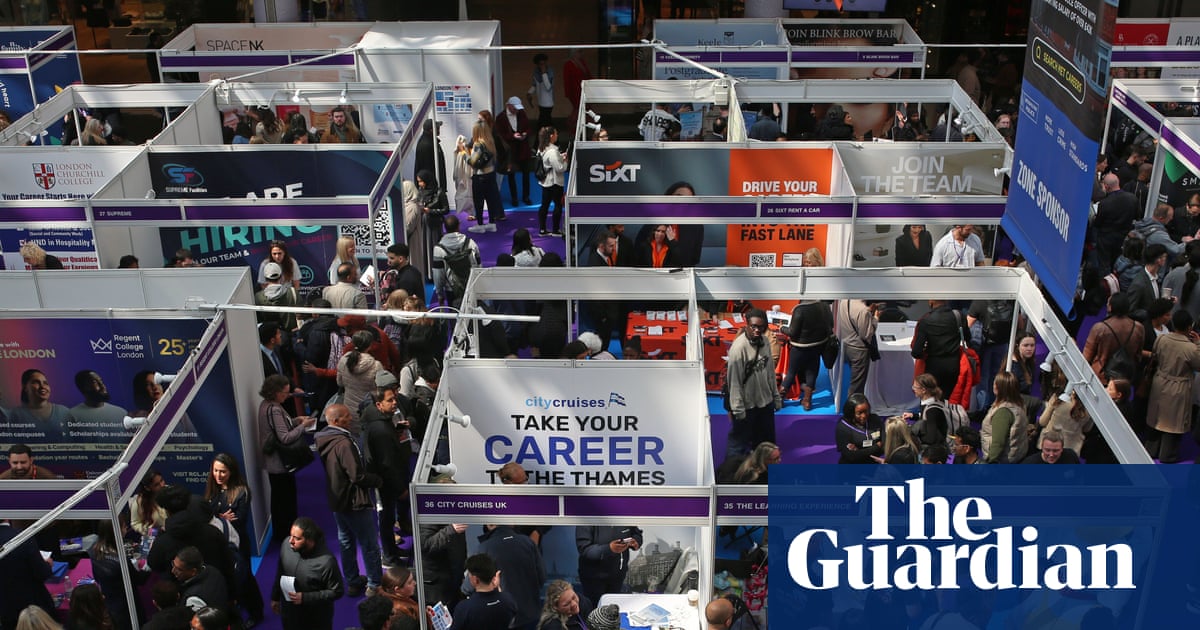
Third of university students in Great Britain think AI job losses will cause social unrest, poll finds
A King's College London poll reveals that one in three UK university students believe AI will eliminate jobs so quickly it will trigger civil unrest. The survey also found students are heavy AI users, with 77% using it at least a few times a month and 27% using it daily. Meanwhile, almost half of the general public would prefer to avoid AI altogether. Workers use AI less frequently, with 46% using it at least a few times a month.
Why it matters
This poll highlights an interesting paradox: the demographic most actively embracing AI tools is also deeply anxious about its societal consequences. The fact that students are both heavy users and fearful of AI-driven job displacement suggests a nuanced understanding — they recognize AI's utility while being realistic about its disruptive potential. The finding that nearly half the public would prefer to avoid AI entirely is concerning, as it suggests a growing divide between those adapting to…
Guardian AI

Jury hands victory to Sam Altman and OpenAI in battle with Elon Musk
A federal jury in Oakland, California, ruled in favor of Sam Altman, OpenAI, and president Greg Brockman in a lawsuit brought by Elon Musk. The jury found them not liable for Musk's claims that they unjustly enriched themselves and broke a founding contract made with Musk when establishing the AI startup.
Why it matters
This verdict marks a significant legal milestone in the ongoing power struggle between two of tech's most prominent figures. While the jury's decision vindicates Altman and OpenAI legally, the broader questions Musk raised about OpenAI's transformation from a nonprofit to a profit-driven entity remain relevant in public discourse. The case highlights the tension between OpenAI's original mission and its current commercial trajectory, and regardless of the legal outcome, these concerns about AI…
TechCrunch AI

SandboxAQ brings its drug discovery models to Claude — no PhD in computing required
SandboxAQ, an Alphabet spinout chaired by Eric Schmidt that has raised over $950 million, has partnered with Anthropic to integrate its proprietary large quantitative models (LQMs) directly into Claude. These physics-grounded models can run quantum chemistry calculations and simulate molecular dynamics and microkinetics for drug discovery and materials science. The key value proposition is accessibility: rather than requiring specialized computing infrastructure, researchers can now interact with these powerful scientific AI tools through Claude's natural language conversational interface. While competitors like Chai Discovery and Isomorphic Labs focus on building better models, SandboxAQ is betting that the real bottleneck in AI-driven drug discovery is the interface and ease of access, not the underlying science models themselves.
Why it matters
This is a genuinely interesting strategic move that highlights an underappreciated problem in scientific AI: the gap between powerful models and the people who need to use them. Drug discovery tools that require PhD-level computing expertise to operate are inherently limited in their impact. By embedding LQMs into Claude's conversational interface, SandboxAQ is essentially democratizing access to sophisticated molecular simulation — which could meaningfully accelerate research workflows at phar…
From X/Twitter
- Gabriel Chua says the secret to his omnipresence is Codex automations — recurring tasks that get him to a strong first draft faster and keep pulling threads on autopilot.
- Claude Console now shows prompt cache diagnostics — when a request misses cache, you can see exactly which part changed and what it cost in tokens.
- Claude Design just doubled token limits across every plan.
- Claire Vo and trq212 make the case that "HTML is the new markdown" — .md is easy for agents to read but a slog for humans to eyeball.
- A prompt worth stealing: ask the agent to maintain a running implementation-notes.html capturing decisions, tradeoffs, and spec gaps as it works.
- Microsoft's AI chief predicts most white-collar work will be heavily automated within 12–18 months — lawyers, accountants, marketers, PMs, and engineers included.
From Reddit/HN/YC
- [Hacker News] The State of AI 2026 survey results are out — a snapshot of where developers actually stand on tooling, models, and adoption.
- [Hacker News] Students hacked their way to free 4.0s by exploiting a grading tool used at uWaterloo and UofT.
- [Hacker News] Patrick Toulmé makes the case that true hardware portability is a myth — the best AI stacks will always be opinionated about silicon.
- [Hacker News] Viberia is a Civ/Polytopia-style command center for orchestrating AI agents, BYOK and BYOS.
- [Hacker News] Pizza Hut franchisees allege the chain's AI system Dragontail caused cascading failures and $100M in damages.
- [Hacker News] Antirez built a new EDIT tool for LLM agents — designed to make file modifications less error-prone than search-and-replace.