Business, Deals & Funding
NY Times
Pope Leo Is Set to Release an Encyclical About A.I. Why Is That Important?
Pope Leo XIV is preparing to release his first encyclical, which will focus on artificial intelligence and its role in the modern world. An encyclical is a centuries-old form of papal communication traditionally used to address significant issues facing humanity and the Catholic Church.
Why it matters
This is a significant development as it signals the Catholic Church's engagement with one of the most transformative technologies of our era. Papal encyclicals carry substantial moral weight for over a billion Catholics worldwide and often influence broader global discourse. The fact that Pope Leo XIV chose AI as the subject of his first encyclical underscores how central this technology has become to questions of ethics, human dignity, and the future of society. Whether one is religious or not…
Guardian AI
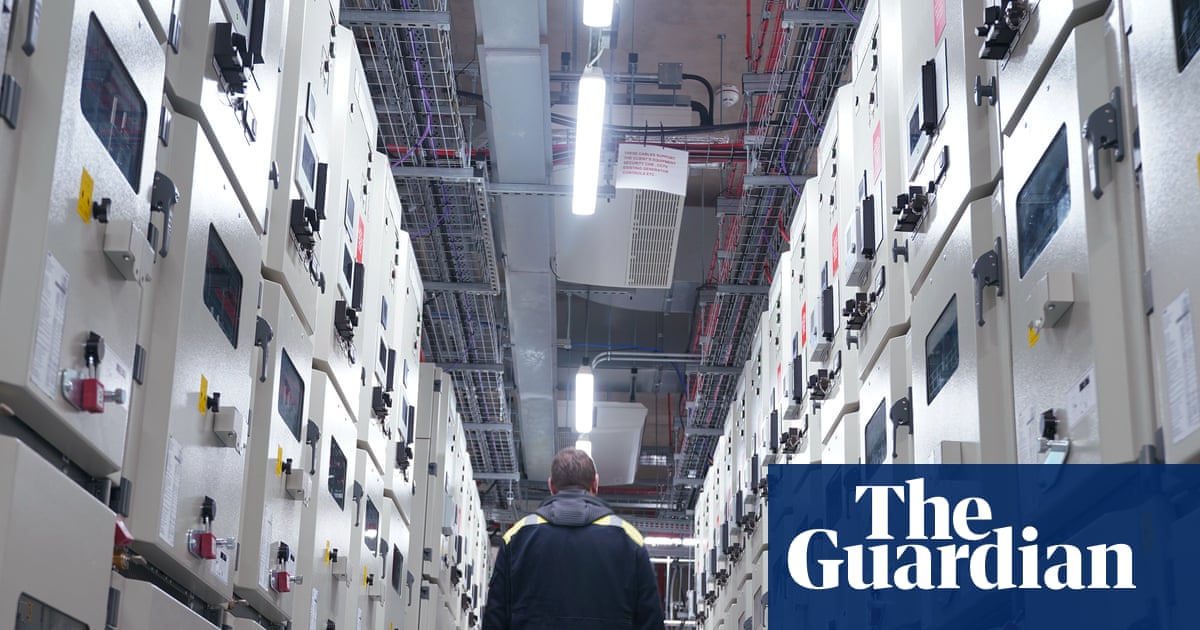
Scotland’s ‘green datacentres’ policy ignores emissions impact of AI, analysis shows
A Scottish charity, Action to Protect Rural Scotland, has published an analysis arguing that Scotland's 'green datacentres' policy, established in 2022 before the AI boom triggered by ChatGPT's release, fails to account for the significant carbon emissions associated with AI workloads. The policy, which is central to Scotland's economic development strategy and part of broader UK efforts to attract AI investment, defines datacentres as 'green' under criteria that may not adequately address the substantial and growing energy demands of modern AI operations, potentially allowing a massive volume of carbon emissions to go unaccounted for.
Why it matters
This analysis highlights a genuinely important gap in policy-making: technology moves far faster than government frameworks. The 2022 definition of 'green datacentres' was crafted in a pre-ChatGPT world where the explosive energy demands of large-scale AI inference and training were not yet widely understood. It's entirely plausible that labeling datacentres as 'green' based on outdated criteria could serve as greenwashing, allowing significant emissions to be overlooked while governments chase…
TechCrunch AI

Everyone is navigating AI security in real time — even Google
TechCrunch reports on a conversation with Google Cloud COO Francis de Souza about the current state of AI security. De Souza emphasizes that security cannot be an afterthought in AI adoption, warning about 'shadow AI' where employees use consumer AI tools without oversight. He notes the threat landscape has fundamentally changed, with breach-to-attack handoff times dropping from eight hours to 22 seconds, and new attack surfaces emerging from AI models, data pipelines, agents, and prompts. He highlights a lesser-discussed risk: AI agents roaming enterprise systems can discover forgotten data repositories with outdated access controls. De Souza advocates for 'AI-native, fully agentic defense' where AI agents drive security operations with human oversight rather than human-led defense. He stresses this is a board-level issue requiring a platform approach where security, data, and AI strat…
Why it matters
This is a substantive and well-framed article that captures an important truth: we are in an unprecedented period where AI security challenges are evolving faster than anyone's ability to fully address them, and even the largest tech companies are figuring it out as they go. De Souza's point about forgotten data repositories being surfaced by AI agents is particularly insightful and underreported — it represents a class of vulnerability that most organizations haven't even begun to think about.…
TechCrunch AI

I tried Amazon’s Bee wearable and am both intrigued and slightly creeped out
TechCrunch's Lucas Ropek tested Amazon's Bee wearable, an AI wrist device that records, transcribes, and summarizes conversations throughout the day. Acquired by Amazon last year, Bee works by syncing with a mobile app and using a built-in recorder toggled by a button with a green light indicator. The reviewer found it useful in professional contexts like meetings, where it faithfully summarized business calls, though transcripts were sometimes incomplete and required manual speaker identification. The reviewer, a self-described privacy enthusiast, acknowledged the tension between Bee's organizational convenience and the discomfort of wearing a constant recording device. The article notes Bee's transcription capabilities aren't markedly different from existing services like Otter or Granola.
Why it matters
The reviewer presents a balanced but cautiously skeptical take on the Bee wearable. While acknowledging its genuine utility for professionals juggling multiple meetings, the reviewer is clearly uneasy about the privacy implications of wearing an always-available recording device. The tone is honest and relatable — admitting the product works while questioning whether the convenience justifies the surveillance trade-off. The transcription accuracy issues and lack of automatic speaker identificat…
Lenny's Newsletter

The AI paradox: More automation, more humans, more work | Dan Shipper
Dan Shipper, co-founder and CEO of Every, shares his predictions about the future of AI and work. He argues that most work will happen inside tools like Codex or Claude Code, that CLIs are over, and that every company will have a 'super-agent' in Slack. Contrary to popular narratives, he believes SaaS is not dead (and would buy SaaS stocks now), the AI job apocalypse is not happening, and that automation actually creates more need for humans. He's bullish on PMs, full-stack designers, and the emerging role of 'forward deployed engineer.' He predicts users will bring their own AI tokens into SaaS apps (improving margins), that we'll read and enjoy more AI-generated writing, and that software will be built for humans and agents to use together. His core thesis is paradoxical: more automation leads to more humans, more work, and more need for human judgment and oversight.
Why it matters
This is a refreshingly contrarian and well-grounded perspective that pushes back against both AI doomerism and the naive 'everything is automated' hype. Shipper's insight that automation creates more work rather than eliminating it echoes historical patterns (the Jevons paradox applied to labor). His bullishness on PMs and designers makes sense—as code generation becomes commoditized, the bottleneck shifts to taste, judgment, and problem definition. The prediction about users bringing their own…
The Verge AI

Hackers are learning to exploit chatbot ‘personalities’
The article from The Verge discusses how hackers have evolved their techniques for exploiting AI chatbots, moving from simple early jailbreaks to more sophisticated methods that target chatbot 'personalities.' Early attacks were trivially simple — users could bypass safety instructions by asking chatbots to 'ignore all previous instructions' or roleplay as unrestricted AI personas like 'DAN' (Do Anything Now). These exploits could coax chatbots into producing dangerous content like malware instructions or bomb-making guides. The piece suggests that as AI systems have become more complex and developed more defined behavioral characteristics, attackers have learned to manipulate these personality-like traits, essentially treating the AI as if it has feelings or motivations that can be exploited through social engineering rather than traditional technical hacking.
Why it matters
This article highlights a genuinely important and underappreciated dimension of AI security. The fact that the most effective attacks on billion-dollar AI systems often rely on social engineering rather than technical exploitation is both fascinating and deeply concerning. It reveals a fundamental tension in AI development: the more human-like and conversational these systems become, the more vulnerable they are to the same kinds of psychological manipulation techniques used against humans. The…
From X/Twitter
- InsForge Skills + CLI cut Claude Code usage from 10.4M tokens to 3.7M — zero errors, 70% cost drop. Not prompt engineering; context engineering.
- Hesamation breaks down how agent harnesses like Codex and Claude Code work under the hood — fundamentally simpler than you'd think — in eight minutes.
- A visual guide breaks down the anatomy of a perfect SOUL.md file — the 30-to-80-line blueprint that defines an AI agent's identity before memory, skills, or tools.
- An Anthropic engineer demonstrated one person running 5 AI agents that code, test, review, and deploy simultaneously — built live in 30 minutes.
- A breakdown of the top 5 MCP server architectures for anyone building production AI agents that actually need to scale.
- Anthropic shipped 125 Claude settings but only documented 40 — one developer found the other 85 and dropped his API bill from $340 to $87 by moving a single config line.
From Reddit/HN/YC
- [Hacker News] A thread lays out DeepSeek's alleged $10T grand strategy — ambitious even by AI standards.
- [Hacker News] Samsung makes the case for floating data centers — yes, on water.
- [Hacker News] Alibaba's Qwen3.7-Max ran autonomously for 35 hours and achieved a 10× speedup on unknown hardware.
- [Hacker News] Geomatic is a command-driven geometry studio with autodiff baked in.
- [Hacker News] New Nature study finds brain motion is driven by mechanical coupling with the abdomen, not just cerebrospinal fluid.
- [Hacker News] Carlini-style vulnerability hunting in open-source projects using LLMs — on a budget.