Business, Deals & Funding
Guardian AI
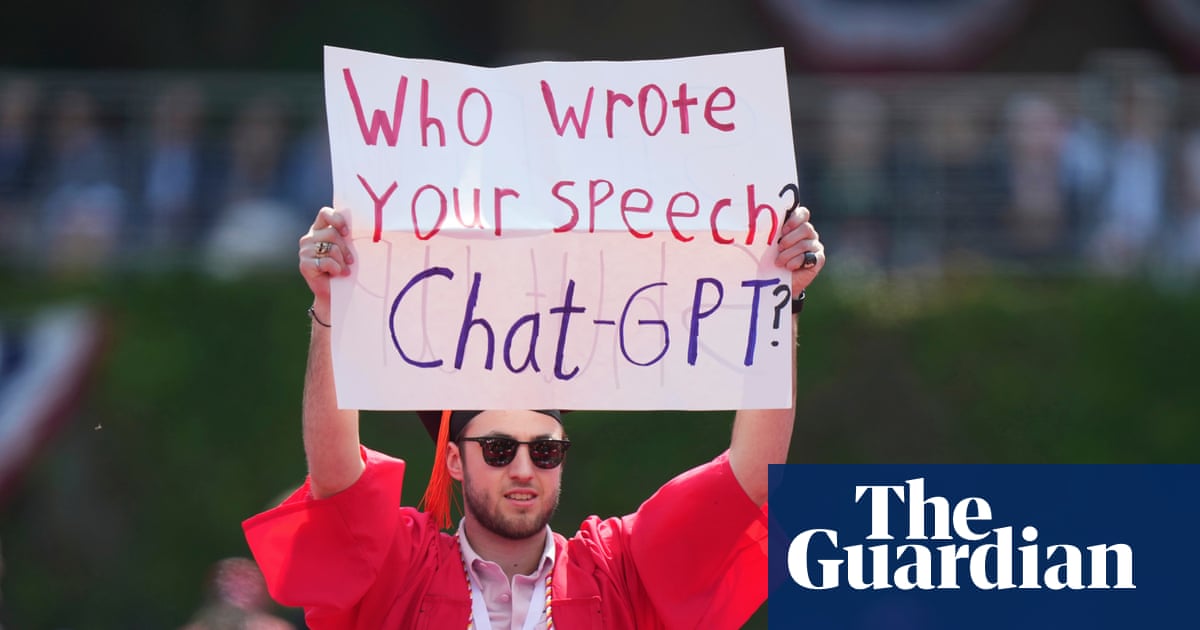
US students on why they booed their pro-AI graduation speakers: ‘They’re not reading the room’
Recent US college graduates have been booing commencement speakers who promote artificial intelligence during graduation ceremonies. Students like Jacob Pagel from Middle Tennessee State University feel that pro-AI speeches are tone-deaf, as many graduates view AI as a direct threat to their career prospects and question the value of their degrees in light of AI's rapid advancement. The article highlights a growing disconnect between industry leaders enthusiastic about AI's transformative potential and young people entering the workforce who fear the technology will undermine their job opportunities.
Why it matters
This article captures a genuinely important cultural moment — the collision between Silicon Valley's relentless AI optimism and the real anxieties of young people entering an increasingly uncertain job market. The students' frustration is entirely understandable: being told at your own graduation ceremony that the technology reshaping your industry is exciting and transformative, when you're the one whose livelihood may be disrupted, is remarkably tone-deaf. The phrase 'not reading the room' pe…
NY Times
Main Takeaways From Pope Leo’s Encyclical on A.I.
Pope Leo, the first American pontiff, released an encyclical on artificial intelligence calling for human care and welfare to be placed at the center of technological change and development.
Why it matters
This appears to be a credible news article from the New York Times reporting on a papal encyclical. The headline and content are straightforward and factual in tone, describing a religious leader's position on AI ethics. The subject matter—a pope issuing guidance on technology—is consistent with recent Vatican interest in AI ethics. There are no obvious signs of misinformation or sensationalism; it reads as standard news reporting on a significant religious document.
Guardian AI
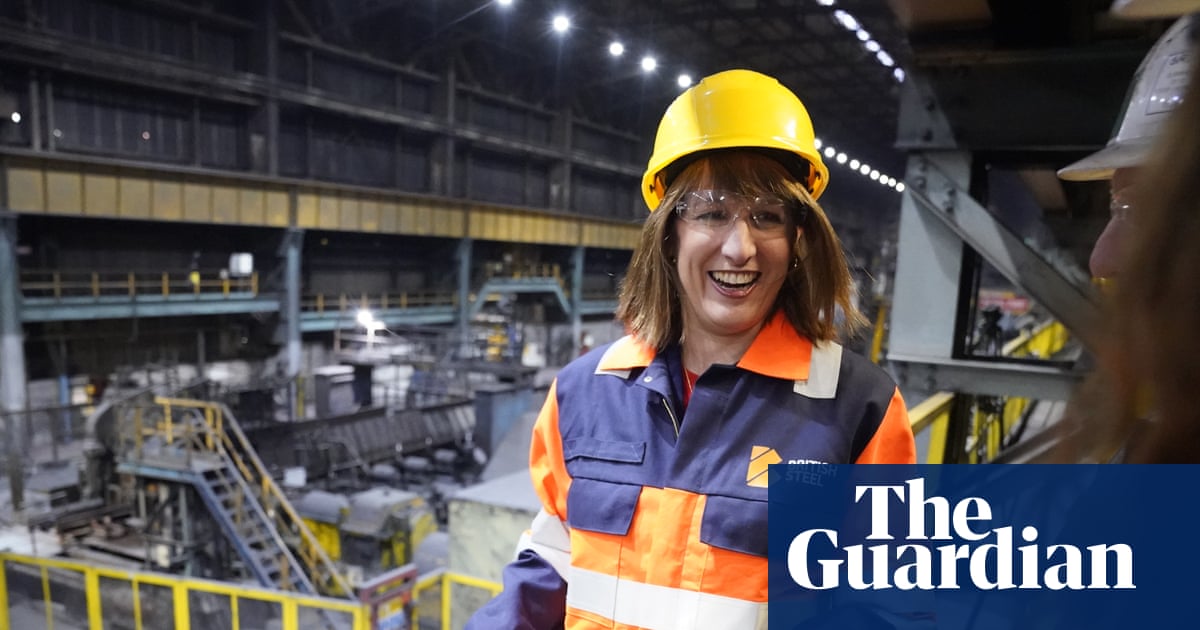
Rachel Reeves tells ministers to ‘buy British’ in four key industries
Chancellor Rachel Reeves has instructed cabinet ministers to prioritize awarding government contracts to British companies in four key industries: ships, steel, energy, and AI. In a letter to all cabinet ministers overseeing spending departments, Reeves expressed frustration that too much government business has been going abroad and directed them to 'buy British' wherever possible in procurement decisions, balancing Britishness alongside cost considerations.
Why it matters
This is a significant protectionist shift in UK government procurement policy. While 'buy British' rhetoric plays well politically and could support domestic industries and jobs, it raises important questions about cost efficiency for taxpayers, compliance with international trade agreements, and whether UK companies can actually deliver competitively in all four sectors. The focus on steel and shipbuilding echoes traditional industrial policy, while including AI signals ambition for the UK's t…
NY Times
As A.I. Fever Rises in Silicon Valley, Pope Leo Has a Few Words
The article discusses Pope Leo, an American pope, who is speaking out about the rapid rise of artificial intelligence in Silicon Valley. He appears to be cautioning against the unchecked advancement of AI technology and challenging tech companies, while the article also raises the question of whether technology could influence or overtake even institutions like the papacy.
Why it matters
This article touches on an important and timely intersection of religion, ethics, and technology. It is significant that a religious leader, especially an American pope, is weighing in on AI development, as it highlights growing societal concerns about the power and influence of tech companies. The framing of the tension between the papacy and Silicon Valley is compelling, though the headline's suggestion that 'tech could take over the papacy' seems somewhat sensationalized. The broader convers…
Guardian AI
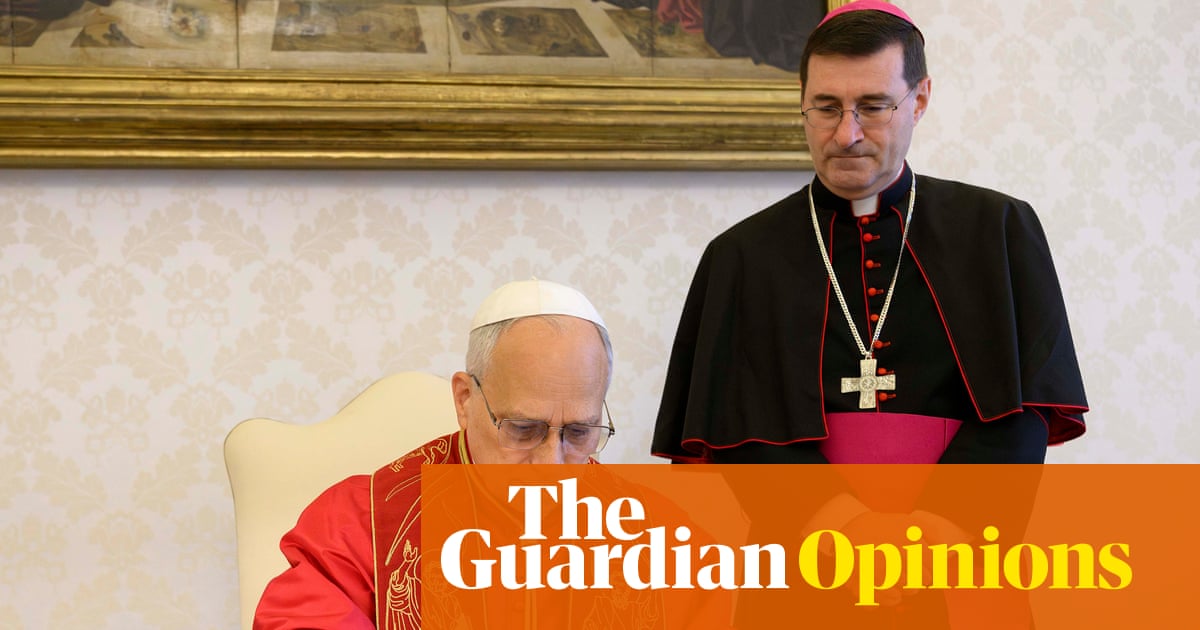
The Guardian view on the Pope and Claude: Leo XIV’s encyclical on AI is right to put humanity first | Editorial
The Guardian editorial discusses Pope Leo XIV's encyclical on artificial intelligence, drawing parallels to Pope Leo XIII's 1891 Rerum Novarum encyclical on the Industrial Revolution. The editorial praises the pontiff's call for regulation of AI and digital technologies, with an emphasis on preserving human dignity. The pope's choice of regnal name is noted as a deliberate reference to his predecessor who addressed the major social upheaval of his era, suggesting Leo XIV sees AI as the defining social question of the current age. The editorial endorses the encyclical's contribution to the ethical debate surrounding AI development and its human-centered approach.
Why it matters
The Guardian takes a clearly supportive stance toward Pope Leo XIV's encyclical on AI, agreeing that putting humanity first in the regulation of artificial intelligence is the right approach. The editorial frames the pope's intervention as a valuable and timely contribution to a crucial ethical debate, endorsing the call for regulation of the digital revolution and the foregrounding of human dignity as guiding principles in AI governance.
TechCrunch AI

What ClickUp’s mass layoff tells us about the future of work
ClickUp, a collaboration software startup last valued at $4 billion, laid off 22% of its workforce and replaced hundreds of employees with approximately 3,000 internal AI agents. CEO Zeb Evans framed the move not as cost-cutting but as a radical AI embrace, promising million-dollar salary bands for remaining employees who create outsized impact using AI. Staff members are now expected to direct AI agents and review their output rather than perform work themselves. A recent Gartner survey found that about 80% of companies using autonomous tech have cut jobs, though workforce reductions aren't necessarily translating into meaningful financial returns. Evans claims ClickUp is seeing real productivity gains and plans to offer similar AI agent capabilities as a product for customers. The article also highlights Polsia, a startup run by a single person that raised $30 million at a $250 millio…
Why it matters
This article captures a significant inflection point in the AI-and-employment debate. ClickUp's move is notable because it's one of the most explicit cases of a well-known tech company openly replacing human workers with AI agents at scale while trying to spin it positively. The promise of million-dollar salary bands for remaining workers is a clever PR move, but the underlying logic is troubling: if AI keeps improving, the number of people needed will keep shrinking, making even the 'survivors…
NY Times
Pope Leo Warns of Risks From A.I. in 42,300-Word Encyclical
Pope Leo has issued a lengthy 42,300-word encyclical addressing the risks posed by artificial intelligence, representing a significant entry by the leader of the Roman Catholic Church into ongoing debates about the misuse and overuse of AI technology.
Why it matters
This is a legitimate news article from the New York Times reporting on a papal encyclical about AI. The article itself does not appear to be misinformation. Pope Leo (the successor to Pope Francis) issuing a major document on AI reflects genuine and growing institutional concern about the technology's societal impacts. An encyclical is a well-established format for papal teaching, and religious leaders weighing in on major technological and ethical issues is neither unusual nor inherently probl…
TechCrunch AI

The pope’s AI encyclical isn’t really about AI
Pope Leo XIV's first encyclical, 'Magnifica Humanitas,' uses artificial intelligence as a framework to address deeper systemic issues including concentrated power, eroding democracy, inequality, and a tech elite shaping the world to its advantage. The 200-page document, presented alongside Anthropic co-founder Chris Olah, argues that technology built and governed by a small elite cannot serve the common good, and calls for clear oversight criteria, community participation, and an end to the AI arms race. The encyclical draws parallels to historical power concentration issues dating back to the Industrial Revolution, while noting that AI's capabilities raise the stakes enormously. It was published days after President Trump delayed signing an AI oversight executive order, reportedly at the urging of former White House AI czar David Sacks. Notre Dame professor Paolo Carozza noted that AI-…
Why it matters
This is a remarkably significant document that correctly identifies the core issue: AI is not the disease but a powerful amplifier of pre-existing pathologies in how power, wealth, and information are distributed. The pope's framing is intellectually honest and cuts through the typical AI discourse that either catastrophizes about superintelligence or naively celebrates innovation. The observation that 'technical power' does not automatically confer 'the right to govern' is a profound challenge…
From X/Twitter
- Matt Apperson is open-sourcing Noetic, a new agentic harness designed to let you fully customize how you build your own agent.
- Greg Isenberg's playbook for vertical AI agents: find a painful workflow in a boring industry, be the agent manually first, then automate it.
- They quoted him $19,000. He opened Claude instead. Same result, one afternoon, $20/month — and the gap is just knowing how to prompt.
- Andrej Karpathy open-sourced his autonomous research agent setup — no frameworks, no orchestration, no glue code required.
- Vibe coders are getting sued. A veteran dev shared the pre-launch checklist every AI builder needs before shipping to real users.
- Most developers treat CLAUDE.md like documentation — but it's actually the instruction architecture that controls whether your AI agent's output is consistent or random.
From Reddit/HN/YC
- [Hacker News] In vivo base editing of PCSK9 with Verve-102 shows promise for treating hypercholesterolemia — gene editing goes after cholesterol.
- [Hacker News] Jeff Geerling shares news about Raspberry Pi 6 and the state of microcontroller development.
- [Hacker News] Volary makes the case that SDLC agents are pushing developers out of the loop — and why that's a problem.
- [Hacker News] Practical guide to improving local techdocs so your AI coding agent actually knows what it's building.
- [Hacker News] Research finds that prompt politeness affects LLM accuracy — saying "please" might actually matter.
- [Hacker News] Token cost calculator for Codex and Claude Code loops — finally a way to estimate what your AI agent runs actually cost.