Business, Deals & Funding
Claude Code Changelog
v2.1.157
Version 2.1.157 of Claude Code introduces automatic plugin loading from `.claude/skills` directories without needing a marketplace, a new `claude plugin init` command for scaffolding plugins, autocomplete for `/plugin` arguments, agent field support in `settings.json` for dispatched sessions with override capability, the ability for `EnterWorktree` to switch between Claude-managed worktrees mid-session, and a `tool_decision` telemetry addition (truncated in the changelog).
Why it matters
This release focuses heavily on improving the plugin ecosystem by making plugins easier to create, discover, and load locally. The automatic loading from `.claude/skills` is a smart move that lowers the barrier to plugin adoption. The agent dispatching improvements and worktree switching mid-session are practical enhancements for multi-agent workflows. It's a solid incremental update that shows continued investment in extensibility and developer experience.
TechCrunch AI

Coders are refusing to work without AI — and that could come back to bite them
A TechCrunch article reports that developers have become so dependent on AI coding tools that many refuse to work without them, even for research studies. METR, an AI research lab, was unable to repeat a 2025 study measuring AI coding productivity because developers wouldn't participate without AI access. While developers self-report feeling twice as valuable with AI, evidence suggests AI-generated code may not be better and could increase maintenance burdens. Amazon shut down an internal AI usage leaderboard after employees gamed it, Uber burned through its 2026 AI budget in four months without measurable productivity gains, and studies indicate AI-generated code produces 1.7x more problems than human-written code. Companies are reportedly spending 44% of their AI tokens fixing bugs that AI itself generated, raising questions about whether the speed gains from AI coding tools are offse…
Why it matters
This article highlights a genuinely concerning dynamic in software development. The inability of METR to even conduct a controlled study because developers refuse to work without AI is a striking indicator of how quickly dependency has formed — and how difficult it will be to objectively evaluate whether these tools are net positive. The parallels to other technology dependencies are clear: once a tool becomes embedded in workflow, its actual value becomes nearly impossible to disentangle from…
TechCrunch AI

So you’ve heard these AI terms and nodded along; let’s fix that
This TechCrunch article serves as a living glossary of common AI terms and jargon that people frequently encounter but may not fully understand. It defines and explains key concepts including AGI (artificial general intelligence), AI agents, API endpoints, and chain-of-thought reasoning. The glossary aims to demystify terms like LLMs, RAG, and RLHF, noting that even experts sometimes disagree on precise definitions. For example, it highlights how OpenAI, Google DeepMind, and others have differing views on what AGI actually means. The article is regularly updated to keep pace with the rapidly evolving AI field.
Why it matters
This is a useful and well-intentioned reference piece, particularly for non-technical readers who feel overwhelmed by the rapid proliferation of AI terminology. The explanations are accessible and use relatable analogies, such as describing API endpoints as hidden buttons. However, the article appears to be truncated, cutting off mid-explanation of chain-of-thought reasoning, which limits its completeness. The honest acknowledgment that even experts disagree on definitions like AGI is refreshin…
Ars Technica AI
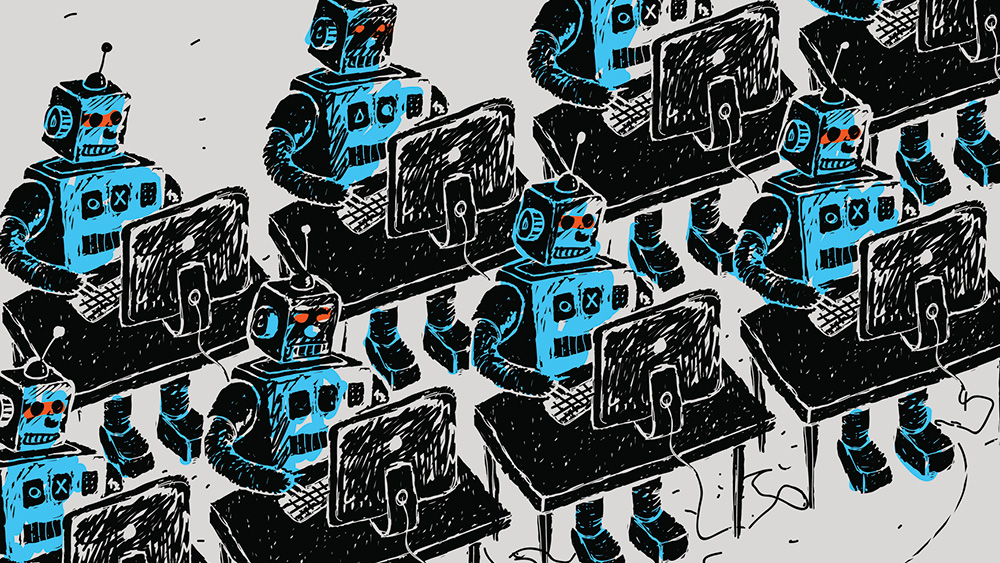
Botnet of more than 17 million devices dismantled
Dutch authorities dismantled a botnet comprising over 17 million devices managed by 200 servers, after a security researcher reported it. The botnet was linked to ASOCKS, a Russia-based residential proxy service. The infrastructure was hosted in the Netherlands and was seized by police from a hosting provider. Residential proxies obscure users' identities and locations, enabling DDoS attacks, phishing, and other cybercrime. In 2024, security firm Human had found evidence tying a botnet called Proxylib to ASOCKS, including 28 Google Play apps that enrolled up to 190,000 devices without user consent. The method by which the 17 million devices were compromised remains unclear, though possibilities include software vulnerabilities and malicious apps.
Why it matters
This is a significant takedown given the sheer scale of 17 million compromised devices, highlighting how residential proxy services can serve as massive enablers of cybercrime. The connection to ASOCKS and the earlier Proxylib findings by Human Security paint a troubling picture of how commercial proxy services can operate in a gray area that facilitates criminal activity. The fact that malicious apps were distributed through Google Play underscores ongoing challenges with app store security. T…
TechCrunch AI

What happens when companies become too AI-pilled?
TechCrunch's Equity podcast discusses the growing phenomenon of companies becoming overly enthusiastic about AI adoption, which Box founder Aaron Levie calls 'AI psychosis.' The article highlights that executives deciding AI can replace workers often don't understand what those jobs truly involve. Key examples include ClickUp cutting 22% of its workforce in favor of AI agents, tech layoffs in 2026 nearly matching all of 2025's totals, and DuckDuckGo installations rising 30% as users reject Google's forced AI integration into search. The podcast explores the tension between AI optimists and AI skeptics, suggesting both perspectives have merit simultaneously.
Why it matters
This article captures an important and increasingly visible tension in the tech industry: the gap between executive enthusiasm for AI and the practical reality of what AI can and cannot replace. The term 'AI psychosis' coined by Aaron Levie is apt — there's a real pattern of decision-makers who are furthest from the actual work being the most eager to automate it away. The ClickUp example of cutting nearly a quarter of its workforce for AI agents feels like a cautionary tale in the making. The…
The Verge AI

Tech companies desperately want to film you doing chores
AI training startup Shift is offering free home cleaning to New Yorkers in exchange for filming its cleaners performing household chores. The footage is intended to train robots to perform domestic tasks. Unlike text and image data that could be scraped from the internet, physical-world data for robotics is much harder to obtain, creating a significant bottleneck for companies developing physical AI. This has led to startups like Shift finding creative ways to collect real-world data showing humans performing everyday tasks like scrubbing dishes, wiping counters, and mopping floors, as teaching robots to handle the complexities of the physical world — understanding space, motion, force, friction, and varied materials — remains extremely challenging.
Why it matters
This is a fascinating development that highlights the next frontier of AI data collection. While the free cleaning offer sounds appealing, it raises important questions about privacy, consent, and the value of personal data. It's notable that unlike the text and image scraping era, where creators were often not compensated, the physical nature of this data collection forces companies to actually engage with and compensate people in some form. However, the exchange of intimate footage of one's h…
TechCrunch AI

After Nvidia’s $20B not-acqui-hire, AI chip startup Groq reportedly raising $650M
AI chip startup Groq is reportedly raising $650 million from existing investors as it pivots to focus on its AI inference neocloud business. This follows a $20 billion not-acqui-hire deal with Nvidia in December, which involved senior Groq employees departing to Nvidia and the licensing of Groq's hardware technology. That deal paid out Groq's investors in cash. Now, under interim CEO Adam Winter and CFO Matt Eng, Groq is seeking funding to grow its inference cloud business, which lets developers and enterprises host inference-heavy AI applications. Backers Disruptive and Infinitium have reportedly agreed to fill the round if other existing investors decline their pro-rata shares.
Why it matters
This is a fascinating case study in how AI startups can extract value even without a traditional acquisition. Groq essentially monetized its talent and IP through Nvidia's $20B deal, paid out investors handsomely, and is now asking those same investors to reinvest in a leaner, refocused company. The pivot to inference cloud services makes strategic sense — inference demand is outpacing training demand as AI deployment scales. However, there are significant concerns: the company lost key senior…
NY Times
Sky-High I.P.O. Pricing Isn’t Great for Real People
The article discusses how sky-high IPO valuations for companies like SpaceX, OpenAI, and Anthropic tend to result in poor investment outcomes for ordinary retail investors, as these companies enter public markets at prices that leave little room for growth for everyday buyers.
Why it matters
This article raises a valid and important concern for retail investors. Historically, when companies go public at extremely lofty valuations, much of the upside has already been captured by early-stage private investors, venture capitalists, and institutional players. Ordinary investors buying in at inflated IPO prices often face disappointing returns or significant downside risk. The piece serves as a useful cautionary reminder that hype-driven valuations in sectors like AI and space technolog…
From X/Twitter
- Hila Shmuel says she shipped 60 features in 60 minutes without touching code, using an HTML + AI workflow where Claude acted as her head of product.
- Leaked screenshot shows Microsoft redesigning Copilot into a super app with an OpenClaw-like agent called Scout, according to Alex Heath.
- The feature that shipped alongside Opus 4.8 might matter more than the benchmarks: Dynamic Workflows in Claude Code let agents adapt their own execution plans mid-task.
- Opus 4.8 lets you add system instructions mid-conversation without breaking the prompt cache — more cache hits, lower cost and latency on API calls.
- Someone coded a Mac app that automatically applies icons to folders based on their names, and nobody seems to be talking about it.
- Meng To tested Opus 4.8 on landing page design — says it can produce beautiful pages but requires heavy prompting, and it's a little worse than GPT 5.5.
From Reddit/HN/YC
- [Hacker News] Spending a weekend in Claude Design before touching Claude Code saved three weeks of development time.
- [Hacker News] A $2k AI-generated film is about to debut at Tribeca — proof the floor for entry keeps dropping.
- [Hacker News] xPrize launches a hackathon with a $2M prize pool backed by Google.
- [Hacker News] Graham Helton wrote an excruciatingly detailed guide to SSH that earns the adjective.
- [Hacker News] Max Planck researchers figure out how dendrites shorten the lifespan of solid-state batteries — and how to fight back.
- [Hacker News] Totpgate uses single-packet authorization via TOTP — one UDP packet, no open ports, no VPN.