Business, Deals & Funding
Claude Code Changelog
v2.1.158
Version 2.1.158 of Claude Code makes Auto mode available on Bedrock, Vertex, and Foundry platforms for Opus 4.7 and Opus 4.8 models. Users can opt in to this feature by setting the environment variable CLAUDE_CODE_ENABLE_AUTO_MODE=1.
Why it matters
This is a small but meaningful update that extends Auto mode support to additional cloud platforms and model versions. It's a positive step for enterprise users who rely on Bedrock, Vertex, or Foundry, as they can now access Auto mode functionality that was presumably previously limited to other configurations. The opt-in approach via environment variable is sensible for a feature still being rolled out.
TechCrunch AI

SoftBank says it will invest up to €75 billion to build French data centers
SoftBank Group announced plans to invest up to €75 billion (approximately $87 billion) to expand data center capacity in France, aiming to develop and operate up to 5 gigawatts of additional capacity. The first phase involves building data centers in Dunkirk (Loon-Plage), Bosquel, and Bouchain, delivering 3.1 gigawatts to the Hauts-de-France region by 2031. SoftBank, an investor in and customer of OpenAI, calls this its largest AI infrastructure investment in Europe. French economic minister Roland Lescure praised the move as supporting President Macron's ambition to position France as a leading AI destination. The article notes growing opposition to data center construction in the U.S. over environmental and electrical grid concerns, while SoftBank has also announced plans for an Ohio data center powered by a 9.2 gigawatt natural gas plant.
Why it matters
This is a staggering commitment that underscores how the AI infrastructure arms race has gone fully global. The €75 billion figure is enormous — roughly equivalent to the GDP of a small European country — and signals SoftBank's conviction that AI compute demand will continue scaling dramatically. France stands to benefit significantly from the jobs and economic activity, and Macron's government has clearly been effective at courting these investments. However, there are legitimate concerns wort…
Guardian AI
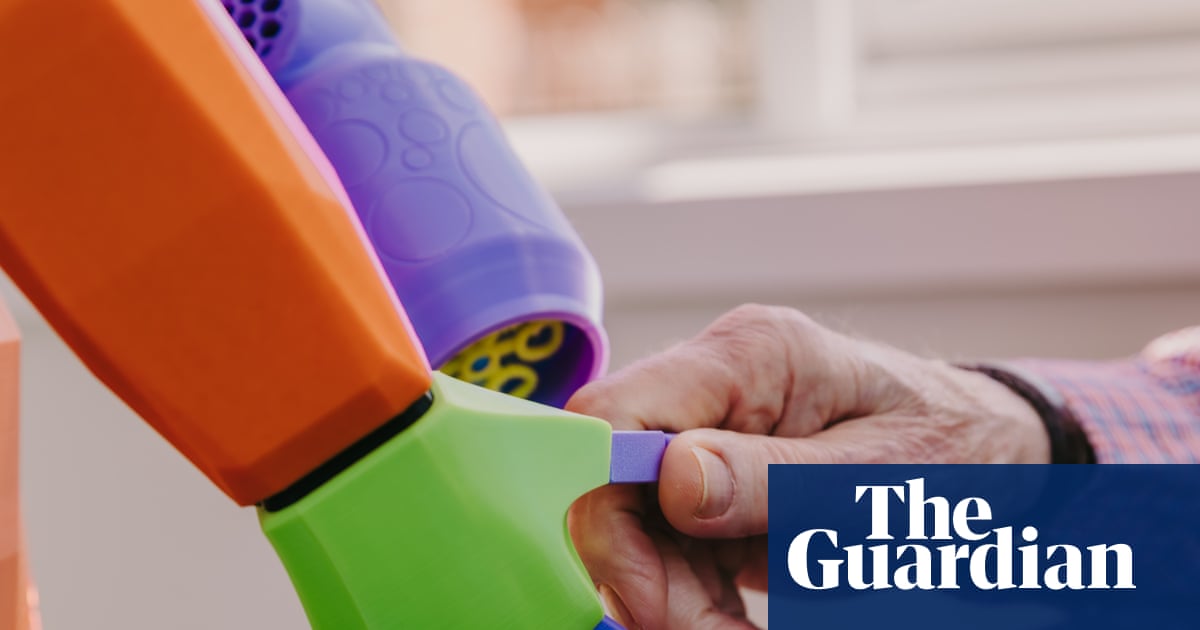
An industry targeting Australia’s ageing population is growing, but can AI deliver more humanity in aged care?
The article discusses the growing use of AI companion robots and virtual experiences in Australia's aged care sector, aimed at addressing loneliness among the ageing population. While these technologies are being introduced to improve quality of life for elderly residents, experts like Prof Wendy Moyle emphasize that technology should supplement rather than replace human care and interaction, though she acknowledges some uncertainty about the future role of humans in aged care.
Why it matters
This article raises important and timely questions about the intersection of technology and human care. The tension between leveraging AI to address real problems like loneliness in aged care and the risk of dehumanizing care for vulnerable populations is a critical ethical issue. The headline effectively captures this paradox — whether AI can deliver 'more humanity.' Prof Moyle's hesitant correction from 'you'll never get rid of humans' to 'I don't think we'll get rid of humans' is a telling a…
Lenny's Newsletter

🧠 Community Wisdom: Catching people using AI during an interview, org design when everything lives in one person’s head, when to rename your product, from nurse to health-tech PM, and more
This is a paid subscriber-only edition of Lenny's Newsletter's 'Community Wisdom' series (#187), published on May 30, 2026. The post highlights helpful conversations from their members-only Slack community, covering topics including: detecting AI use during interviews, organizational design challenges when institutional knowledge is concentrated in one person, deciding when to rename a product, and transitioning from nursing to health-tech product management. The full content is behind a paywall and not accessible without a paid subscription.
Why it matters
The topics teased in the title are genuinely interesting and timely — especially catching AI use in interviews and the 'bus factor' org design problem. However, since the actual content is entirely paywalled, there's nothing substantive to evaluate. The headline does a good job of surfacing real, practical questions that product managers and leaders face. It's frustrating that there's no preview or excerpt to assess the quality of the advice. Based on Lenny's Newsletter's generally strong reput…
TechCrunch AI

‘What a joke’: Github Copilot’s new token-based billing spurs consternation among devs
GitHub Copilot is switching from flat-rate subscription billing to token-based billing starting June 1, 2026, causing significant backlash from developers. Some users report projected cost increases from around $29-$50/month to $750-$3,000/month. Critics are divided: some blame Microsoft for encouraging heavy usage then changing the pricing model, while others argue that only 'vibe coders' who lack real development skills would burn through enough tokens to see such dramatic increases. Microsoft has not commented on the changes.
Why it matters
This pricing shift feels like a classic bait-and-switch that was probably inevitable. Microsoft almost certainly subsidized Copilot heavily to build market dominance and user dependency, and now they're monetizing that lock-in. The defenders who say 'real developers won't be affected' are partially right — vibe coding does burn excessive tokens — but they're missing the bigger picture. Microsoft explicitly designed and marketed Copilot to encourage exactly this kind of heavy agentic usage, with…
TechCrunch AI

Meta is reportedly developing an AI pendant
Meta is reportedly developing an AI-powered pendant, building on its 2025 acquisition of Limitless, an AI device startup that made a wearable pendant for recording conversations. According to a memo viewed by The Information, Meta plans to begin testing the device within the next year. The company is also expanding its AI glasses lineup and launching a 'Wearables for Work' business subscription. These hardware initiatives aim to improve the performance of Meta's Reality Labs division, which lost $4 billion in Q1 2026. The article notes that earlier AI wearables from other companies have failed to gain consumer traction due to privacy concerns and limited usefulness, though competitors like OpenAI continue pursuing similar products.
Why it matters
Meta's push into AI wearables feels like a natural extension of its hardware ambitions, but the track record of AI pendants and similar devices is not encouraging. The Humane AI Pin and Rabbit R1 both flopped, and a pendant that records your conversations raises immediate and significant privacy concerns — both for the wearer and especially for the people around them. That said, Meta's acquisition of Limitless and its existing success with Ray-Ban Meta smart glasses give it a stronger foundatio…
TechCrunch AI

I put Google’s 24/7 AI assistant Gemini Spark to work, and it’s actually pretty useful
TechCrunch reviews Google's new 24/7 agentic AI assistant Gemini Spark, which runs on cloud virtual machines and integrates with Google productivity apps like Gmail, Calendar, Docs, Sheets, and Slides. The reviewer tested it for real-world tasks like finding shopping deals and coupons at local drugstores. While Spark showed promise in automating everyday tasks such as inbox summaries, task recaps, and weekend planning, the reviewer found it useful but questioned why Google made it a separate branded product rather than integrating it into existing Gemini offerings. The article notes that Spark differentiates itself from competitors like OpenClaw by not requiring users to keep their machines running, as it operates on cloud VMs. However, Google's suggested personal use cases assume users are highly organized scheduling types, and AI accuracy issues with details remain a concern.
Why it matters
The article presents a balanced but somewhat skeptical take on Gemini Spark. The reviewer genuinely finds it useful for certain tasks like shopping deal research, but raises valid concerns about its positioning as a standalone product and its somewhat contrived personal productivity use cases. The writing has a relatable, slightly humorous tone that effectively highlights the gap between how tech companies imagine people live versus how they actually do. The review is incomplete (the article ap…
Guardian AI

Anthropic’s alliance with pope on AI harms: all in good faith or ‘Vatican-washing?’
Anthropic has formed an alliance with Pope Leo XIV and the Vatican regarding AI harms. The Pope's first major written teaching addressed AI threats including worker displacement, war acceleration, and environmental exploitation. Experts question whether Anthropic's engagement with the Vatican is genuine or amounts to 'Vatican-washing' — creating positive PR discourse without substantive critical examination of AI's risks.
Why it matters
This raises legitimate concerns about whether corporate engagement with moral authorities like the Vatican serves as genuine ethical commitment or sophisticated reputation management. Anthropic has positioned itself as the 'safety-focused' AI company, and aligning with the pope could reinforce that brand image without necessarily translating into meaningful policy changes. The term 'Vatican-washing' aptly captures the risk: using the moral weight of a religious institution to create a halo effe…
From X/Twitter
- Someone paired a DGX Spark and a Mac Mini M4 to split AI inference — Nvidia handles prompt processing, the Mac handles token generation.
- A security scanner for AI agent skills that detects vulnerabilities, malicious patterns, and risks before they ship.
- An Anthropic engineer built a workflow where you wake up and review what Claude Code shipped overnight — full demo in 22 minutes.
- Eric Siu shares high-leverage Claude Code workflow prompts for revenue operations — CRM analysis, call transcripts, the works.
- Eric Siu says enterprises don't want to build their own AI — they want you to do it for them with managed revenue agents.
- Every's team lays out a weekend guide to leveling up your compound engineering skills across engineering, GTM, and ops.
From Reddit/HN/YC
- [Hacker News] Tim May's 1997 paper on untraceable digital cash, information markets, and BlackNet reads like a prophecy.
- [Hacker News] UC Berkeley Law has imposed a blanket AI ban effective summer 2026.
- [Hacker News] A deep dive into how thread locals actually work on macOS via dyld.
- [Hacker News] Viral video shows an evolved bird nest design that leaves snakes with almost no way in.
- [Hacker News] Blue Origin faces months of delays after a rocket explosion damaged its launch pad.
- [Hacker News] The U.S. military says it found a way to down a drone without spending $1M.