Business, Deals & Funding
Claude Code Changelog
v2.1.162
Version 2.1.162 of Claude Code includes several improvements: the `claude agents --json` command now shows what a waiting session is blocked on via a `waitingFor` field; explicitly listing Grep/Glob in `--tools` now properly provides dedicated search tools on native builds; the `/effort` command now confirms when a chosen level will persist as default; and clicking slash commands in autocomplete now fills them into the prompt rather than executing immediately, requiring Enter to run.
Why it matters
This is a minor but thoughtful quality-of-life update. The `waitingFor` field for agents is genuinely useful for programmatic monitoring of multi-agent workflows. Fixing the silent ignore of Grep/Glob tool names is a good bug fix that could have been confusing users. The slash command autocomplete change is a smart UX improvement that prevents accidental command execution. Overall, these are small polish items that show attention to developer experience details.
Guardian AI

‘Happiness is not just about GDP’: ambitious plan or utopia?
The article discusses the World Justice Report, published in June 2026, which outlines a sweeping vision for building a prosperous, equitable world within safe planetary boundaries. The report presents an alternative to dystopian trajectories by proposing ways to achieve wellbeing and justice beyond traditional GDP metrics. While some question its credibility, proponents argue the alternative future without such a plan is far more bleak. The report is described as rooted in eco-socialist thinking and academic research, setting out an ambitious framework for planetary survival that prioritizes equality and habitability.
Why it matters
This article touches on an increasingly important debate about redefining progress beyond GDP. The concept of measuring societal success through wellbeing, equity, and environmental sustainability rather than purely economic output is gaining mainstream traction. While critics may dismiss such reports as utopian, the framing is fair: the status quo trajectory of ecological degradation and rising inequality is itself a kind of dystopia. The real question is not whether such visions are idealisti…
Guardian AI

Smartglasses and earpieces may worsen exam cheating in schools, says Ofqual
Ofqual chief Ian Bauckham has warned that wearable technology such as smartglasses and invisible earpieces could increase exam cheating in England's GCSE, AS, and A-level exams. He indicated that stronger checks will likely be needed to protect the integrity of these qualifications. Ofqual is also scrutinising courses for potential misuse of AI by students.
Why it matters
This is a legitimate and growing concern. As wearable technology becomes smaller, more discreet, and more capable — especially with integrated AI assistants — traditional exam invigilation methods will become increasingly inadequate. Regulators like Ofqual are right to raise the alarm proactively. However, the deeper question is whether the traditional timed, closed-book exam format itself remains fit for purpose in an era where information access is ubiquitous. Rather than engaging in an endle…
Guardian AI

My year with the robots: how Joanna Stern let AI into her home, work – and heart
Tech journalist Joanna Stern spent all of 2025 as a self-described 'lab rat,' integrating artificial intelligence into nearly every aspect of her life — from answering texts and choosing meals to editing the book she was writing about the experiment itself. While some AI applications proved useful and others fell short, it was her experience with a chatbot companion that had the most profound emotional impact on her.
Why it matters
This is a fascinating and timely piece of experiential journalism that highlights both the practical utility and the deeply personal, sometimes unsettling implications of living with AI. The fact that a chatbot companion was the most emotionally affecting part of the experiment speaks volumes about where AI's real disruption may lie — not just in productivity, but in human connection and emotional dependency. It raises important questions about boundaries, authenticity, and what it means to for…
Guardian AI
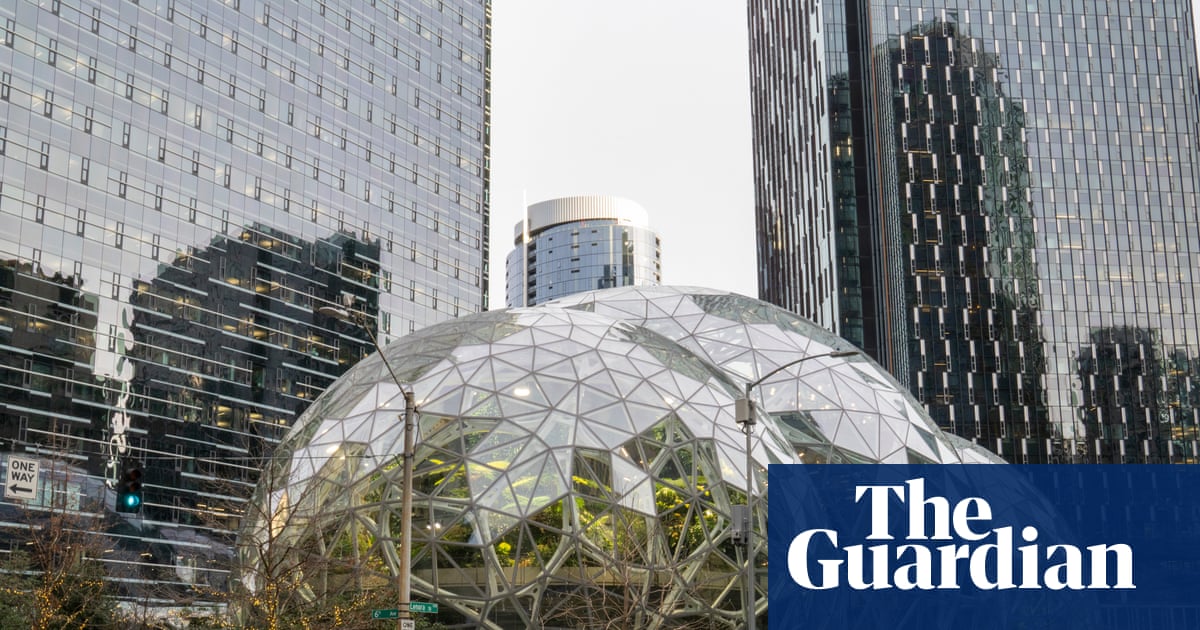
Seattle, home to Amazon and Microsoft, poised to pass moratorium on new datacenters
Seattle's city government is poised to pass a year-long moratorium on new datacenter construction, making it the largest US city to consider such a ban. Four companies had sought to build five large datacenters that would have consumed approximately a third of the city's current daily electricity demand. The measure represents a significant rebuke to big tech amid growing local concerns over the energy and resource demands of the AI boom.
Why it matters
This is a significant development that highlights the growing tension between the rapid expansion of AI infrastructure and the communities that bear the environmental and resource costs. Seattle, as the home base of Amazon and Microsoft, passing such a moratorium sends a powerful symbolic message. The fact that five proposed datacenters would consume roughly a third of the city's daily electricity is a staggering figure that underscores why residents and local officials are pushing back. While…
TechCrunch AI

Lovable signs multiyear deal with Google Cloud to up usage 5x, source says
Lovable, a fast-growing Stockholm-based vibe-coding startup, has signed an expanded multiyear deal with Google Cloud involving a fivefold increase in its cloud footprint, including AI usage. The deal grants Lovable expanded access to Anthropic's Claude and Google's Gemini models. Lovable's agent will be available through Google Cloud's Gemini Enterprise Agent Gallery, and the company will integrate with Wiz (Google's $32 billion acquisition) for real-time code security. Lovable reportedly crossed $400 million in annualized revenue in February 2026 with just 146 employees and claims over half of Fortune 500 companies use its product. The deal also ties into Google's $10 billion investment in Anthropic, as Lovable's growing usage could help Anthropic hit performance targets tied to an additional $30 billion commitment from Google.
Why it matters
This deal is a significant signal of how the vibe-coding and AI-assisted development space is maturing into serious enterprise territory. Lovable's revenue numbers are extraordinary — $400M ARR with 146 employees represents one of the most capital-efficient growth stories in tech. The strategic layering here is notable: Google benefits by driving cloud consumption, Anthropic benefits by hitting usage targets tied to massive additional funding, and Lovable benefits from enterprise distribution t…
Guardian AI

SpaceX targets biggest ever stock market debut, putting Musk on course to be trillionaire
SpaceX is planning an IPO that could raise approximately $75 billion, which would make it the largest initial public offering in history. The listing, expected next week, would give SpaceX a market valuation of $1.77 trillion. If successful, founder Elon Musk, already the world's wealthiest person, could become the first trillionaire.
Why it matters
This would be a landmark financial event of extraordinary scale. A $75 billion IPO dwarfs previous records and reflects the enormous investor appetite for space and satellite technology. However, the valuation raises questions about whether it is grounded in fundamentals or driven by speculative enthusiasm around Musk's brand and SpaceX's Starlink revenue potential. Musk becoming a trillionaire would be a symbolic milestone that will likely intensify debates about wealth concentration, the infl…
NY Times
SpaceX IPO to Be Largest Ever at $135 Share Price
The article reports that SpaceX is set to go public at a share price of $135, which would make it the largest IPO ever, surpassing Saudi Aramco's 2019 initial public offering in both overall valuation and total funds raised.
Why it matters
I cannot verify whether this event has actually occurred. As of my knowledge cutoff, SpaceX had not conducted an IPO, and the article is dated June 2026, which is beyond my training data. The claim is plausible given SpaceX's enormous private valuation trajectory, but I cannot confirm its authenticity. Readers should verify this information through multiple reliable sources before acting on it, especially for investment decisions.
From X/Twitter
- VibeMarketer_ argues the harness debate is over: Claude Code now builds a custom harness for every task on the fly, decomposing work, spinning up sub-agents, and verifying output dynamically.
- Voxyz_ai threw a question at five agents and every conclusion was wrong — three fixes that actually worked: break the question first, lock the opposition, then break your own logic.
- MichLieben makes the case that cold outreach was never one job — list building, ICP scoring, intent signals, enrichment, copy — and argues every step now collapses into a single agent workflow.
- Four sub-agent patterns — codebase audit, research synthesis, writer-critic-reviser, and competitive intel — that Zephyr_hg says turn a Saturday into production-grade fluency.
From Reddit/HN/YC
- [Hacker News] Reuven Lerner distills 30 lessons from 30 years of freelancing into one list.
- [Hacker News] The largest free animated icon library for Vue ships with 523 Lucide motion icons.
- [Hacker News] Google publishes the developer guide for Gemma 4 12B, its latest open-weight model.
- [Hacker News] Swift's May 2026 edition rounds up the language's latest changes and additions.
- [Hacker News] Microsoft unveils Majorana 2, a new quantum chip built to accelerate the path toward agentic AI.
- [Hacker News] Jacob Kaplan-Moss on why sometimes the answer isn't clever code — it's embracing the grind.