Business, Deals & Funding
Guardian AI
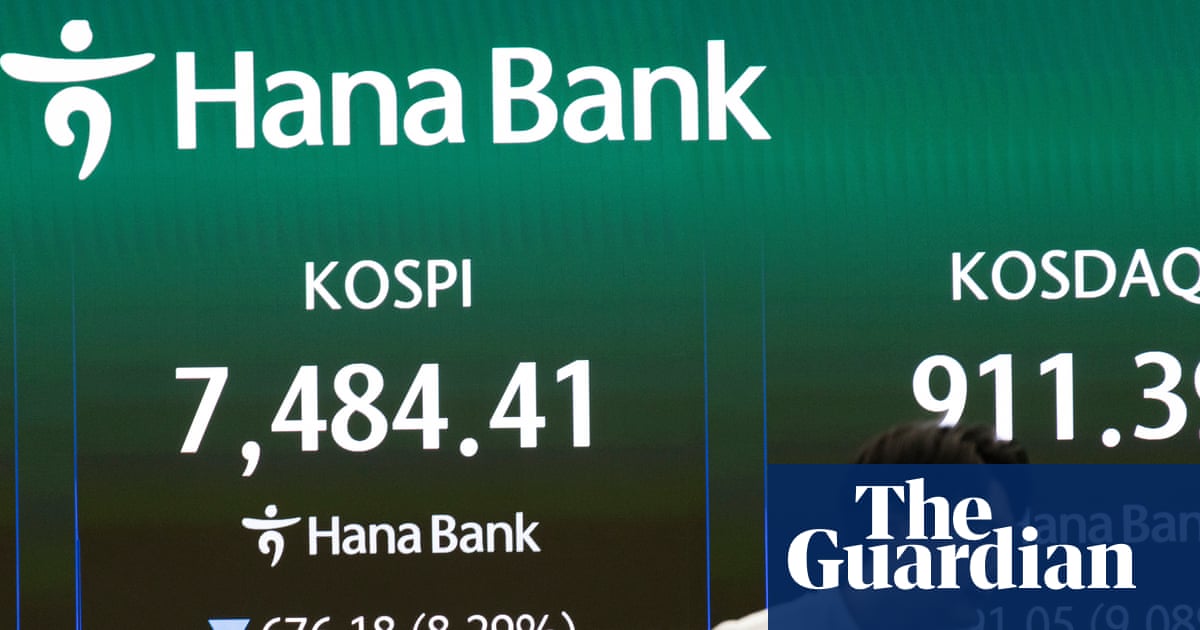
Stock markets fall as concerns persist over tech firms at heart of AI boom
Global stock markets fell on Monday following a sharp sell-off in US tech stocks late last week, driven by investor concerns about the prospects for technology companies at the heart of the AI boom. The declines were seen across Asian and European markets. Meanwhile, oil prices rose after Iran and Israel exchanged strikes, raising fears that a fragile truce in the Middle East could collapse.
Why it matters
This article highlights the intersection of two major risk factors currently weighing on markets: uncertainty about the sustainability of the AI-driven tech rally and geopolitical instability in the Middle East. The tech sell-off suggests investors are beginning to question whether AI-related valuations have gotten ahead of fundamentals, which is a healthy correction signal. The geopolitical tensions adding pressure through rising oil prices compound the bearish sentiment. Together, these facto…
Guardian AI

Aviva detects record £230m in bogus insurance claims as use of AI rises
Aviva detected a record £233m worth of bogus insurance claims in 2025, identifying over 18,400 suspect claims. Scammers are increasingly using artificial intelligence to fabricate car accident scenes, forge documents, and exaggerate damage in their fraudulent claims.
Why it matters
This story highlights a growing arms race between insurers and fraudsters, with AI serving as a double-edged sword — used both by criminals to create more convincing fake claims and likely by insurers to detect them. The record level of detected fraud suggests either fraud is genuinely increasing or detection capabilities are improving, likely both. This trend will inevitably push insurance companies to invest more heavily in AI-powered fraud detection, but it also raises concerns about legitim…
Guardian AI
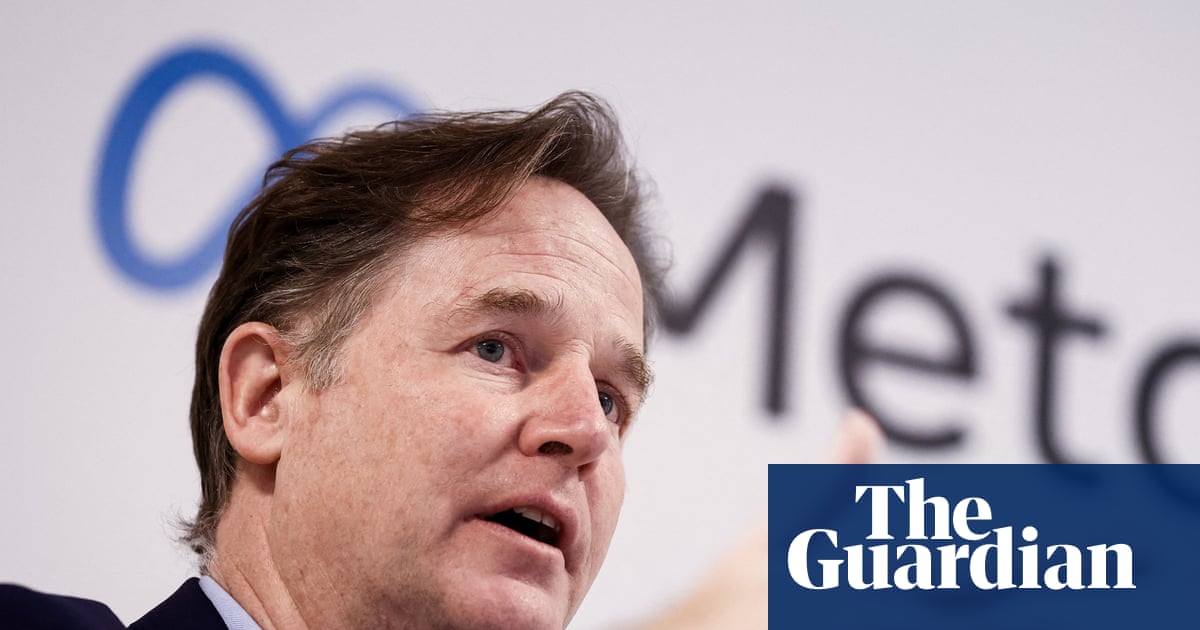
Silicon Valley including Meta has embraced Maga politics, says Nick Clegg
Nick Clegg, former UK deputy prime minister and Meta's former head of global affairs, stated that Silicon Valley companies including Meta have embraced MAGA politics, with some executives pivoting right for 'rather more self-interested' reasons. Clegg, who spent nearly seven years at Meta, said it felt like a good time to leave when he departed in March.
Why it matters
This is a significant statement from a high-ranking insider confirming what many observers have suspected: that Big Tech's rightward political shift is driven more by business opportunism than genuine ideological conviction. Clegg's characterization of 'self-interested' motives suggests companies are aligning with political power to secure favorable regulatory treatment and government contracts rather than acting on principle. This raises serious concerns about the integrity of platforms that s…
Guardian AI
Writing is an exercise in the art of persuasion. If we use AI we lose the art | Alan Finkel
Alan Finkel argues that writing is fundamentally an exercise in persuasion and critical thinking, and that relying on AI to produce written work undermines these essential skills. He references concerns raised by academics about students excessively using AI chatbots to write essays, resulting in graduates who lack the competencies required for their professions. Finkel advocates for transparency, asserting that readers deserve to know whether content they are reading was produced by a human or by AI.
Why it matters
Finkel makes a compelling and important point about the value of writing as a cognitive discipline, not just a means of producing text. The concern that AI-generated work erodes critical thinking and persuasive skills is well-founded — writing forces the author to organize thoughts, anticipate counterarguments, and develop clarity of reasoning in ways that simply prompting an AI does not. However, the argument could benefit from more nuance: AI can also serve as a tool to enhance writing when u…
TechCrunch AI

Is this the dawn of the Tokenpocalypse?
The article discusses Microsoft's significant pricing changes for GitHub Copilot, shifting from flat-rate to per-token charging, which Reddit users have dubbed the 'Tokenpocalypse.' TechCrunch's Equity podcast panelists explore how this reflects a broader trend in the AI industry: heavily subsidized AI products will increasingly pass real costs to customers as companies like Anthropic prepare for IPOs and face profitability questions. They note how quickly the cycle has moved — companies went from enthusiastically 'tokenmaxxxing' to imposing usage caps within months after realizing how expensive AI usage truly is. Uber is cited as an example of a company that blew through its AI budget far faster than expected. The panelists question whether AI labs can reduce costs fast enough to meet customer spending appetites, and note that original pricing like ChatGPT's $20/month was essentially a…
Why it matters
This is a predictable and important inflection point for the AI industry. The era of heavily subsidized AI usage was always unsustainable, and the shift toward real pricing was inevitable as companies pursue IPOs and investors demand paths to profitability. The 'Tokenpocalypse' framing is apt — many businesses built workflows and dependencies around artificially cheap AI, and the repricing will cause genuine disruption. The Uber anecdote is particularly telling: if a sophisticated tech company…
TechCrunch AI

Notion restores access to Anthropic after service disruption
Notion temporarily disabled all Anthropic AI models in its productivity tool after experiencing degraded performance and elevated failure rates with Anthropic's Opus 4.7 and 4.8 models. The issue was resolved within about 12 hours, with Notion's head of product clarifying it was a routine infrastructure disruption rather than a model quality issue. Anthropic confirmed a brief infrastructure problem caused elevated errors across multiple Claude models, which has since been fixed.
Why it matters
This is a fairly routine infrastructure incident that got amplified on social media because people wanted to read a deeper narrative about AI model quality into it. The fact that Notion's post was reposted 1,200 times suggests significant public interest in any signs of AI model degradation, reflecting the high stakes and scrutiny surrounding AI reliability as these models become embedded in critical productivity tools. The quick resolution and transparent communication from both companies is r…
TechCrunch AI

OpenAI is still working on that ‘super app’
OpenAI is developing a revamped version of ChatGPT as a 'super app' that will integrate coding tools and AI agents, aiming to compete more effectively with Anthropic among business customers and move closer to profitability before an IPO. The company is shifting away from standalone products like video generator Sora, which executives now call 'side quests,' to focus on turning ChatGPT into a gateway that funnels free users toward paid products like Codex. A senior employee declared 'chat is dead,' and OpenAI's product lead described the vision as a personal agent capable of helping users across all aspects of their lives.
Why it matters
This strategic pivot makes sense given OpenAI's need to monetize its massive user base ahead of an IPO, but the 'super app' concept carries significant risks. Bundling everything into one app can create a bloated, unfocused product that does many things adequately but nothing exceptionally well — a lesson learned by many tech companies before. The declaration that 'chat is dead' feels premature and performative; conversational AI remains the core interaction model, and rebranding it doesn't cha…
Lenny's Newsletter
Father of the iPod and iPhone on building taste, judgment, and creativity in the AI era | Tony Fadell
This is a podcast episode page from Lenny's Newsletter featuring an interview with Tony Fadell, creator of the iPod, co-creator of the iPhone, and founder of Nest. The conversation covers topics including the internal debates about whether the iPhone should have a physical keyboard, the importance of opinion-based decisions for v1 products, why marketing matters as much as the product itself, why voice will eventually become the primary AI interface, and the risk of 'cognitive surrender' to AI. The page includes links to referenced materials, recommended books (including Fadell's own 'Build'), and notes that full takeaways are behind a paywall for paid subscribers.
Why it matters
The episode appears to be a high-quality, substantive conversation with one of the most consequential product builders of the last few decades. The topics covered—opinion vs. data decisions, the 'three generations' rule, and cognitive surrender to AI—seem genuinely relevant and timely for product builders. Tony Fadell's track record (iPod, iPhone, Nest) gives him rare credibility to speak on taste, judgment, and building hardware-software products. However, the actual content and key takeaways…
From X/Twitter
- Google Gemma 4 + Ollama + Hermes gives you a fully offline local agent stack — no API bills, no cloud dependency, no data leaving your machine.
- Avi Chawla distills two years of fine-tuning LLMs into 15 techniques from LoRA to QLoRA and beyond — bookmark-worthy if you're training your own models.
- Lenny Rachitsky makes the case that distribution is the new moat.
- Microsoft is layering context into agents with Work IQ, Fabric IQ, Foundry IQ, and Web IQ — the companies that master the IQ layer will win the agent era.
- Dharmesh Shah argues the missing layer in AI adoption isn't access — it's teaching AI how the company already does its best work.
- Andrej Karpathy spent two hours showing how he actually uses AI day to day — just briefing the machine in plain language and iterating.
From Reddit/HN/YC
- [Hacker News] Image-3D converts a photo into a 3D Gaussian splat that runs entirely in the browser.
- [Hacker News] UK PM Starmer moves to ban social media for under-16s, with legislation expected by 2026.
- [Hacker News] Josh Collinsworth makes the case that LLMs encourage performative productivity — looking busy without meaningful output.
- [Hacker News] Free read-only script that scans your AWS account to find wasted cloud spend without touching anything.
- [Hacker News] DoomBench benchmarks data stacks by making them run Doom — because why not.
- [Hacker News] How ecotypes harbor the genetic memory of a species' evolutionary past.