Business, Deals & Funding
Guardian AI

Doctors and NHS could be sued for mistakes made by AI tools, report warns
The Medical Protection Society warns that under current UK law, doctors and the NHS can be held legally liable for medical negligence caused by errors made by AI tools used in diagnosing and treating patients. The organization is calling on ministers to overhaul the law to help medical professionals avoid liability when AI technology is responsible for mistakes that harm or kill patients.
Why it matters
This is a critically important issue that highlights a genuine gap in legal frameworks as AI becomes more integrated into healthcare. While patient safety must remain paramount and there should always be accountability when harm occurs, it seems unreasonable to hold individual doctors fully liable for errors generated by AI systems they didn't design and may not fully understand. At the same time, simply absolving everyone of responsibility would be dangerous. The solution likely requires a nua…
DATAVERSITY Smart Data

What Is AI Governance?
AI governance is the foundation for responsible development, deployment, and monitoring of AI within organizations, extending existing data governance to cover AI system accuracy, validity, and security. It translates ethical principles like fairness, transparency, and accountability into everyday procedures across all AI stages. The article emphasizes urgency: laws in Europe and U.S. states will require formal AI governance policies starting in the second half of 2026 and 2027, including the EU AI Act and ISO/IEC 42001. Gartner estimates 75% of regulated businesses risk fines exceeding 5% of revenue from manual compliance processes, yet only 18% of organizations have implemented formal AI governance programs. The article also argues that AI governance serves as an accelerator for AI projects rather than an obstacle, preventing project fragmentation and inefficiency.
Why it matters
This is a solid introductory overview of AI governance that effectively communicates the urgency of the topic, particularly with concrete regulatory deadlines and statistics. The framing of governance as an accelerator rather than a hindrance is a valuable perspective that could help overcome organizational resistance. However, the article reads more like a marketing piece for Dataversity's certification programs than a deeply informative resource — it's light on practical implementation detail…
Claude Code Changelog
v2.1.169
Version 2.1.169 of Claude Code adds a --safe-mode flag (and CLAUDE_CODE_SAFE_MODE environment variable) to start with all customizations disabled for troubleshooting. It also adds a /cd command to change working directory mid-session without breaking prompt cache, a disableBundledSkills setting and CLAUDE_CODE_DISABLE_BUNDLED_SKILLS environment variable to hide bundled skills/workflows/slash commands from the model, and fixes Up/Down arrow key behavior.
Why it matters
This is a solid incremental release focused on developer experience improvements. The safe-mode flag is particularly valuable for debugging issues caused by customizations like CLAUDE.md files, plugins, or MCP servers. The /cd command addresses a practical pain point of needing to change directories without losing prompt cache context. The ability to disable bundled skills gives power users more control over what the model sees. These are thoughtful quality-of-life improvements that show attent…
Guardian AI

World’s first wind-powered underwater datacentre starts operating in China
China has launched the world's first wind-powered underwater datacentre off the coast of Shanghai. The Shanghai Lingang undersea datacentre demonstration project, a joint effort between HiCloud Technology and China Communications Construction, began operations in May with a capacity of 24 megawatts. The facility is designed to use less power and water than traditional land-based datacentres, addressing the growing energy challenges posed by China's artificial intelligence boom.
Why it matters
This is a genuinely innovative approach to addressing two major challenges simultaneously: the surging energy demands of AI infrastructure and the environmental impact of datacentres. Underwater datacentres benefit from natural seawater cooling, which dramatically reduces the enormous water and energy consumption typically required for cooling. Pairing this with wind power makes the concept even more compelling from a sustainability standpoint. However, questions remain about long-term maintena…
TechCrunch AI

Why Apple’s slow-and-steady AI bet is starting to look pretty smart
Apple unveiled Siri AI, its biggest AI launch to date, integrating Google Gemini-powered capabilities deep into its software ecosystem. The update enables Siri to surface information from emails and texts, offer contextual suggestions via onscreen awareness, pull real-time web information, and work seamlessly across Apple devices with stored chat histories. Apple's SVP Craig Federighi positioned the company as prioritizing user-centric AI over racing for AI's sake, contrasting Apple's approach with competitors like OpenAI. The new Siri won't be available until later this year as a beta, but analysts note that embedding AI at the OS level could threaten competitors who distribute through Apple's App Store. The article frames Apple's deliberate, slower approach to AI as potentially smarter than the breakneck pace of rivals, given growing consumer ambivalence toward AI technology.
Why it matters
This article makes a reasonable case that Apple's patient approach to AI may prove strategically sound. Apple's greatest strength has always been integration — making technology feel seamless within its ecosystem — and embedding AI at the OS level rather than shipping standalone AI products plays directly to that strength. The Gemini partnership is pragmatic, acknowledging Apple doesn't need to build the best foundation model itself. The positioning against consumer AI anxiety is shrewd marketi…
TechCrunch AI

Mercor’s Brendan Foody calls out Sequoia, accusing it of ‘dual-pricing’ valuation tricks
Brendan Foody, co-founder of AI talent platform Mercor (valued at $10 billion), publicly accused Sequoia of a 'dual-pricing' valuation practice on X. He alleges that Sequoia invests in startups across two tranches — a larger amount at a lower valuation and a smaller amount at a much higher valuation — then only the higher 'headline' valuation gets publicized. Foody claims founders misrepresent these inflated valuations to employees and angel investors. TechCrunch cites examples including AI startup Serval, which announced a $1 billion Series B led by Sequoia while days earlier being valued at under $400 million in a Sequoia-participated Series A extension, and Aaru, where lead investor Redpoint backed at $450 million despite a $1 billion headline price. Sequoia partner Shaun Maguire pushed back, saying the practice has occurred roughly five times in his seven years at the firm and frami…
Why it matters
This is a significant and credible exposé of a practice that has real consequences for startup employees, angel investors, and the broader venture ecosystem. The dual-tranche pricing mechanism is essentially a form of valuation theater — it allows lead investors to get favorable economics while manufacturing inflated headline numbers that benefit both the VC's portfolio markups and the founder's fundraising narrative. Maguire's defense is notably weak: he frames it as market-driven but doesn't…
Guardian AI

Plan for AI legal assistants in England and Wales ‘cannot replace funding and staff’, lawyers say
David Lammy, the UK deputy prime minister, plans to announce a trial of AI-powered virtual legal assistants in crown courts in England and Wales aimed at reducing the backlog of court cases. Lawyers have warned that the technology should not be used as a substitute for adequate funding and additional court staff.
Why it matters
This is a significant development that highlights both the potential and the limitations of AI in the justice system. While AI assistants could help streamline administrative processes and reduce backlogs, lawyers are right to caution that technology alone cannot fix systemic underfunding and understaffing problems. The justice system deals with people's fundamental rights and liberties, so any AI deployment must be carefully managed to ensure accuracy, fairness, and accountability. There is a…
TechCrunch AI
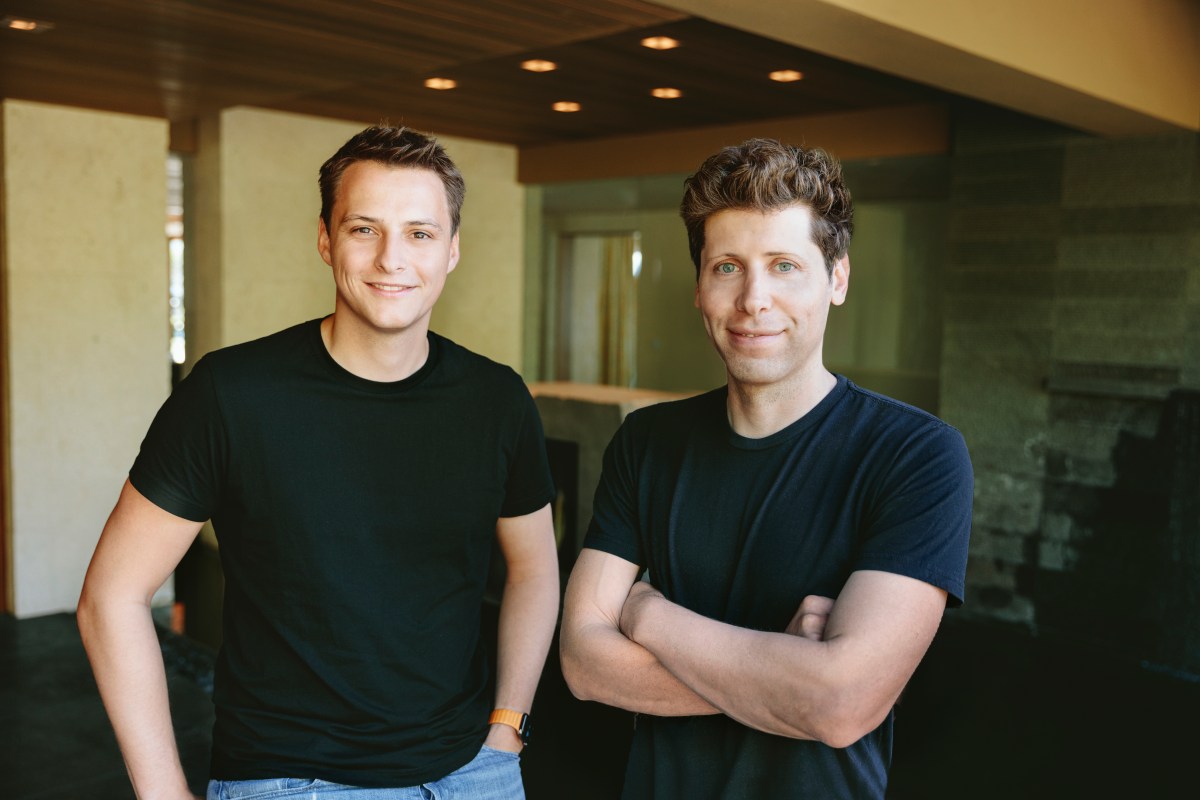
As OpenAI files for IPO, Sam Altman’s eye-scanning company is doing layoffs, report says
Tools for Humanity, Sam Altman's identity verification company known for its iris-scanning World orb and Worldcoin cryptocurrency, is reportedly conducting layoffs as it struggles to generate revenue. The news comes as Altman's other company, OpenAI, has filed for an IPO. Despite raising money at a $2.5 billion valuation from investors like Andreessen Horowitz and Bain Capital, Tools for Humanity has faced significant regulatory and ethical pushback internationally. Kenya banned the company from operating, South Korea fined it $830,000 for privacy violations, and concerns have been raised about offering people in developing countries roughly $50 in cryptocurrency in exchange for biometric iris data. In the U.S., companies like Tinder, Zoom, and Docusign have partnered with the project.
Why it matters
This outcome was entirely predictable. The fundamental premise of Tools for Humanity — convincing billions of people to hand over their irreplaceable biometric iris data to a startup, often in exchange for a small amount of volatile cryptocurrency — was always ethically dubious and commercially questionable. The regulatory backlash in Kenya, South Korea, and elsewhere reflects legitimate concerns about a company collecting some of the most sensitive personal data possible from vulnerable popula…
From X/Twitter
- Pawel Huryn argues if you already run n8n, you're halfway to dynamic workflows where Claude writes the glue between your agents.
- Martin Slaney makes the case that internal tools are the most underrated AI use case — here are 11 real ones people are building right now.
- Advice for agent builders: don't use loops, design state machines.
- Boris Cherny shares five tips for running Opus autonomously for hours or days — auto mode, dynamic workflows, and more.
- Open-source text-to-lottie skill lets Codex and Claude Code generate production-ready Lottie animations from a prompt.
- Mac-1, a 6.6B local model, searches files across 650GB of scattered data with 10/10 accuracy — making Finder and Spotlight look broken.
From Reddit/HN/YC
- [Hacker News] Apple rebuilt its entire on-device AI stack at WWDC 2026 — here's what changed under the hood.
- [Hacker News] Apple delays Siri AI in the EU for iOS 27 and iPadOS 27, blaming the Digital Markets Act.
- [Hacker News] Gigabyte crams 40 nodes into a single 1U chassis — ServeTheHome has the teardown.
- [Hacker News] Biber is a new ELF and PE binary inspector written in Zig.
- [Hacker News] Storytime brings session continuity to Claude Code, letting you pick up agentic coding sessions where you left off.
- [Hacker News] A detailed walkthrough of the RISC-V boot chain from silicon to Ubuntu 26.04 on the SpacemiT K3 board.