Business, Deals & Funding
The Verge AI

Deezer launches an AI music detector for other streaming services
Deezer has launched an AI music detector tool that allows users of any streaming platform to scan their playlists for AI-generated music. After being the first major streaming service to label AI-generated content and failing to get competitors to license its detection technology, Deezer is now offering the tool directly to consumers. Users visit Deezer's site, grant access to their streaming service (compatible with 20 platforms including Spotify, Apple Music, SoundCloud, and YouTube Music), and Deezer imports and scans their playlists for AI content, alerting them to any detections. The move comes as competitors like Apple and Spotify have opted for voluntary tagging systems rather than adopting Deezer's detection tech.
Why it matters
This is a clever strategic move by Deezer that serves dual purposes: it positions the company as a champion of human-created music while simultaneously functioning as a marketing tool that drives traffic and brand awareness. By requiring users to interact with Deezer's platform to scan their Spotify or Apple Music libraries, they're creating a touchpoint with potential subscribers. The underlying concern about AI-generated music flooding streaming platforms is legitimate, and Deezer deserves cr…
Claude Code Changelog
v2.1.172
This patch release adds several features and fixes: sub-agents can now nest up to 5 levels deep, AWS Bedrock region detection now reads from ~/.aws config files with /status showing the source, a search bar was added to the plugin marketplace browser, a model attribute was added to an OTEL metric, and a bug was fixed where sessions hitting 1M context without usage credits would get permanently stuck by now auto-compacting.
Why it matters
This is a solid incremental release with a good mix of improvements. The nested sub-agents feature (5 levels deep) significantly expands agentic capabilities. The AWS region config file fallback is a sensible quality-of-life fix that aligns with standard AWS SDK behavior. The most impactful fix is resolving the permanently stuck sessions at 1M context — that sounds like it was a serious usability bug. The plugin search bar is a nice UX addition as the marketplace grows. Overall, a well-rounded…
DATAVERSITY Smart Data
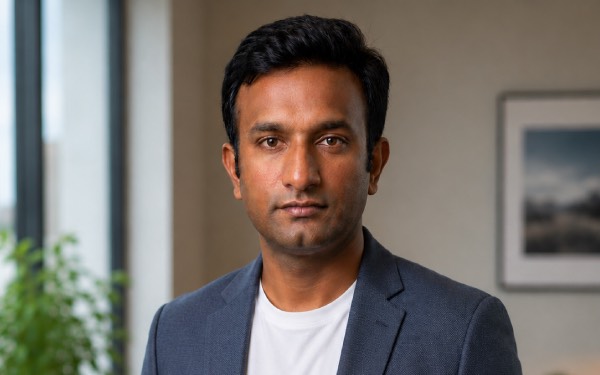
Why Your Semantic Layer Will Make or Break Your AI Strategy
The article argues that the semantic layer—the intermediary between raw data and business meaning where definitions, metrics, and calculation rules reside—is the critical foundation for any enterprise AI strategy. Author Jose Prabhu Michael contends that most enterprises have poorly governed, fragmented semantic layers built for human-mediated BI consumption, not machine-speed AI decision-making. While human analysts can recognize data discrepancies and ask clarifying questions, AI agents will confidently produce fluent but incorrect outputs from conflicting or poorly defined data. Drawing on consulting experience across retail, government, and banking, the author describes a recurring pattern: AI tools impress in demos but quickly lose user trust when they return inconsistent or inaccurate results traceable to ungoverned data foundations. The article emphasizes that this is fundamental…
Why it matters
This article addresses a genuinely important and underappreciated problem in enterprise AI adoption. The core thesis—that AI amplifies data governance failures at machine speed by removing the human interpretive layer that previously compensated for semantic inconsistencies—is both accurate and well-articulated. The author's practical experience lends credibility, and the examples of AI returning conflicting sales figures or recommending discontinued products are relatable scenarios that effect…
Guardian AI

Labor to set terms for datacentre and AI growth as it vows not to repeat mistakes of resources boom
Australia's Assistant Minister for the Digital Economy, Andrew Charlton, says the government intends to set terms for the rapidly growing AI and datacentre industry to avoid repeating the mistakes of the resources boom. While acknowledging that concerns over resource usage from datacentres are legitimate, Charlton argues Australia cannot afford to ignore the significant economic opportunities presented by AI and datacentre growth. The Labor government aims to proactively manage this expansion rather than letting it develop unchecked.
Why it matters
This signals a pragmatic and potentially wise approach from the Australian government. The resources boom left Australia with significant economic benefits but also environmental damage, infrastructure strain, and a two-speed economy that disadvantaged non-mining sectors. Applying those lessons to the datacentre and AI boom—particularly around energy consumption, water usage, and ensuring broad economic benefit—could position Australia well. However, the challenge will be in execution: setting…
TechCrunch AI

Opendoor’s India exit is fueling a bigger conversation about AI and outsourcing
Opendoor is shutting down its India operations less than two years after expanding there, with CEO Kaz Nejatian citing a shift toward smaller AI-native teams and bringing work back to the U.S. The move has sparked debate about whether AI is beginning to undermine the cost-arbitrage model that made India the world's largest Global Capability Center market, with over 2,100 centers employing 2.36 million people generating nearly $100 billion annually. Opendoor's global workforce shrank from 1,470 to 1,042 employees, with its non-U.S. staff dropping from 342 to 184. Investors and analysts are divided on whether this reflects AI replacing offshore jobs or simply broader cost-cutting, though outsourcing experts say AI is reducing the total operational labor companies need regardless of location.
Why it matters
This is a genuinely significant signal, though the narrative is somewhat muddied by Opendoor's broader financial struggles in a tough housing market. The company was already cutting costs everywhere, so attributing the India exit primarily to AI is convenient but incomplete. That said, the directional trend is real: AI tools are compressing the volume of routine operational work that justified large offshore teams, and the cost-arbitrage advantage of India diminishes when you need fewer humans…
TechCrunch AI

Anthropic’s Dario Amodei has just one direct report
Anthropic CEO Dario Amodei has revealed in a Bloomberg interview that he has only one direct report — his chief of staff. All other executives at the company, now valued at roughly one trillion dollars, report to his sister and co-founder Daniela Amodei, who manages day-to-day operations. This unusual structure allows Dario to focus almost entirely on strategy, culture, research direction, and his long-form writings about the future. The article contrasts this with OpenAI's Sam Altman, who has around half a dozen direct reports, and Nvidia's Jensen Huang, who has many dozens.
Why it matters
This is a fascinating organizational design choice that speaks volumes about how Anthropic operates. By delegating virtually all operational management to Daniela, Dario has essentially carved out a role that's more like a chief scientist-strategist than a traditional CEO. It's a luxury enabled by having a deeply trusted co-founder who also happens to be family. The arrangement likely works because Anthropic is still fundamentally a research-driven company where technical vision and safety phil…
NY Times
Microsoft C.E.O. Satya Nadella Says ‘Everyone Is a Stakeholder’ in A.I.
At The New York Times's Hard Fork Live event, Microsoft CEO Satya Nadella discussed the backlash against artificial intelligence and responded to President Trump's comments about Americans sharing in the wealth generated by A.I. companies, emphasizing that 'everyone is a stakeholder' in the development and impact of artificial intelligence.
Why it matters
The headline and framing suggest Nadella is attempting to position Microsoft as a responsible steward of AI technology amid growing public concern. The 'everyone is a stakeholder' rhetoric is a classic corporate strategy to deflect criticism while maintaining the status quo of concentrated corporate power and profit. While the sentiment sounds inclusive, it remains to be seen whether such statements translate into meaningful actions like profit-sharing, equitable access, or genuine accountabili…
OpenAI
How an astrophysicist uses Codex to help simulate black holes
The article describes how astrophysicist Chi-kwan Chan, a researcher at the University of Arizona and member of the Event Horizon Telescope (EHT) collaboration, uses OpenAI's Codex to help build and refine simulations of black holes. Chan's work involves modeling the plasma (superheated matter of electrons and ions) swirling around black holes near the event horizon. A major challenge is that in diffuse, hot regions near supermassive black holes, particles rarely collide and instead spiral around magnetic field lines, requiring simulations to track trillions of particles with extremely small timesteps. This has limited simulation realism for decades, even on the world's fastest supercomputers. Chan suspected new mathematical techniques could reformulate how simulations track particle motion to avoid calculating every tiny spiral directly, but exploring all mathematical possibilities man…
Why it matters
This is a compelling real-world application story that demonstrates how AI coding tools like Codex can accelerate scientific research in astrophysics. The problem is well-defined and genuinely important: simulating black hole plasma has been computationally intractable for decades, and using AI to explore mathematical reformulations is a clever approach. However, the article appears to be cut off before revealing the actual results or specific ways Codex was used, which is frustrating. It reads…
From X/Twitter
- Fable 5 lets any designer prompt a portfolio-grade landing page — and that's about to flood the market with top-tier design work.
- Someone extracted Fable 5's full system prompt and discovered that Fable 5 and Mythos 5 share the same underlying model.
- Marcin told Fable 5 to build three apps in one prompt — a Jarvis dashboard, an Apple Fitness clone, and a pixel-perfect hotel site — and it nailed all three.
- Claude Fable 5 is live: new model generation, new way of working. Here's the official getting-started guide for Claude Code and the platform.
- GlideOS now lets projects share data, files, secrets, and persistent memory across all apps in a project.
- Hermes Desktop App now works with Ollama — local AI agents on open-source models running 24/7 for free.
From Reddit/HN/YC
- [Hacker News] Anthropic makes Fable 5's invisible safeguards visible after community backlash over hidden system prompts.
- [Hacker News] SynCodeLive lets teams code, talk, and pair with AI in a single live session.
- [Hacker News] Phil Booth makes the case that agentic coding fails when developers lose their mental models of the codebase.
- [Hacker News] Framework delays the Laptop 13 Pro due to bugs — but sweetens the wait with a bonus for pre-order customers.
- [Hacker News] The security vulnerability bottleneck has moved — and most teams haven't updated their mental model of where risk actually lives.
- [Hacker News] Researchers evaluate LLM-generated code for domain-specific languages and find the results vary wildly by DSL complexity.