Business, Deals & Funding
Claude Code Changelog
v2.1.193
Version 2.1.193 of Claude Code adds the `autoMode.classifyAllShell` setting to route all shell commands through the auto-mode classifier rather than only arbitrary-code-execution patterns. It also adds auto-mode denial reasons to transcripts, denial toasts, and the `/permissions` recent denials view. Additionally, it introduces a `claude_code.assistant_response` OpenTelemetry log event containing the model's response text, which is redacted by default unless `OTEL_LOG_ASSISTANT_RESPONSES=1` is set (falling back to the `OTEL_LOG_USER_PROMPTS` setting).
Why it matters
This is a solid incremental update focused on improving observability and security controls. The `autoMode.classifyAllShell` setting is a welcome addition for organizations wanting tighter control over shell command execution. Surfacing denial reasons in multiple places improves the developer experience when debugging permission issues. The OpenTelemetry logging of assistant responses with sensible redaction defaults shows good attention to both observability needs and privacy concerns in enter…
Guardian AI
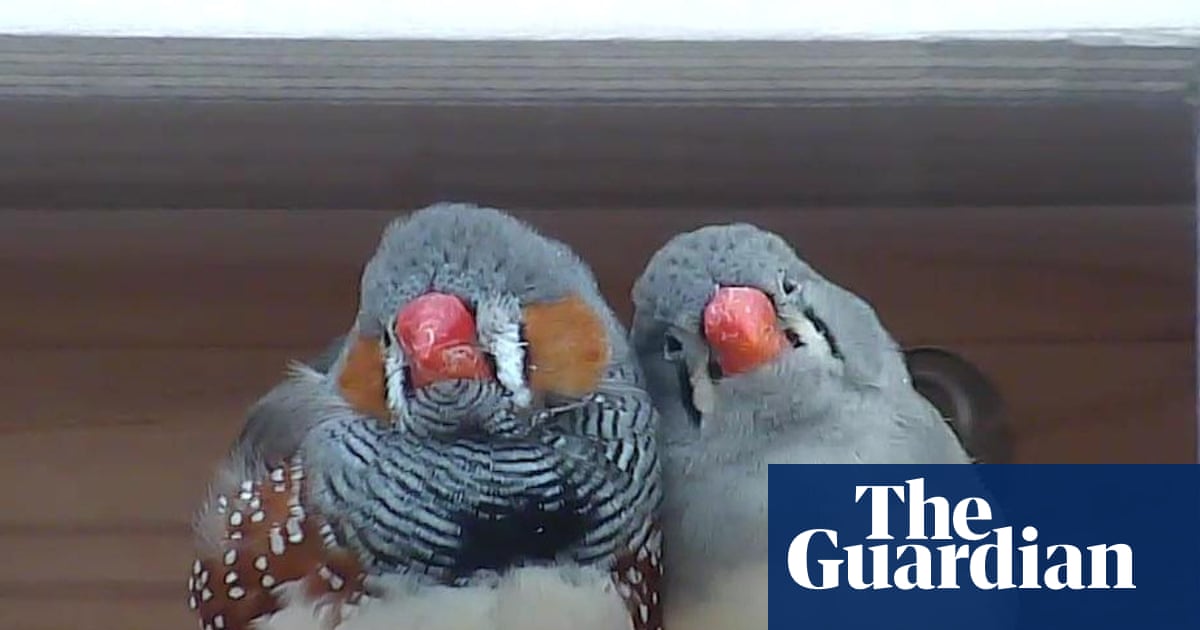
A little bird told her: scientist wins $100,000 prize for decoding birdsong
Dr. Julie Elie at UC Berkeley won the $100,000 Coller-Dolittle prize for two-way interspecies communication in 2026 for decoding the communication system of zebra finches. She identified 11 core calls the birds use to announce their identity, describe their activities, and employ individual signatures, advancing the goal of human-animal communication.
Why it matters
This is a fascinating and heartwarming story that highlights the remarkable complexity of animal communication systems. The fact that zebra finches have identifiable 'dictionaries' with individual signatures suggests a level of sophistication we often underestimate in non-human species. While true two-way human-animal conversation remains distant, this research represents meaningful scientific progress in understanding how other species encode and share information. The existence of a dedicated…
Guardian AI

Australian musicians sound warning note after Nick Cave, Kylie and many more slurped into AI training tool
Australian musicians including Paul Dempsey (Something For Kate) and Bernard Fanning are expressing concern after discovering their original songs were included in datasets used to train AI systems. A dataset search tool created by The Atlantic revealed that millions of songs, including works by prominent Australian artists like Nick Cave and Kylie Minogue, were scraped and used as AI training data without consent. Dempsey described the situation as rendering their work 'useless,' highlighting broader tensions between the music industry and AI developers over unauthorized use of copyrighted material.
Why it matters
This is a legitimate and important concern for musicians and creators worldwide. The unauthorized scraping of copyrighted music to train AI systems represents a fundamental issue of consent and fair compensation. Artists invest years of creative effort into their work, and having it absorbed into AI training datasets without permission or payment undermines both their economic rights and the value of human creativity. While AI development is inevitable, it should not come at the expense of crea…
TechCrunch AI

The White House is asking OpenAI to slow roll the release of its new model over safety concerns
The Trump administration is pressuring OpenAI to limit the release of its newest model, GPT 5.6, to a select group of approved partners rather than the general public, citing safety concerns. CEO Sam Altman told staff that the government would approve access 'customer by customer' during a preview period, with hopes for a broader release weeks later. OpenAI staff reportedly worked closely with the Office of the National Cyber Director and the Office of Science and Technology Policy on the rollout. This marks a shift from the administration's initially 'hands-off' approach to AI, following a recent executive order directing AI companies to voluntarily submit new models for government testing before public release. The article draws parallels to Anthropic's restricted release of its Claude Mythos frontier cyber model through its Project Glasswing program, noting ongoing debates about whet…
Why it matters
This article represents a significant development in the evolving relationship between government and AI companies. The shift from the Trump administration's initial deregulatory stance to actively gating model releases is notable and suggests that the capabilities of frontier models may genuinely be crossing thresholds that concern even regulation-averse policymakers. However, several aspects warrant skepticism. First, government-approved customer-by-customer access creates an obvious mechanis…
The Verge AI

OpenAI will delay GPT-5.6 after Trump administration request
The Trump administration has asked OpenAI to delay the broad release of its GPT-5.6 model due to security concerns, instead allowing only a limited preview for a small group of enterprise customers with government-approved access on a case-by-case basis. This follows a harsher action against Anthropic, which was issued an ultimatum to suspend access to its Mythos 5 and Fable 5 models under an export control directive prohibiting foreign nationals from using the technology. The uneven regulatory approach has raised concerns across the tech industry, contrasting with the administration's earlier promises of a pro-innovation, 'speed wins' stance on AI.
Why it matters
This article, dated June 2026, describes events that have not yet occurred as of my knowledge cutoff and cannot be verified. The scenario it presents — of the Trump administration selectively intervening in AI model releases with different treatment for different companies — raises significant concerns about government overreach and the potential for politically motivated favoritism in technology regulation. If accurate, the disparity between how OpenAI and Anthropic are treated suggests a trou…
TechCrunch AI

Patronus AI lands $50M to build ‘digital worlds’ that stress-test AI agents
Patronus AI, founded in 2023 by former Meta AI researchers Anand Kannappan and Rebecca Qian, has raised a $50 million Series B round led by Greenfield Partners, bringing total funding to $70 million. The company builds simulated 'digital world models' that create replicas of websites and internal systems to stress-test AI agents using reinforcement learning. Nearly every frontier AI lab and many startups are customers, and the company's revenue has grown 15-fold over the past year. Patronus currently focuses on software engineering and finance environments but plans to expand. The company differentiates itself from human-data firms by evaluating agent behavior without human involvement, comparing its approach to how Waymo trained autonomous vehicles in synthetic worlds before real-world deployment.
Why it matters
This is a well-positioned company addressing a genuinely critical need in the AI ecosystem. As AI agents move from simple Q&A to autonomous multi-step tasks, the gap between benchmark performance and real-world reliability becomes a serious liability for companies deploying them. The Waymo analogy is apt — you wouldn't put a self-driving car on the road without extensive simulation, and the same logic applies to AI agents handling financial transactions or software engineering tasks. The 15x re…
Ars Technica AI
Notion killing Skiff-influenced email app since most users use AI agents instead
Notion is shutting down Notion Mail, its Gmail client built largely by former Skiff team members, on September 22, 2026. The company says more than half of Notion Mail users already manage emails through AI agents without opening their inbox, so Notion is 'going all in on using agents to run your inbox.' Notion acquired encrypted email startup Skiff in February 2024, shut down Skiff's own email service within a year, then launched Notion Mail in April 2025 as a Gmail client. Now Notion Mail itself is being discontinued. Users' email history will remain in Gmail, but drafts and scheduled emails must be exported before the shutdown. HIPAA-reliant organizations must transition off by June 30, 2026. Notion may continue leveraging Skiff's talent and ideas for other productivity features but has moved away from direct email products.
Why it matters
This story is a fascinating and somewhat troubling case study in acquisition-driven product churn. Notion bought Skiff, killed its privacy-focused encrypted email, rebuilt it as a Gmail client without end-to-end encryption, and is now killing that too — all within about two years. The claim that most users prefer AI agents to handle email is a bold assertion that conveniently justifies sunsetting a product. It raises real questions: are users genuinely preferring AI agents, or is Notion simply…
TechCrunch AI

Anthropic’s Claude is winning over paid consumers, a market owned by ChatGPT
According to credit card transaction data from Indagari (analyzing ~28 million U.S. consumers), Anthropic's Claude has seen its paying consumer base and revenue grow approximately 75% since January 2026, gaining ground in a market dominated by OpenAI's ChatGPT. DataCamp reports that 'Claude' is now the most searched term on its platform, surpassing even 'AI,' with consumer demand for Claude courses outpacing ChatGPT courses 3-to-1 and increasing 18x in the last 30 days. Claude saw a growth spike in March 2026 after Anthropic refused to let its models be used by the Trump administration for mass surveillance and autonomous weapons. However, ChatGPT still maintains a commanding overall lead in both paying users and total consumer reach, per Sensor Tower and Indagari data. The article also notes a recent U.S. government ban on Anthropic's cybersecurity-focused models (Mythos 5 and Fable 5)…
Why it matters
This article presents a credible and data-backed picture of Claude's consumer growth trajectory, though it's important to note the data sources have limitations (credit card sampling rather than complete revenue figures). The 75% growth since January 2026 is impressive but comes from a much smaller base than ChatGPT, so the percentage gains should be contextualized. The DataCamp search and course demand data is a particularly interesting signal of shifting consumer mindshare. The article is not…
From X/Twitter
- Justin Ferriman argues WordPress faces accelerated marketshare loss if plugin security doesn't adapt to the AI era.
- A $49 dock clips onto the $599 Mac Mini and turns it into a 24/7 AI workflow server with ethernet, storage, and 700+ hours of uptime.
- Beyang Tang shows how Sourcegraph's unchanged code block detection dramatically reduces cognitive load when reviewing long diffs.
- Sam Altman in a 52-minute keynote: "To build with AI, you don't need a huge team. You need a good idea."
- Alex Lieberman polled 30 AI-pilled enterprise execs on highest-ROI use cases — his answer: the 10x leverage engineers get from coding agents.
- Santiago Valdarrama breaks down the three areas an agent can learn from and argues the harness is where most teams should focus.
From Reddit/HN/YC
- [Hacker News] Evan Spiegel and Miranda Kerr help erase $550M in medical debt for Californians.
- [Hacker News] A Show HN revisits the original insight with a twist: A Transformer Is All You Need.
- [Hacker News] A Chinese cybersecurity company claims it's built a better-than-Mythos bug finder — bold claim, unclear evidence.
- [Hacker News] Deep dive into why software GPS spoofing can't beat Pokémon Go's anti-cheat on iOS 17.
- [Hacker News] Cursor argues reward hacking is swamping model intelligence gains, calling into question how much coding benchmarks actually measure.
- [Hacker News] Aditya Patadia makes the case that current LLM costs are not sustainable and the math doesn't work at scale.