Business, Deals & Funding
Claude Code Changelog
v2.1.196
Version 2.1.196 of Claude Code adds organization default model support (configurable by admins, shown as 'Org default' or 'Role default' in /model), readable default session names, clickable file attachments (Cmd/Ctrl-click to reveal in Finder/Explorer), and a security fix preventing `claude mcp list`/`get` from spawning `.mcp.json` servers that were self-approved by a repo via a committed `.claude/settings.json`.
Why it matters
This is a solid incremental release with a good mix of quality-of-life improvements and an important security hardening. The organization default models feature is particularly valuable for enterprise deployments, giving admins centralized control. The security fix addressing self-approved MCP servers via committed settings files closes a meaningful attack vector where a malicious repository could auto-approve its own MCP servers. The clickable file attachments and readable session names are ni…
NY Times
Columbia University Has a New President. Again. This One Plans to Stay.
Jennifer Mnookin has been named Columbia University's fifth president in four years. She describes herself as 'a principled pragmatist' and plans to bring stability to the Ivy League institution after a period of rapid leadership turnover.
Why it matters
The fact that Columbia University has cycled through five presidents in just four years is remarkable and speaks to the intense pressures facing university leadership in the current political and social climate. Mnookin's self-description as a 'principled pragmatist' suggests she is positioning herself as someone who can navigate the competing demands from students, faculty, donors, and politicians that have made the Columbia presidency so volatile. Whether she can actually bring lasting stabil…
TechCrunch AI

The AI jobs debate just got messier
A new report from Ramp and Revelio Labs analyzing nearly 22,000 companies found that 'high-intensity AI adopters' — firms spending heavily on AI — saw headcount increase by 10.2%, with entry-level roles rising 12%, countering narratives that AI kills junior jobs. However, the data skews toward tech-forward, VC-backed firms that may have been growing regardless of AI. The authors acknowledge the report doesn't prove AI universally creates jobs but argues against claims of broad AI-driven job losses. Companies that only experimented with AI without sustained investment saw no headcount gains, suggesting a widening gap between resource-rich firms that can leverage AI for expansion and those that cannot.
Why it matters
This is a nuanced and well-reported piece that resists the temptation to declare AI either a job killer or job creator. The key insight — that AI may function as a firm-expansion tool rather than a labor-substitution tool, but primarily for already-advantaged companies — is important and underreported. The article rightly highlights the selection bias problem: companies spending heavily on AI tend to be fast-growing tech firms anyway, making causation hard to establish. The most concerning take…
Guardian AI
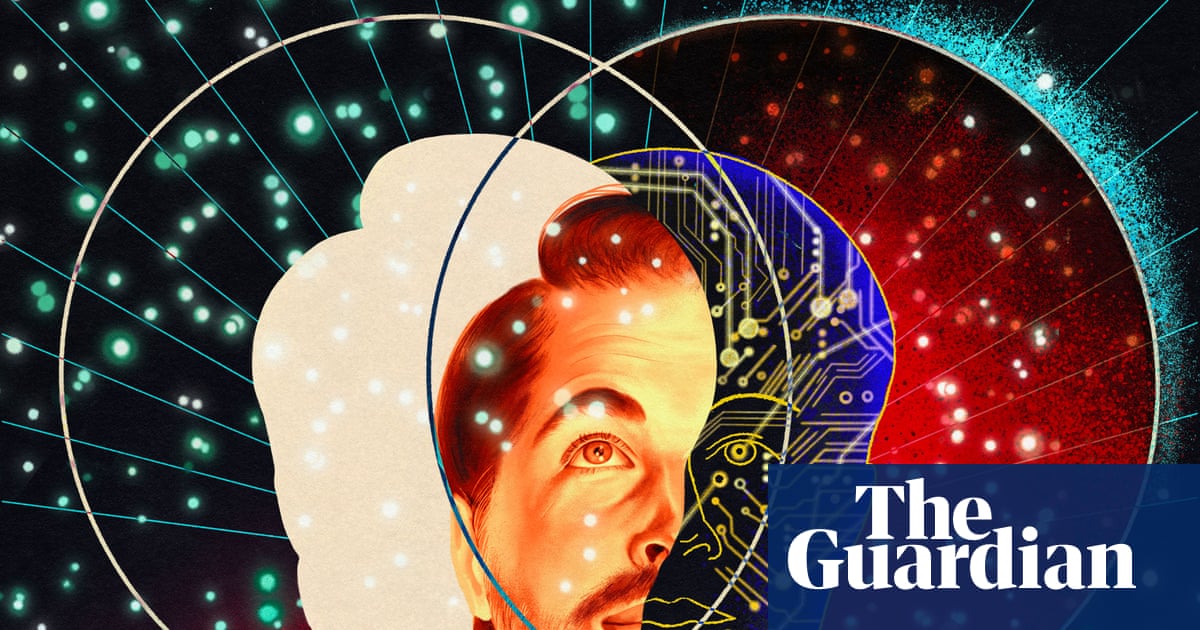
‘There’s this deep mystery of what, actually, is this thing?’: the philosopher inside Google DeepMind
The article profiles Iason Gabriel, a political philosopher who has worked at Google DeepMind since 2017, exploring his role in trying to anticipate and address the ethical and societal impacts of AI development. It examines whether ethicists embedded within major tech companies can meaningfully influence AI's trajectory amid growing commercial and geopolitical pressures to advance the technology rapidly.
Why it matters
This is an important and timely piece that highlights the tension between philosophical reflection and the breakneck pace of AI development. The fundamental question it raises — whether in-house ethicists can genuinely shape outcomes or merely serve as window dressing for corporate interests — is crucial. While having philosophers inside companies like DeepMind is better than having none, the structural incentives of a profit-driven tech giant inevitably constrain how much influence such roles…
TechCrunch AI

Vibe coding platform Base44 launches own model as AI startups seek defensibility
Wix-owned vibe coding platform Base44, acquired for $80 million a year ago, is rolling out its own custom AI model called Base1, trained on tens of millions of real user interactions. The move reflects a broader trend of AI startups seeking defensibility by owning their models rather than relying on external frontier LLMs. Founder Maor Shlomo argues that owning the model enables optimizations in latency, cost, and efficiency, and that specialization gives Base44 an edge over general-purpose models. However, competition is intensifying from both vibe-coding rivals like Lovable and frontier AI labs like Anthropic (Claude Code) and xAI moving into app creation. VC partner Jonathan Userovici notes that data, distribution, and tech stack are key defensibility ingredients, while cautioning against underestimating frontier models, citing Harvey's abandoned plans to train its own model. Rising…
Why it matters
Base44's decision to train its own model is a strategically sound move that addresses real concerns about defensibility, cost control, and specialization. Having proprietary models trained on platform-specific interaction data is a genuine competitive advantage that pure API wrappers lack. However, the history of AI is littered with companies that thought they could out-specialize frontier labs, only to be overtaken when those labs improved their general capabilities. The Harvey example is inst…
Ars Technica AI

US offers $10 million for info on group behind Signal and WhatsApp hacking spree
The US State Department is offering up to $10 million for information on two Russian state-linked cyber groups (tracked as UNC5792 and UNC4221) that have compromised thousands of Signal and WhatsApp accounts since at least March 2026. The groups target investigative reporters, US government employees, military personnel, and political figures through phishing campaigns that masquerade as automated support messages. The attacks trick users into either linking attacker devices to their accounts or surrendering backup recovery keys, giving attackers access to both new and past encrypted conversations. The FBI has published advisories warning of the evolving campaign, which now includes fake messages urging users to enable backups and share recovery keys under the guise of mandatory security updates.
Why it matters
This is a significant and alarming escalation in state-sponsored cyber operations targeting encrypted messaging platforms. The social engineering approach is particularly insidious because it exploits users' trust in platform support communications and their desire to protect their own data — essentially weaponizing security consciousness against the user. The fact that thousands of accounts belonging to high-value targets have already been compromised suggests the campaign has been devastating…
Science Daily

Millions of exploding stars could soon reveal dark energy's secrets
A new AI-powered framework has been developed that can analyze images of Type Ia supernovae and model their environments in unprecedented detail, enabling astronomers to estimate cosmic distances with near-spectroscopic accuracy. The technique is designed to handle the massive data volumes expected from the Vera C. Rubin Observatory and could significantly advance our understanding of dark energy and the expansion of the Universe.
Why it matters
This is an exciting development that sits at the intersection of artificial intelligence and cosmology. Type Ia supernovae have long been the gold standard for measuring cosmic distances, but spectroscopic follow-up has always been a bottleneck. If this AI framework can truly achieve near-spectroscopic accuracy from imaging data alone, it would be transformative for the field, especially given the millions of transients Rubin is expected to detect. The potential to dramatically scale up dark en…
TechCrunch AI

Gemini’s personalized AI image generation is now free for US users
Google is making Gemini's personalized AI image generation feature free for all eligible US users, previously limited to paid subscribers. The feature, powered by Nano Banana, creates images based on users' interests and data from connected Google apps like Gmail, Google Photos, YouTube, and Search, without requiring detailed prompts. Users can opt in and choose which apps Gemini accesses. The feature was first announced in April and rolled out as part of Gemini's Personal Intelligence capability, which launched earlier in 2026 and has expanded to India and Japan. Gemini has surpassed 750 million monthly active users.
Why it matters
This move represents Google's aggressive strategy to democratize AI features and grow its user base by making premium capabilities free. While the convenience of personalized image generation is appealing, the depth of personal data integration — pulling from Gmail, Photos, YouTube, and Search — raises significant privacy concerns. The opt-in nature is a positive step, but many users may not fully understand the extent of data being leveraged. Google is clearly betting that making these feature…
From X/Twitter
- Shubham Saboo runs a one-person AI agent company with 7 agents, 10 cron jobs, and 0 employees — every role is a folder, every job description a markdown file.
- Pawel Huryn says most PMs are lagging behind and shares a free Claude Code for PMs 101 guide.
- Vincent Pradeilles breaks down the WWDC session on creating UI prototypes using agents in Xcode.
- Sam Altman makes the case that building with AI doesn't require a huge team, just a good idea — the surviving work is deciding what's good.
- OpenClaw launches native iOS and Android apps, putting AI agents in your pocket alongside channels, tasks, and replies.
- Akshay Pachaar argues the model is a commodity now — what matters is the harness that reads the repo, applies edits, and runs the tests.
From Reddit/HN/YC
- [Hacker News] 1ShotGen turns a rough idea into a full build prompt for your coding agent in a single pass.
- [Hacker News] A 2026 study finds pregnancy and health apps still leaking data despite years of scrutiny.
- [Hacker News] Pieter Levels' data shows negative posts get 2.5× more views than positive ones on X.
- [Hacker News] SlimSnap lets you mark a screenshot element and get structured JSON your coding agent can actually use.
- [Hacker News] A Rust trading bot for Polymarket makes decisions in an 800µs loop — open-sourced on GitHub.
- [Hacker News] TurboPrefill lands in llama.cpp with 2.7× faster prefill than Pipeline Parallel on Llama-3-70B.