Business, Deals & Funding
The Verge AI

New York becomes the first state to enact a data center moratorium
New York Governor Kathy Hochul has signed the nation's first statewide data center moratorium, blocking new environmental permits for hyperscale data centers over 50 megawatts for up to a year. The executive order aims to give the state time to develop regulations protecting residents from rising energy prices and environmental impacts of AI-driven data center expansion. A separate bill passed by the state legislature with a stricter 20 megawatt threshold still awaits Hochul's signature. The governor's office says the higher 50 MW threshold is intended to avoid disrupting smaller data centers used by institutions like hospitals. The Department of Public Service will use the moratorium period to develop appropriate regulatory frameworks.
Why it matters
This is a significant and potentially precedent-setting policy move that reflects growing tension between the explosive demand for AI infrastructure and local community concerns about energy costs and environmental impact. The moratorium is a reasonable pause-and-assess approach rather than an outright ban, giving regulators time to catch up with a rapidly evolving industry. However, there are real risks: New York could lose economic development opportunities to other states, and the moratorium…
Claude Code Changelog
v2.1.208
Version 2.1.208 of Claude Code adds several features: screen reader mode for accessibility (via flag, env var, or settings), vim insert-mode key remapping (e.g., 'jj' to Escape), support for a corporate process wrapper executable via CLAUDE_CODE_PROCESS_WRAPPER environment variable, and mouse-click support (description appears truncated).
Why it matters
This release shows thoughtful attention to accessibility and enterprise needs. The screen reader mode is a meaningful accessibility improvement, and the corporate process wrapper support addresses real enterprise deployment concerns. The vim remapping feature is a nice quality-of-life addition for vim users. The changelog entry appears truncated, so the full scope of changes isn't clear.
DATAVERSITY Smart Data

The Difference Between AI That Works and AI You Can Actually Use
The article argues that the key difference between AI that technically works and AI that is practically usable lies not in model architecture but in data quality. While generative AI can produce coherent outputs that perform well on benchmarks, organizations find that generated content often requires significant human refinement before it can be deployed. The core issue is that training data frequently lacks the nuanced signals needed for brand alignment, audience relevance, contextual fit, and creative quality. The article contends that scaling data volume alone is insufficient; what matters is intentional dataset construction with specialized, rights-cleared, professionally evaluated data that captures subtle human judgments like style, creative intent, and context-specific expectations. Without these signals in training data, models produce plausible but not truly usable outputs.
Why it matters
This article identifies a genuinely important and underappreciated distinction in AI deployment — the gap between technical capability and practical usability. The framing of this as fundamentally a data problem rather than a model problem is insightful and well-articulated. However, the piece reads somewhat like thought leadership content that could be positioning a data services company, and it stays at a fairly high level without offering concrete methodologies, case studies, or quantitative…
Guardian AI
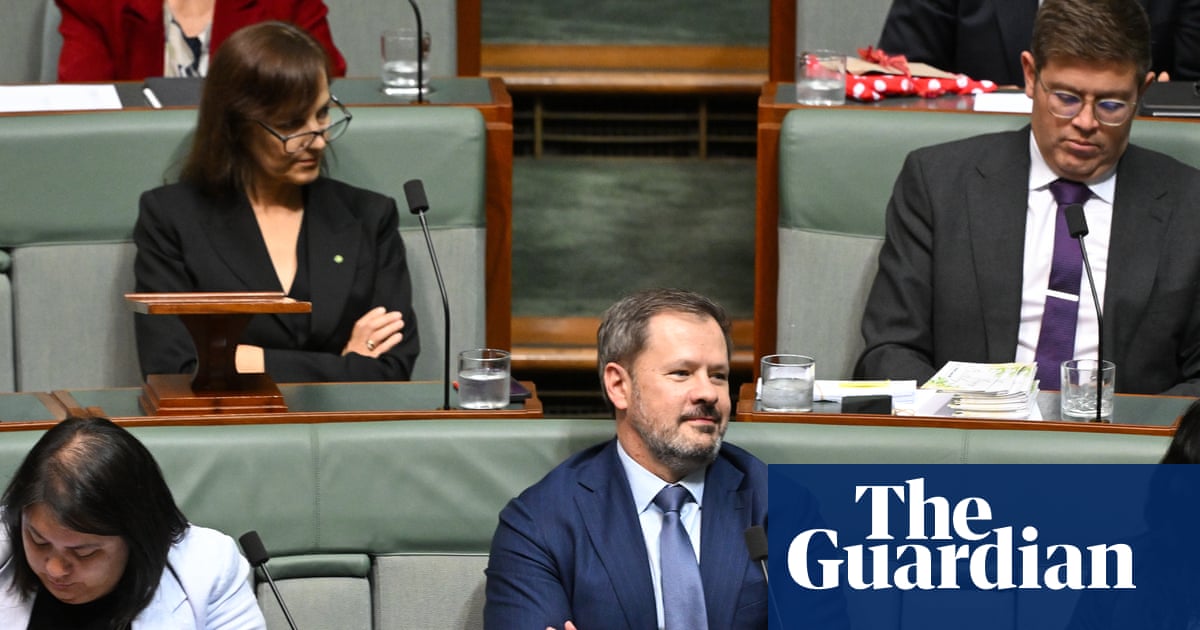
Ed Husic says weakening copyright to benefit AI companies would betray Labor party’s ethos
Labor MP Ed Husic argues that weakening copyright laws to benefit AI companies would contradict the Labor party's founding principles, particularly 'a fair day's pay for a fair day's work.' He warns against letting AI companies self-regulate, calling it 'doomed to fail,' while a media union calls for tougher rules on AI's use of creative work.
Why it matters
Husic raises a legitimate and important point. The rapid expansion of AI has been built substantially on the creative output of writers, artists, and journalists, often without consent or compensation. Weakening copyright protections to benefit enormously profitable tech companies at the expense of individual creators would indeed be a betrayal of labor principles. Self-regulation of AI companies has shown little promise, and stronger rules are needed to ensure fair compensation and protect cre…
NY Times
OpenAI Is Showing Kalshi’s World Cup Odds in ChatGPT
OpenAI has partnered with Kalshi, a prediction market platform, to display World Cup odds directly within ChatGPT search results. This marks the first partnership of its kind for OpenAI, integrating Kalshi's prediction market data to power some search queries related to the 2026 FIFA World Cup soccer tournament.
Why it matters
This partnership represents a significant convergence of AI-powered search and prediction markets, two rapidly growing sectors. For Kalshi, it's a major distribution win — being embedded in ChatGPT gives their odds enormous visibility and legitimacy. For OpenAI, it's a smart move to make ChatGPT search results more dynamic and data-rich, especially for real-time events like the World Cup. However, there are concerns worth noting: displaying betting odds in a general-purpose AI assistant normali…
Science Daily
Alan Turing's biggest AI assumption may have been wrong
Computer scientist Peter J. Denning argues in his new book that AI research has been misguided by two foundational assumptions from Alan Turing's 1950 paper: that intelligence can exist independently of a physical body and be recreated in software, and that passing the Turing test demonstrates true intelligence. Denning contends that critical aspects of human intelligence—common sense, intuition, emotions, practical skills, and culturally embedded knowledge—constitute 'tacit knowledge' that cannot be encoded into computers. He points to the failure of projects like Douglas Lenat's Cyc, which after 40 years and 25 million entries still couldn't replicate common sense. Denning believes this makes artificial general intelligence impossible regardless of advances in large language models, and warns that increasingly autonomous AI systems may introduce significant risks even without achievin…
Why it matters
Denning raises a philosophically important and enduring critique, but I think his argument is somewhat overstated. The tacit knowledge problem is real—there are genuine challenges in encoding embodied experience, intuition, and cultural understanding into machines. However, declaring human-level AI 'impossible' based on current limitations risks the same kind of categorical error that has plagued past predictions about technology. Large language models have already demonstrated surprising emerg…
TechCrunch AI
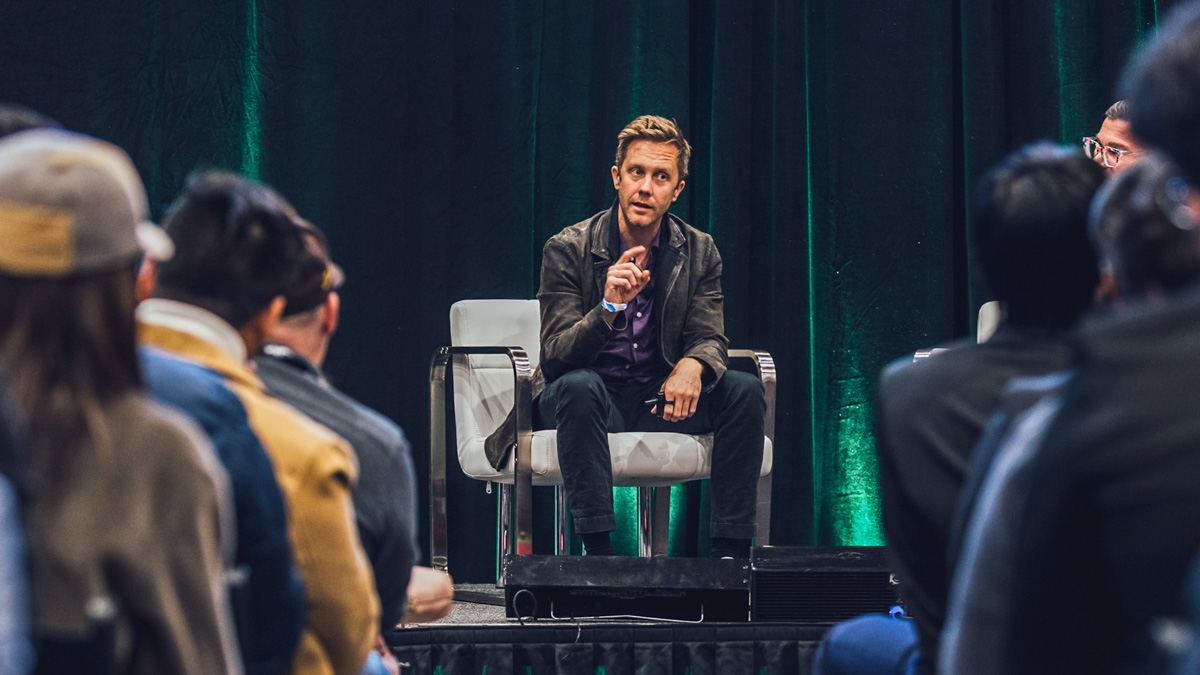
Already rich, already successful, why the last wave of tech winners is grinding again
The article describes a trend of already-wealthy and successful tech entrepreneurs and executives leaving comfortable positions to work on AI, often in non-hierarchical roles. Examples include Tom Blomfield (GoCardless/Monzo co-founder) joining Anthropic's compute team, Instagram co-founder Mike Krieger becoming Anthropic's CPO, Andrej Karpathy joining Anthropic's pre-training team, Chamath Palihapitiya becoming CEO of his AI coding startup 8090 Labs with $135M in funding, Eric Wu launching NavigateAI for construction workers, and Peter Bailis leaving his CTO role at Workday to become a member of technical staff at Anthropic. These individuals cite fear of missing AI's defining moment and the belief that the technology is still in its early innings as motivations.
Why it matters
This is a genuinely interesting trend piece that captures something real about the current AI moment. The fact that people are voluntarily taking demotions in title and stepping away from executive roles to do hands-on technical work at AI labs is a strong signal about where they believe value creation is heading. However, the article could benefit from more critical analysis — it largely takes these moves at face value without questioning whether this gold-rush mentality might lead to overcrow…
TechCrunch AI

Uber’s product chief on hotels, robotaxis, and why the company doesn’t want to be “everything for everyone”
Uber's Chief Product Officer Sachin Kansal discussed the company's expanding product strategy beyond ride-hailing and delivery. Key developments include hotel bookings powered by Expedia, 'shop for me' concierge features, boat rentals in Europe, and financial services like debit cards for drivers. Uber has also launched AV Labs, a six-month-old business unit developing sensor-equipped vehicles to gather driving data, which strengthens relationships with autonomous vehicle partners like Waymo while also serving as a strategic hedge. Kansal framed travel as the 'third leg of the stool' after rides and eats, noting that 1.5 billion annual trips occur outside users' home cities. The company is experimenting with financial products for merchants and exploring AI features visible to riders and drivers, though Kansal indicated Uber doesn't aim to become an 'everything for everyone' super-app.
Why it matters
This article provides a useful overview of Uber's strategic direction under its product leadership, revealing a company that is methodically expanding its platform while trying to avoid overextension. The AV Labs initiative is particularly noteworthy — it's clearly a strategic play to maintain leverage over autonomous vehicle partners like Waymo, even as Uber depends on them. The framing of travel as a natural third pillar makes business sense given the existing user base data. However, the art…
From X/Twitter
- Anthropic released a free course on loop engineering with Claude Code — covering agentic loops, why voice beats writing, and automatic code review with draft PRs.
- A Sierra engineering leader makes the case that context switching and flow state don't have to be at odds.
- Chris Lema says the shift in 18 months went from mastering prompts to building systems with encoded judgement — let AI do the prep, not the decisions.
- Raroque open-sourced a custom AI agent that integrates iMessage, Apple Notes, and Reminders — despite Apple offering no API for any of them.
- Harrison Chase argues a custom eval harness is the only way to beat the labs' agentic experience — here's how to build one.
- Greg Isenberg on using AI loops to run your business 24/7 — not for building products, but for operating the company itself.
From Reddit/HN/YC
- [Hacker News] Show HN: someone built a chat interface over Stanford's CS229 course notes.
- [Hacker News] TSMC spies got 10 years in prison, but Taiwan's new AI Basic Act has no penalties at all.
- [Hacker News] PageZERO v2 goes all-in on TanStack Start for full-stack development on Cloudflare.
- [Hacker News] A new atlas offers 3D neurochemical reconstruction of the human brainstem at unprecedented detail.
- [Hacker News] MIT makes the case for a future that preserves the benefits of neurotechnology for all, not just the well-funded.
- [Hacker News] A practical guide to testing PostgreSQL migrations before COMMIT — catch schema disasters before they land.