Business, Deals & Funding
Guardian AI

Tell us your experiences of living near AI datacentres in the UK
The Guardian is soliciting experiences from UK residents who live near AI datacentres. The article notes there are around 450 large data centres across the UK, housing computing infrastructure for cloud services and increasingly AI. It highlights ongoing debate about how datacentres affect local areas, with residents raising concerns about land use, pollution, noise, and the 'heat island effect.'
Why it matters
This is a straightforward reader callout rather than a substantive investigative piece, but it touches on an increasingly important issue. As AI infrastructure expands rapidly, the local environmental and quality-of-life impacts on nearby communities deserve serious scrutiny. The concerns mentioned—noise, pollution, heat islands, and land use—are legitimate and well-documented in other contexts. Crowdsourcing resident experiences is a reasonable journalistic approach to building a fuller pictur…
The Rundown AI
Claude disproves an 87-year-old math problem
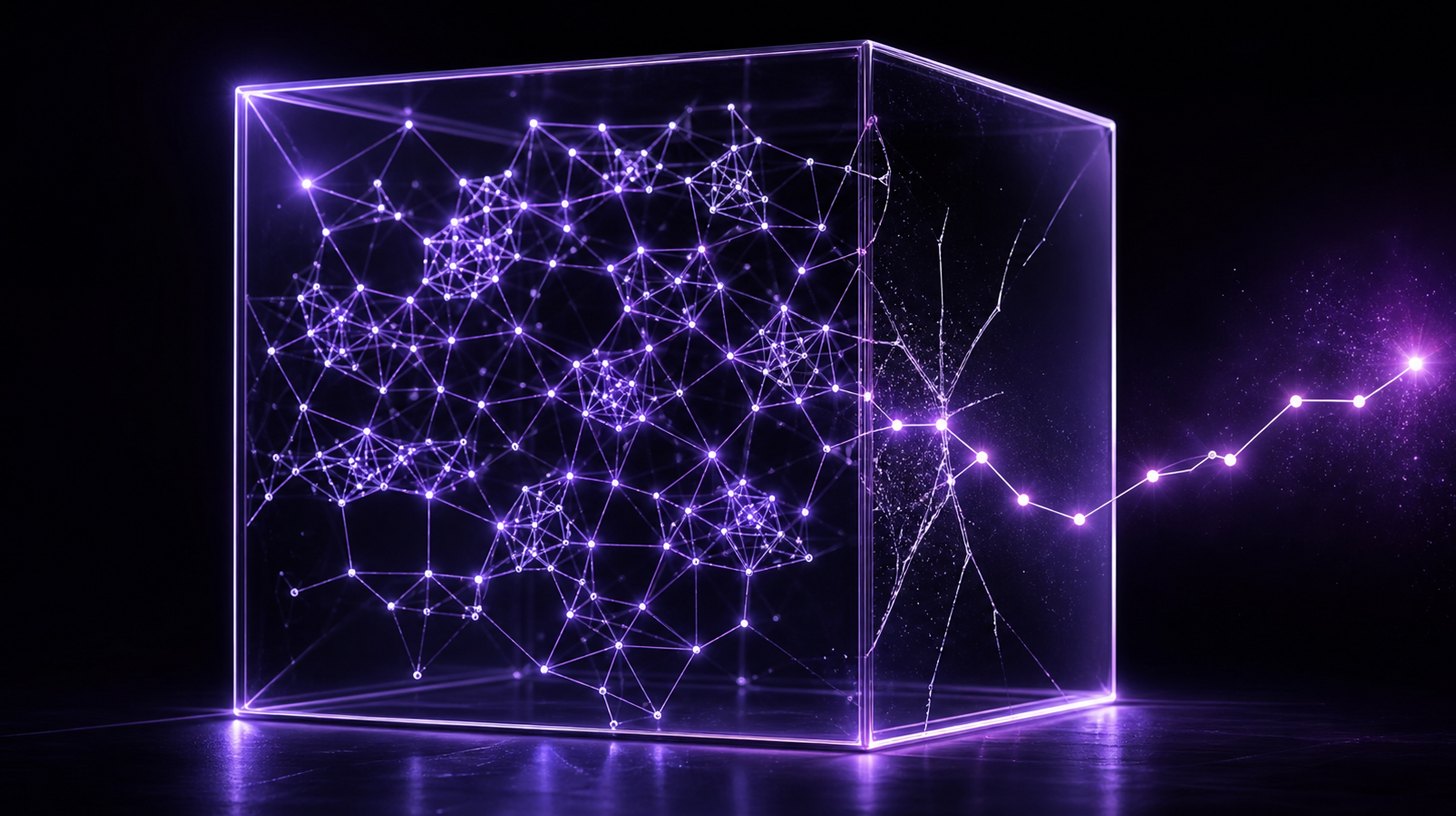
Anthropic's Claude Fable 5 model reportedly helped disprove the Jacobian conjecture, an 87-year-old unsolved algebra problem, with Anthropic researcher Levent Alpöge posting a one-line counterexample formula on X. The Jacobian conjecture, open since 1939, had resisted decades of mathematical effort, with one prominent mathematician predicting it could take another 100 years to solve. Experts say the proof is short enough to verify directly. The article also covers reports of the U.S. government exploring restrictions on Chinese AI models, and notes a broader trend of frontier AI models achieving breakthroughs in mathematics, including solving open Erdős problems and the unit distance puzzle.
Why it matters
This is a remarkable claim that deserves careful scrutiny. The Jacobian conjecture is a major open problem in algebraic geometry, and history is littered with claimed proofs and disproofs that later fell apart. If the counterexample truly holds up to expert verification, it would be a landmark achievement and a striking demonstration of AI's growing capability in mathematical reasoning. However, the breathless framing — emphasizing that it happened 'during the World Cup final' and was posted ca…
Claude Code Changelog
v2.1.216
Version 2.1.216 of Claude Code adds a new `sandbox.filesystem.disabled` setting that allows users to skip filesystem isolation while maintaining network egress control. It fixes three bugs: a performance issue in long sessions where message normalization grew quadratically causing multi-second stalls, a problem where auto mode denied commands with HTTP 401 errors after OAuth token expiration or rotation mid-session, and a bug where AskUserQuestion told Claude to continue even when the user asked it to wait or explain first.
Why it matters
This is a solid maintenance release with meaningful improvements. The quadratic message normalization fix is particularly important as it addresses a real usability pain point for long sessions. The OAuth token rotation fix and the AskUserQuestion behavior correction show attention to edge cases that affect real-world usage. The new sandbox filesystem setting adds useful flexibility for users who need it. Overall, these are the kinds of targeted fixes and refinements that make a tool more relia…
Guardian AI

Man of his word: Pope Leo speeches declared human-authored by Australian AI detection tool
Pope Leo XIV's collection of speeches and writings, called 'Maps of Hope,' has been certified as human-authored by Proudly Human, an Australian AI detection company led by former chief scientist Dr. Alan Finkel. This certification comes less than two months after Pope Leo declared artificial intelligence the greatest threat to humanity.
Why it matters
This is a fascinating intersection of religion, technology, and authenticity in the AI age. The fact that a pope's writings now need certification as human-authored underscores how deeply AI has permeated content creation and how trust in human authorship has eroded. It's both ironic and fitting that Pope Leo, having declared AI the greatest threat to humanity, would seek such verification — it lends credibility to his stance while highlighting the very problem he identified. The emergence of c…
Guardian AI

Nine to axe 30 jobs at the Age and SMH due to ‘extreme’ AI disruption
Nine Entertainment is cutting 30 newsroom jobs at the Sydney Morning Herald and the Age, with managing director of publishing Tory Maguire citing the 'extreme state of disruption' caused by AI as the reason. The cuts will be implemented through voluntary and targeted redundancies as part of what the company describes as an 'evolution' of its operations.
Why it matters
This is a troubling but increasingly common development in the media industry, where AI is being used as justification for reducing human journalism staff. While AI disruption is real—particularly in how it affects search traffic, content aggregation, and advertising revenue—there's a risk that companies use 'AI disruption' as a convenient cover for cost-cutting that may have happened regardless. The loss of 30 journalists from two of Australia's most important mastheads represents a genuine di…
Guardian AI

Election voting advice from AI chatbots ‘inaccurate and unreliable’
Research conducted during a Hungarian election found that AI chatbots provide inaccurate, inconsistent, and unreliable voting advice. The study showed that chatbots recommended parties that were not even running, failed to mention relevant parties, and gave highly volatile answers to identical prompts. The findings raise serious concerns about the reliability of general-purpose AI systems in electoral contexts.
Why it matters
This study highlights a genuinely important issue. General-purpose AI chatbots are not designed to serve as voting advice tools, and their use in this context is problematic. The volatility of responses to identical prompts underscores fundamental limitations in how these systems process and present political information. This should serve as a clear warning to voters not to rely on AI chatbots for electoral guidance, and to tech companies to implement stronger guardrails around election-relate…
Guardian AI
Not enough water for UK’s datacentre plans, trade body says
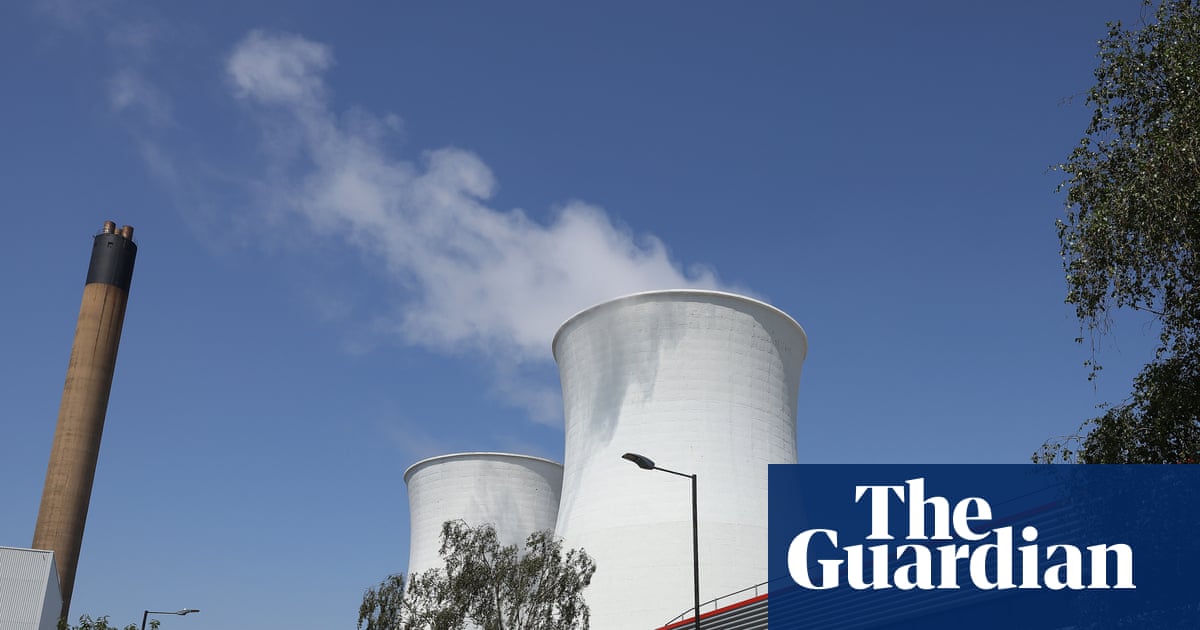
The UK water industry has warned that the country will not have enough water to support the government's planned expansion of datacentres for AI growth. Datacentres require large amounts of water for cooling servers, and the trade body has criticized the government's failure to address these cooling demands, calling the AI growth plans 'fatally flawed.' Water is consumed both directly through cooling systems and indirectly through high electrical power usage.
Why it matters
This highlights a critical and often overlooked constraint on the rapid expansion of AI infrastructure: physical resource limitations. While much of the discourse around AI growth focuses on chips, energy, and investment, water scarcity is an equally fundamental bottleneck, especially in regions like the UK that already face water stress. The water industry's blunt criticism suggests a serious planning gap in the government's AI strategy. Sustainable datacentre expansion will require innovative…
TechCrunch AI

Anthropic’s landmark $1.5B copyright settlement is approved
A federal judge gave final approval to Anthropic's $1.5 billion class action copyright settlement with authors and book publishers. The settlement, believed to be the largest in U.S. copyright law history, will pay $3,000 per work across an estimated 500,000 works. The case originated from Judge William Alsup's ruling that while training AI on copyrighted text constitutes fair use, Anthropic illegally obtained books by downloading them from pirate sites like Library Genesis. Anthropic settled to avoid trial on the piracy question. The ruling does not set binding precedent since it was a single district court decision that won't be appealed, leaving the broader legal question of using copyrighted works for AI training unresolved as similar lawsuits continue against Google, Meta, Midjourney, and OpenAI.
Why it matters
This settlement represents a significant but incomplete milestone in AI copyright law. The $3,000 per work payout feels modest given the enormous value AI companies extract from these works, and it's understandable that many authors don't view this as a win. The most consequential aspect is Judge Alsup's fair use ruling for AI training, which, while not binding precedent, sends a strong signal to the industry. Anthropic's strategic decision to settle rather than risk an appeals court ruling tha…
From X/Twitter
- Jack Dorsey explains how the CEO job changes when your company becomes an intelligence — rethinking principles, team dynamics, and decision-making.
- Microsoft open-sourced SkillOpt, a framework for self-evolving agent skills — train them with epochs, batch sizes, and validation gates like neural networks.
- Anthropic's multi-agent researcher breaks down how to build a graph of Claude agents — one parent delegating to five sub-agents working in parallel.
- Andrew Ng says what once took a team weeks to build — like Pong — can now be built in minutes thanks to AI.
- Digital Marketing Pro is an open-source plugin with 158 skills and 24 specialist agents for multi-brand portfolio management across Claude Code, Codex, Cursor, and more.
- Jack Conte's new AI talk is optimistic, conflicted, and brilliant — and Stephen Robles argues it's proof AI can't replace the real thing.
From Reddit/HN/YC
- [Hacker News] The Space Force is seeking to buy up to $30 billion in rocket launches, its largest procurement push yet.
- [Hacker News] The UK's AI Safety Institute benchmarked open-weight models on cyber tasks — the gap to frontier models is narrowing but still real.
- [Hacker News] Anthropic published a CISO's guide to agentic AI, arguing zero risk isn't the job — managing it is.
- [Hacker News] Mu is a personal home server you can self-host — one GitHub repo, no cloud required.
- [Hacker News] Lokalite keeps local secrets for CLIs and coding agents without shipping them to the cloud.
- [Hacker News] A new tool removes the Gemini watermark by solving the alpha blend instead of inpainting over it.