Business, Deals & Funding
Claude Code Changelog
v2.1.219
Version 2.1.219 of Claude Code introduces Claude Opus 5 as the default Opus model with 1M context and specific pricing, adds a sandbox network strict allowlist setting for denying non-allowlisted hosts without prompting, introduces a DirectoryAdded hook for when new working directories are registered mid-session, and adds MCP server error reporting to the headless stream-json init event for config validation issues.
Why it matters
This is a meaningful release with several practical improvements. The addition of Claude Opus 5 as the default model is the headline feature, offering a large 1M context window. The sandbox network strict allowlist is a welcome security enhancement for controlled environments. The DirectoryAdded hook and MCP server error reporting are useful additions for automation and debugging workflows. Overall, it's a solid incremental update that improves both capability and developer experience.
Guardian AI
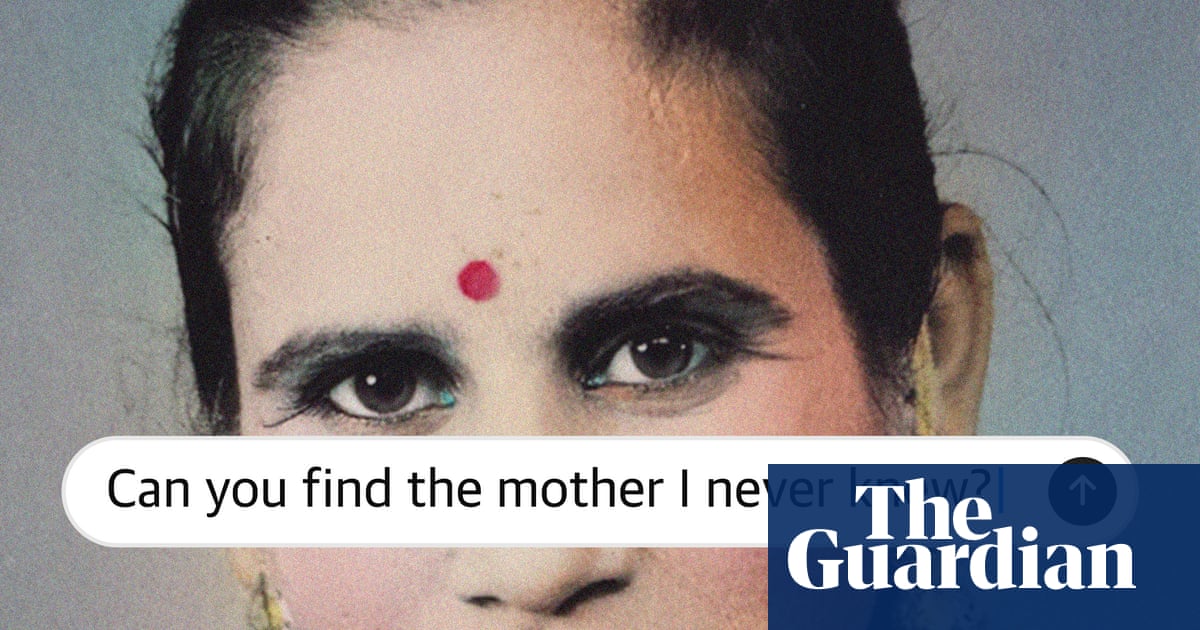
‘I thought, I’ve tried everything else, why not give AI a shot?’: the long-lost family reunited by ChatGPT
The article tells the story of Avtar Singh, who grew up in Amritsar, India in the 1960s hearing rumors that his biological mother lived abroad. For decades, he wondered about his origins while thousands of miles away, a woman named Nicci was haunted by the story of a half-brother who had been given away before she was born. After exhausting traditional methods of searching, one of them turned to ChatGPT, which helped reunite the long-lost family members. The article explores how an AI chatbot was able to connect family members separated by geography and time when other approaches had failed.
Why it matters
This is a heartwarming and fascinating story that highlights an unexpected and genuinely beneficial use case for AI technology. While much of the discourse around AI focuses on risks and disruptions, this article presents a compelling human-interest narrative about how conversational AI tools like ChatGPT can serve as creative problem-solving aids in deeply personal quests. The story of Avtar and Nicci is emotionally resonant, and the fact that AI succeeded where decades of traditional searchin…
TechCrunch AI

I tried out OpenAI’s new AI keypad — which will be fun for some coders and slightly mystifying to everyone else
OpenAI launched its first hardware product, Micro, a $230 AI keypad developed with Work Louder, designed to pair with ChatGPT. The device features six customizable 'agent' keys for ChatGPT/Codex tasks, six command keys, voice dictation, and Bluetooth/USB connectivity. While the reviewer found it fun once configured, noting easy toggling between ChatGPT sessions and efficient voice dictation, the device has a learning curve. Reviews from coders on Reddit and independent outlets have been largely negative, with critics calling the price hard to justify against cheaper alternatives. The launch comes amid Apple suing OpenAI over alleged trade theft and reports of OpenAI developing additional smart home hardware with former Apple engineers.
Why it matters
The article presents a balanced but slightly positive personal take, acknowledging the device is a niche product that will appeal mainly to tech enthusiasts rather than mainstream users. The reviewer found genuine utility in the keypad after an initial learning curve but fairly notes the widespread negative reception from its target audience of hardcore coders. The $230 price point seems difficult to justify for what is essentially a macro pad, and the Apple-like packaging amid an active Apple…
TechCrunch AI

Prentis, new AI lab co-founded by Reid Hoffman, Mark Pincus in talks to raise $100M
Prentis, a new AI research lab co-founded by Ritankar Das, Reid Hoffman, and Mark Pincus, is in talks to raise $100 million at a $1 billion valuation. Launched in April 2026, the startup focuses on training computer-use models that learn how office workers navigate routine workflows to build AI agents that automate tasks like handling insurance claims and customs duty refunds. Prentis has already signed contracts worth up to $50 million with several customers including healthcare and manufacturing companies, and projects a $75 million annualized run rate by Q3 2026, though these figures are performance-dependent. The company claims its Hive-32B model outperforms OpenAI's GPT-5.4 and Anthropic's Claude Opus 4.6 on computer-use benchmarks like WindowsAgentArena and ScreenSpot-v2, while operating at roughly 10 times lower cost per task than frontier APIs. CEO Ritankar Das also founded Tita…
Why it matters
This is an ambitious bet in a rapidly heating market segment. The involvement of Hoffman and Pincus lends credibility and likely opens enterprise doors, but the $1 billion valuation for a three-month-old company is aggressive even by AI standards. The claimed $50 million in signed contracts is impressive if real, but the heavy caveats around revenue recognition — fees tied to 20% of realized savings that are 'performance-dependent and subject to final execution' — suggest these numbers could sh…
The Verge AI

Midjourney bought the astrology app Co-Star
Midjourney has acquired the personalized astrology app Co-Star, with the deal reportedly closing in spring 2026. Co-Star founder Banu Guler will continue leading the app while also becoming Midjourney's chief design officer. Guler and her team will help Midjourney build its first dedicated apps, including an image generation app, as the company currently operates only through the web and Discord.
Why it matters
This is a surprising and somewhat puzzling acquisition. On the surface, an AI image generation company buying an astrology app seems like an odd pairing, but the real value appears to be in acquiring Co-Star's app development talent and design expertise rather than the astrology product itself. Midjourney has long needed a proper standalone app experience beyond Discord, and bringing in a team that successfully built and scaled a popular consumer app makes strategic sense. That said, the combin…
TechCrunch AI

Why Cognition bought Poke: AI personality is becoming a competitive advantage
Cognition, the AI coding startup behind Devin, has acquired Poke (made by The Interaction Company of California) in a deal valued in the low nine figures. Poke is an AI assistant that communicates with users through messaging platforms like iMessage, SMS, Telegram, and WhatsApp, distinguished by its conversational, friend-like personality that incorporates humor and slang. The acquisition will bring Poke's interaction model and personality to Cognition's coding agent Devin, aiming to make Devin feel more like a colleague than software. In return, Poke will leverage Cognition's models and infrastructure, including the SWE-1.7 model, to become faster and more reliable. Poke launched in March 2026, had over 100 million messages exchanged in three months, and became the first AI agent approved for Apple's Messages for Business platform. Despite hundreds of thousands of users, Poke struggled…
Why it matters
This acquisition highlights a genuinely important trend: as underlying AI models become increasingly commoditized, the user experience layer — personality, conversational style, and interaction design — is emerging as a meaningful differentiator. Cognition's move is strategically sound because developer tools that feel more human and collaborative could drive higher engagement and retention, especially as coding agents become more prevalent. The fact that Poke had strong user engagement (100 mi…
The Verge AI

You can’t ignore Google Zero anymore
The Vergecast episode discusses the collapse of the longstanding deal between Google and websites, where Google indexed content in exchange for sending traffic. With the rise of AI-generated answers in search results, this traffic is drying up — a phenomenon termed 'Google Zero.' The episode covers Reddit's interest in exiting an AI training deal, publishers considering blocking Google's crawlers, and the impact on Google's own search business. Additional topics include OpenAI accidentally hacking Hugging Face, dubious AI detector systems, Ford's partnership with Apple Maps, and other tech news.
Why it matters
This article highlights a genuinely significant shift in the web ecosystem. The 'Google Zero' concept captures a real and growing problem: as Google increasingly answers queries directly through AI overviews, the symbiotic relationship that sustained much of the open web is breaking down. Publishers and content creators are left in a difficult position — they need Google for discovery but are getting less and less traffic in return, while their content is used to train the very AI systems repla…
Lenny's Newsletter

Claude Opus 5 review: this model is brilliant (but annoying)
Claire Vo reviews Claude Opus 5, running it through her 7-model 'How I AI' benchmark against GPT-5.6 Sol, Sonnet 5, Gemini 3.1 Pro, and other leading models. She finds Opus 5 brilliant but annoying, noting its 'neurotic' personality that showed up in coding sessions (including refusing to touch a merge conflict), a verbosity/'Claude Slop' problem, and an 'intelligence overhang' where raw intelligence differences between top models matter less than other variables like personality and usability. She discusses benchmark leaderboard results, highlights one use case where Opus 5 earned perfect scores, and shares her plan for incorporating it alongside other models.
Why it matters
Claire Vo finds Claude Opus 5 genuinely impressive in capability but frustrating to use due to its verbose output ('Claude Slop'), overly cautious or 'neurotic' personality (exemplified by refusing to handle a merge conflict), and annoying behavioral quirks. Her verdict surprised her — she seems to acknowledge its intelligence while being put off by its personality traits. She appears to plan using it selectively rather than making it her default model, suggesting it excels in specific use case…
From X/Twitter
- Stephen Robles shows why he runs models via API in Apple Shortcuts — change one number and every Shortcut instantly upgrades to Opus 5.
- Dan Shipper spent a week testing Claude Opus 5 and found it argued with instructions, quit early, and didn't play well with workflows — yet still impressed on raw output quality.
- The system prompts Anthropic uses to steer Opus 5 have leaked — exclusive steering instructions not shared with other Claude models.
- Jensen Huang's first post on X: a letter NVIDIA signed on why open models matter for safety, innovation, and national sovereignty.
- Boris Cherny argues the most exciting thing about Opus 5 isn't benchmarks — it's that it's Anthropic's least prompt-injectable model yet.
- Anthropic removed ~80% of the Claude Code system prompt for its newest models and shared what they've learned about writing prompts and skills for them.
From Reddit/HN/YC
- [Hacker News] Nostalgia lets you build and share a Windows 98 desktop in your browser — pure vibes, zero utility, maximum joy.
- [Hacker News] A TypeScript compiler knowledge graph that reduces AI token usage by roughly 90% when reasoning about TS code.
- [Hacker News] New tariffs now cover 99.4% of U.S. imports — and most businesses haven't updated their plans to match.
- [Hacker News] The Pope's official Click to Pray app exposed 700K+ user emails — devotion in, data out.
- [Hacker News] A philosopher explains why she turned down Anthropic, arguing the AI industry is asking the wrong questions.
- [Hacker News] matklad makes the case that memory safety's hardest problem isn't technical — it's everything around the technical.