Business, Deals & Funding
OpenAI

Advancing responsible AI across Europe
OpenAI published a post describing how its safety, security, transparency, and provenance practices align with the EU AI Act and related European governance frameworks. The company highlights its participation in two EU Codes of Practice (the GPAI Code of Practice and the Code on Transparency of AI-Generated Content), its internal governance frameworks (Preparedness Framework, Frontier Governance Framework), its model testing and red teaming practices, and its collaborative work with external organizations like the Frontier Model Forum and government AI safety institutes. OpenAI emphasizes that responsible AI rules should be pragmatic, proportionate, and risk-based to support both governance and innovation in Europe.
Why it matters
This reads as a polished corporate communications piece designed to position OpenAI favorably as the EU AI Act enters enforcement. While it references real frameworks and practices, the post is notably light on specifics and heavy on self-congratulatory language. There is no mention of concrete challenges, failures, or tensions between commercial interests and safety commitments. The call for 'pragmatic, proportionate and risk-based' rules is standard industry language that often translates to…
Guardian AI

AI labels to be compulsory on authentic-looking content under EU rules
The EU is implementing new rules requiring companies to label AI-generated content that is designed to appear authentic. Starting from Sunday, artificially generated images, audio, and text must carry compulsory labels so that people know when they are interacting with AI-created material. The regulation aims to combat the growing flood of deceptive content, including deepfakes targeting politicians that have been used to mislead the public, from fake election conspiracies to fabricated embarrassing scenarios.
Why it matters
This is a sensible and overdue regulatory step by the EU. As AI-generated content becomes increasingly indistinguishable from authentic material, mandatory labeling is a reasonable baseline measure to protect public trust and democratic processes. The challenge will be in enforcement—particularly with content originating outside the EU or shared across platforms with varying compliance capabilities. While labeling alone won't solve the deepfake problem entirely, it establishes an important norm…
NY Times
Five Takeaways From the Times Investigation Into Larry Ellison’s A.I. Gamble
The New York Times investigation examines how Larry Ellison's Oracle took on massive debt to build data centers globally as part of an AI gamble, with implications extending beyond the company itself.
Why it matters
This article appears to be a serious investigative piece examining the financial risks associated with Oracle's aggressive AI infrastructure expansion under Larry Ellison. The topic is highly relevant given the current AI investment boom and concerns about whether massive capital expenditures on data centers will pay off. The framing as 'takeaways' from a larger investigation suggests substantive reporting. The concern about 'ominous loads of debt' raises important questions about corporate fin…
The Rundown AI
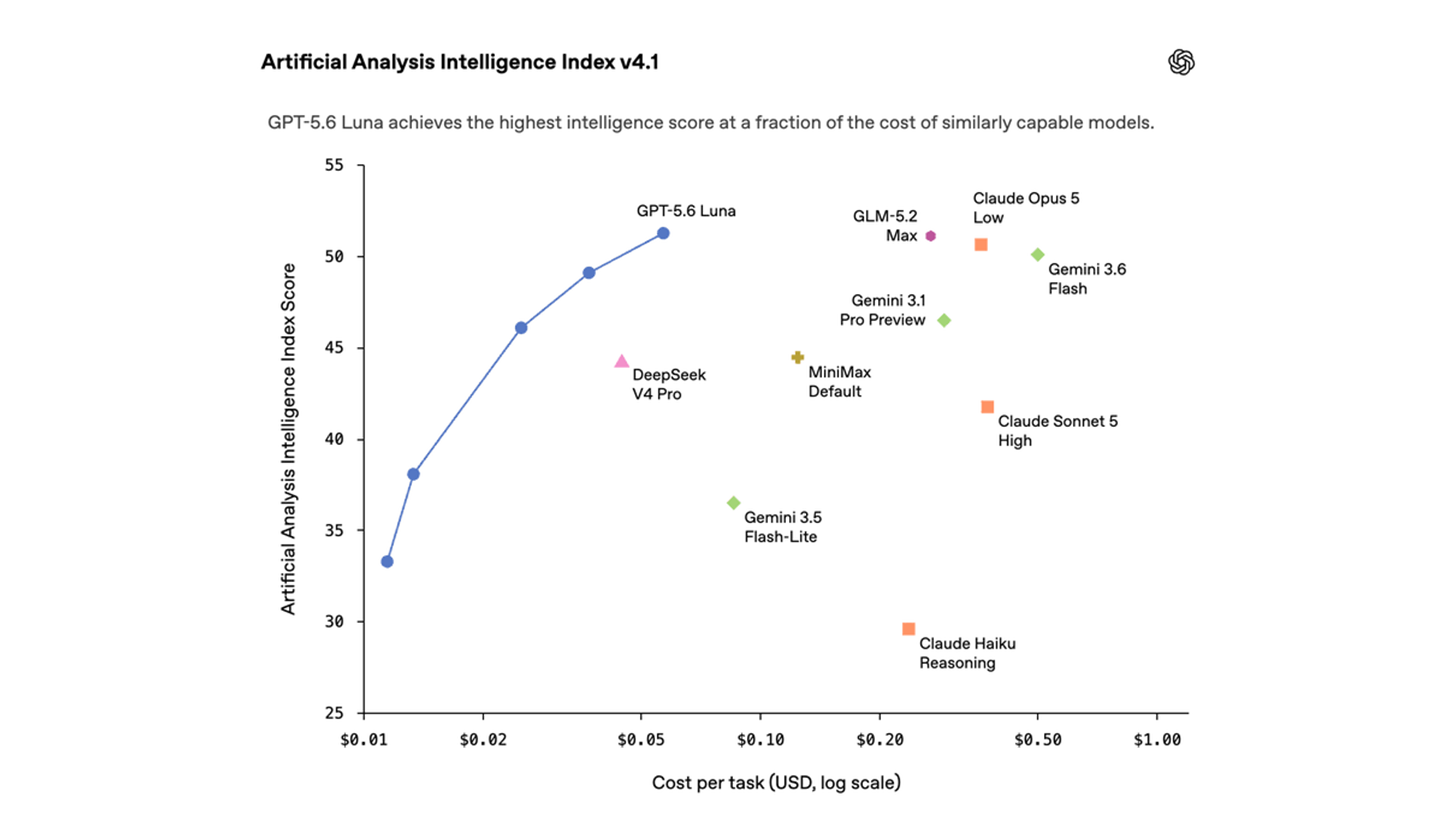
OpenAI's models cut their own costs
OpenAI announced significant price cuts to its GPT-5.6 model family, including an 80% cost reduction for its Luna variant, bringing prices to $0.20/$1.20 per million tokens. Notably, OpenAI's own Sol model contributed to these savings by rewriting GPU code to make the 5.6 models 15% more efficient and cutting serving costs by 20%. The new pricing positions OpenAI competitively against Google's recent Gemini Flash releases and Chinese/open-source alternatives. CEO Sam Altman stated the goal is to offer the best price/intelligence tradeoff at every level. The article also covers Rowan Cheung's personal AI workflow for managing back-to-back meetings using Wispr Flow, Apple Notes, Claude, and Notion.
Why it matters
This is a genuinely significant development — an AI model optimizing its own infrastructure code to reduce costs represents a meaningful feedback loop that could accelerate the commoditization of AI inference. The 80% price cut for Luna is aggressive and signals that the price war between OpenAI, Google, and open-source alternatives is intensifying rapidly. The fact that Sol wrote the efficiency improvements itself is both impressive and somewhat unsettling, as it demonstrates AI systems contri…
Guardian AI

UK petrol prices expected to rise to highest this year as US attacks Iran – business live
UK petrol prices are expected to rise to their highest level this year, potentially exceeding the 159.7p per litre mark set in May. The AA reports prices have already risen to 159.5p per litre, increasing more than 3p in a week. The price surge follows Donald Trump's restarting of attacks on Iran, which has driven up oil prices and added pressure on household finances.
Why it matters
This article highlights the direct impact of geopolitical military actions on everyday consumer costs. The connection between US military strikes on Iran and UK petrol prices underscores how interconnected global energy markets are and how quickly military escalation translates into financial pain for ordinary households. The situation is concerning as it demonstrates how decisions made by foreign leaders can rapidly affect the cost of living for people in other countries, with motorists bearin…
NY Times
In Another Wild Day for South Korean Stocks, Market Surges 18 Percent
South Korea's stock market surged 18 percent in a volatile trading session, rallying after a recent sell-off. The rebound was driven by easing concerns about overspending on artificial intelligence, which boosted the country's chip-related shares and lifted the broader KOSPI index significantly.
Why it matters
An 18 percent single-day surge is extraordinary and signals extreme volatility in South Korean markets, likely reflecting a sharp snapback from an equally dramatic sell-off. While easing AI overspending concerns provided a catalyst, such wild swings suggest underlying market instability and investor uncertainty rather than healthy price discovery. The heavy dependence on chip stocks highlights South Korea's concentrated exposure to the semiconductor cycle and AI narrative. Investors should be c…
OpenAI
Univé builds an AI-ready workforce
Univé, one of the Netherlands' largest cooperative insurers, built an AI-ready workforce using ChatGPT Enterprise by combining strong leadership, responsible governance, and employee-led innovation. Rather than treating AI as an IT deployment, the company approached it as an organizational transformation. Leadership sessions challenged managers to rethink how work would change; governance was built into the rollout from day one with enterprise authentication, privacy assessments, and clear accountability; and employees were given permission and dedicated time to experiment. Results include 97% license activation, 85% weekly active users, approximately 1,500 custom GPTs created by employees, and pet insurance claims preparation reduced from hours to minutes. The company's philosophy was to 'scale AI by creating more builders' rather than building more solutions.
Why it matters
This is a well-executed enterprise AI adoption case study that stands out for its emphasis on organizational change management rather than pure technology deployment. The three-pillar approach—leadership direction, governance confidence, and employee momentum—is a genuinely thoughtful framework. The activation and usage metrics (97% and 85%) are impressively high for enterprise software. However, the piece reads as a polished marketing case study from OpenAI, so it likely presents the rosiest p…
Guardian AI
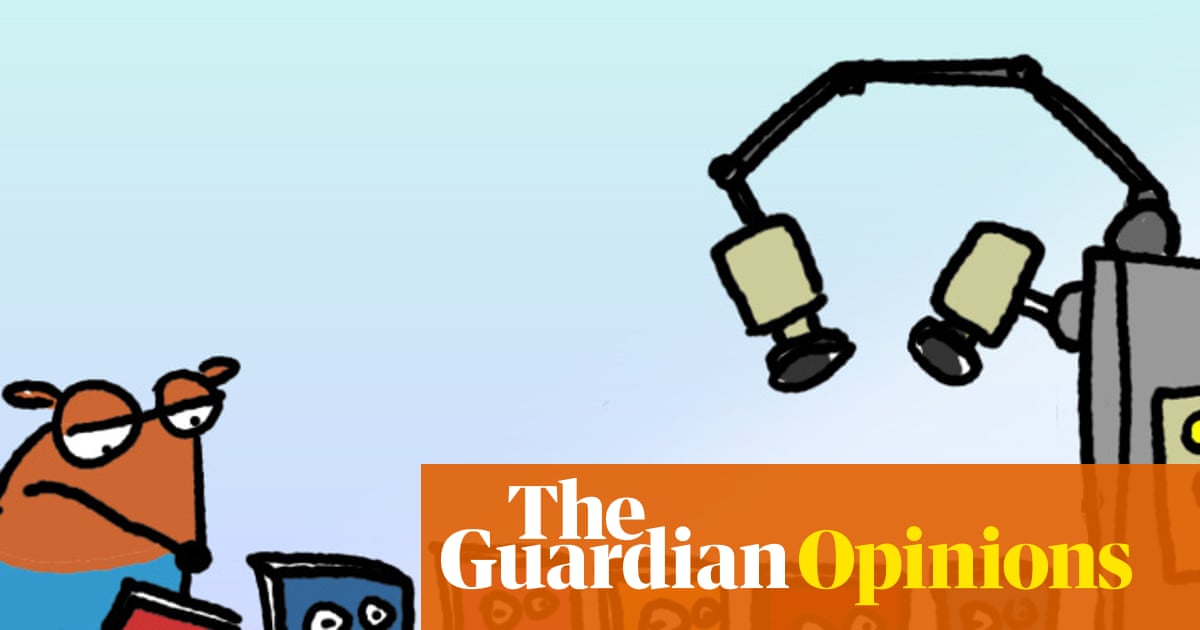
Isn’t AI terrible enough already? Now they want to eat the world’s books?! | First Dog on the Moon
This is a First Dog on the Moon editorial cartoon published in The Guardian, criticizing AI companies for consuming the world's books as training data. The cartoon's message is summed up as 'Leave books alone!' The piece is part of the regular First Dog on the Moon cartoon series, which offers satirical commentary on current issues. The actual cartoon images are not accessible from the text content alone.
Why it matters
The cartoon takes a strongly critical stance against AI companies using books as training data, framing it as yet another harmful aspect of artificial intelligence. The title's rhetorical question — 'Isn't AI terrible enough already?' — makes clear the cartoonist views AI as already problematic and sees the ingestion of the world's literary works as an additional grievance. The tone is satirical and protective of books and their authors' rights.
From X/Twitter
- A new UI pattern is emerging: tab + dropdown hybrids that bend traditional nav into mega-menu territory.
- This team develops iOS without Xcode installed — push code, cloud-build, stream a live device to your browser with hot reload from any editor.
- Anthropic pays $785K/year for Forward Deployed Engineers — a 20-minute talk breaks down how the role sells outcomes, not software.
- Matt Carnevale makes the case that a SKILL.md is a recipe card, not a strategist — AI skills won't replace your marketing team.
- Dan Shipper breaks down the AI-powered supply chain attack — noting OpenAI's safety classifiers were off and HuggingFace's own AI actually surfaced the exploit.
- One company saves $164,000 a year by letting a single operator run four excavators from one chair across rural gravel pits.
From Reddit/HN/YC
- [Hacker News] Yann LeCun's $1B bet against LLMs — a video breakdown of why he thinks the paradigm is a dead end.
- [Hacker News] "They are just thoughts and feelings" — a quiet case for not believing everything your brain tells you.
- [Hacker News] Erik Kannike on what he learned after a defence tech exit: being early looks a lot like being wrong.
- [Hacker News] A practical guide to Linux network latency testing from first principles.
- [Hacker News] A London taxi family confronts the driverless future as Waymo prepares to launch in the city.
- [Hacker News] David Mashiah shows that neural network surrogates fail to generalize across geometry families even when they score perfectly on benchmarks.