Business, Deals & Funding
Guardian AI

Stock market turmoil sheds stark light on the opaque AI economy
The article reports on significant stock market volatility driven by developments in the AI chip economy. A Chinese memory chipmaker, CXMT, had a dramatic IPO on the Shanghai stock market, surging 466% in value to 3.3 trillion yuan (£365 billion), posing a shock challenge to the dominance of major western chipmakers like Nvidia. Investors struggled to make sense of these rapid developments, which highlighted the opaque nature of the AI economy and raised questions about the competitive landscape in the global semiconductor industry.
Why it matters
This story underscores a critical and underappreciated vulnerability in the western AI ecosystem: the assumption that US and allied chipmakers would maintain unchallenged dominance indefinitely. CXMT's explosive IPO valuation signals that China's semiconductor ambitions are far more advanced than many investors and policymakers had assumed, despite years of export controls and sanctions designed to slow Chinese progress. The 'opaque AI economy' framing is apt — the massive capital flows into AI…
TechCrunch AI

Judge denies xAI’s request to block Minnesota ban on ‘nudify’ apps
A U.S. District Judge denied xAI's request for a temporary restraining order against Minnesota's first-in-the-nation ban on 'nudify' apps, allowing the law to take effect on August 1, 2026. Judge Donovan Frank noted that xAI filed its request only three days before the law's effective date, nearly three months after it was signed, suggesting the harm was not immediate. The lawsuit itself continues, with xAI arguing the ban is 'overinclusive.' The article notes that earlier in the year, users of Elon Musk's platform X used xAI's Grok chatbot to flood the platform with non-consensual sexualized images, leading to investigations and bans. The article also mentions that X and xAI are now part of SpaceX.
Why it matters
This ruling seems like a reasonable procedural outcome — if xAI truly believed the law posed imminent harm, waiting until three days before its effective date to seek emergency relief undermines that argument. The broader context is damning for xAI: their own Grok chatbot was directly implicated in enabling the exact type of harm this law targets, making their legal challenge appear cynical and self-serving rather than principled. Minnesota's ban on nudify apps addresses a real and growing prob…
Guardian AI

‘More than just objects’: Australian booksellers raise alarm over ‘horrific’ destruction of rare titles to feed AI
Australian secondhand booksellers are raising concerns that rare and old books are being purchased, scanned for AI training data, and then destroyed. Booksellers like Tim White believe they have been unwittingly caught up in an AI supply chain that treats irreplaceable volumes as mere data sources. The article highlights the tension between the tech industry's demand for training data and the cultural and historical value of physical books, which sellers argue carry significance beyond their textual content.
Why it matters
This is a deeply troubling development that highlights the voracious and often reckless appetite of the AI industry for training data. Rare books are irreplaceable cultural artifacts — they contain marginalia, provenance, physical history, and contextual value that cannot be captured by a scan. Destroying them after digitization treats them as disposable data containers rather than the cultural heritage objects they are. If true, this practice represents a disturbing commodification of human kn…
TechCrunch AI

YouTuber Hank Green says his AI usage is ‘not healthy’
YouTuber Hank Green, who has 3.2 million subscribers, publicly apologized for his growing reliance on AI chatbots after viewers noticed the phrase 'I appreciate the pushback' in a video script, suspecting it was accidentally included from a ChatGPT interaction. Green acknowledged using ChatGPT for research on scripts and admitted the dopamine he gets from interacting with LLMs is 'not healthy for me or good for the world.' He said he was 'mortified' to have let people down and plans to reduce video production, pause or post less frequently to his YouTube channels, and return to more authentic, unscripted content. While insisting the words and opinions in his videos have still been his own, he admitted his process had become unclear even to himself and expressed concerns about AI's climate impact and the consolidation of economic power by AI companies.
Why it matters
This is a genuinely interesting and somewhat poignant story about the creeping dependency that AI tools can foster, even among thoughtful, tech-literate creators who are aware of the risks. Green's honesty about the dopamine-driven compulsion to use LLMs is refreshing and probably resonates with many knowledge workers who have quietly experienced the same pull. His framing of it as an impulse control issue rather than a purely ethical one adds nuance. However, the incident also highlights a rea…
The Verge AI

Is this Billboard Hot 100 hit AI slop?
Fenix Flexin, known as a member of the LA rap duo Shoreline Mafia, has reached number 58 on the Billboard Hot 100 with his solo track 'Rubberz,' but the song has sparked widespread speculation that it was largely or entirely generated by AI. The article notes several reasons for suspicion: the song represents a dramatic stylistic departure from his usual trap-influenced West Coast rap to '80s UK synth pop with a Morrissey-influenced vocal melody and fake British accent, and questions about the recording quality. Fenix Flexin has denied the AI accusations but has done little to dispel them. The article concludes that while they can't be 100 percent certain, the song is probably AI-generated, and notes that even the cover art appears to be AI-generated.
Why it matters
This article highlights a significant and increasingly relevant issue in the music industry: the potential for AI-generated music to chart on major platforms like the Billboard Hot 100. The piece is honest about the limitations of proving AI involvement, using the measured subtitle 'We can't be 100 percent sure, but probably.' The circumstantial evidence presented — a dramatic genre shift, suspicious recording quality, and the artist's evasive response — paints a compelling picture even if defi…
TechCrunch AI

Sam Altman is still making the case for parenting via ChatGPT
Sam Altman, OpenAI's CEO, posted about a 'cool use case' for ChatGPT Work, suggesting parents connect family calendars and kids' interests to generate a daily podcast for the drive to school covering topics like soccer games, birthdays, and news. The post drew widespread criticism, most notably from 'Gravity Falls' creator Alex Hirsch, who simply asked 'What if you just talked to your children?' — a response that went far more viral than Altman's original post. The article notes this fits a pattern of tech CEOs promoting AI as a replacement for human interaction, including Satya Nadella replacing podcast listening with AI summaries. It also references Altman's previous comments about relying on ChatGPT for parenting a newborn and notes that while OpenAI is actively courting parents as users, the company faces multiple lawsuits from families alleging ChatGPT contributed to loved ones' de…
Why it matters
This article captures a genuinely concerning trend in Silicon Valley's relationship with human connection. Altman's suggestion is tone-deaf on multiple levels: it proposes replacing spontaneous, personal parent-child conversation during car rides — one of the few remaining unstructured bonding moments in busy family life — with an AI-generated podcast. The fact that Hirsch's simple retort resonated so much more powerfully than Altman's pitch speaks volumes about public sentiment. It's particula…
TechCrunch AI

This $9 key physically locks your most addictive apps
Autonomous Key is a $9 NFC physical key that pairs with a companion app to lock distracting apps on your phone. Unlike software-only screen-time tools that rely on willpower, users must physically scan the key to unlock blocked apps, with each session lasting up to 60 minutes before apps auto-lock. At $9 with no subscription fees, it's significantly cheaper than competitors like Blok ($29), Unpluq ($26.50), and Brick ($59). The key works with Android 8.0+ and iOS 15+, supports multiple phones, and includes an AI-powered insights feature with a sassy personality that tracks usage habits. Drawbacks include occasional NFC scan failures, and if the key is lost while apps are locked, users must uninstall and reinstall the companion app. It's currently in beta after a Kickstarter campaign and ships in five colors.
Why it matters
This is a clever and elegantly simple concept that addresses a real problem — the ease of bypassing software-only screen-time blockers. The physical friction of needing to scan a key is a genuinely smart behavioral design choice, and the $9 price point with no subscription makes it very accessible. However, I have concerns about durability of the concept: the uninstall-reinstall workaround for a lost key essentially defeats the entire purpose, and the NFC scanning reliability issues are worryin…
Guardian AI
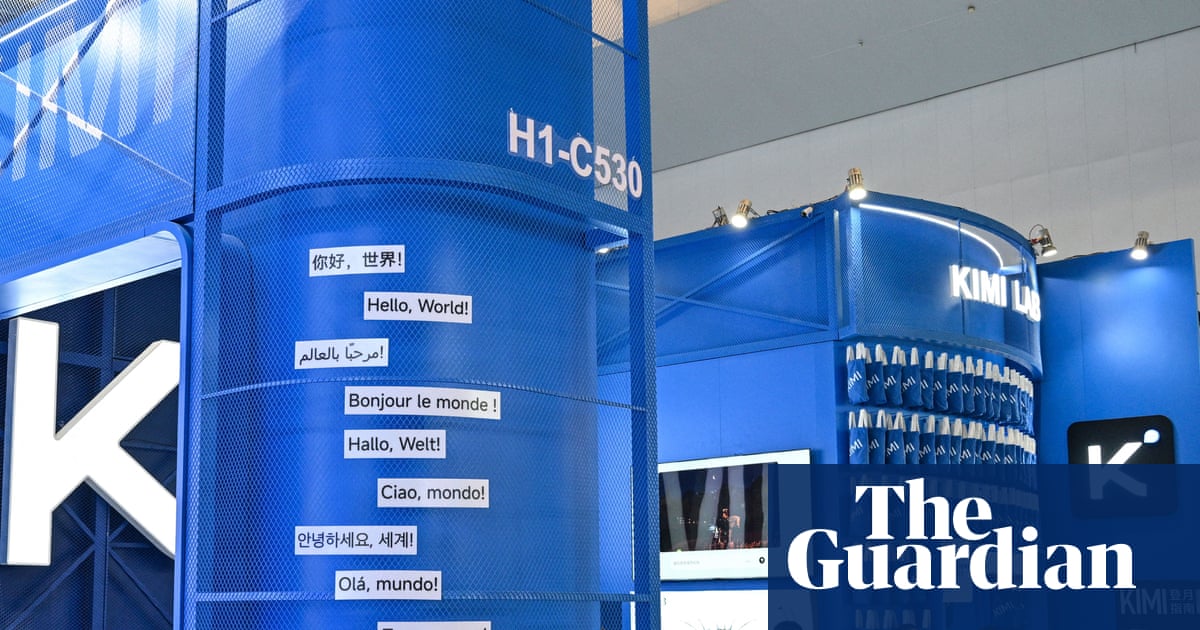
China’s tech advances are causing chaos from Silicon Valley to the White House
China's recent advancements in artificial intelligence, chip manufacturing, and robotics have disrupted financial markets, created divisions among US tech leaders, and forced the Trump administration to scramble for a response. Silicon Valley has historically cited China's tech industry as a competitive threat to justify support for US firms, but the pace of China's progress is now causing significant concern across both the private sector and government.
Why it matters
This article highlights a genuine and growing tension in the global tech landscape. China's rapid progress in AI, chips, and robotics is a legitimate strategic concern for the US, but it also exposes contradictions in Silicon Valley's approach—companies have long used the China threat to argue against regulation while simultaneously benefiting from global supply chains that include Chinese manufacturing. The scramble in Washington suggests that US policy has been reactive rather than proactive,…
From X/Twitter
- Skill chaining is how one AI-native org turns a prospect request into a finished proposal in minutes, not days.
- An engineer rewrote the Bun runtime in 11 days — 535,000 lines of code, 64 agents running at once — and says the key is drawing the graph, not the line.
- OpenAI's Codex app ships with a library, security scanner, and debugger already built in — just hidden behind client-side feature flags.
- A repo of battle-tested plugins, skills, and MCP integrations for Claude Code, Codex, Cursor, and Gemini CLI that replaces the default setup.
- Three identity decisions that turn a generic AI assistant into an agent that thinks for itself instead of asking permission on every call.
- Gogh adds snap-to-grid and smart guides for
From Reddit/HN/YC
- [Hacker News] AirLLM lets you inference the 2.8T Kimi K3 model on a single 4GB GPU — no cluster required.
- [Hacker News] The Claude Code plugin marketplace launched with no price field — every plugin is free, for now.
- [Hacker News] A walkthrough on running a 35B LLM at 128K context on €870 of used hardware, no cloud required.
- [Hacker News] Apple is struggling to keep pace with AI security researchers finding bugs faster than it can patch them.
- [Hacker News] Aevros is a new kernel that explains its own decisions as it runs — self-documenting at the OS level.
- [Hacker News] Confer built a system to search documents it can't actually read, using privacy-preserving AI techniques.