Business, Deals & Funding
Ars Technica AI

Vulnerability giving attackers full control of Macs is under active exploitation
A high-severity macOS vulnerability (CVE-2026-65400) in the screen sharing feature is being actively exploited in the wild. The bug, rated 7.1/10, allows remote attackers without credentials to gain root access to Macs when port 5900 is exposed to the Internet. Dutch cybersecurity officials (NCSC) reported multiple cases where attackers gained root access and installed Monero cryptocurrency miners. The vulnerability stems from a state management flaw in macOS screen sharing and was patched by Apple last week for macOS Tahoe, Sequoia, and Sonoma. Details were disclosed at Black Hat security conference. Security experts recommend keeping port 5900 closed, disabling screen sharing when not in use, using VPN or SSH tunneling instead of direct exposure, and installing the latest security update.
Why it matters
This is a serious vulnerability that highlights a recurring problem: features designed for convenience (like screen sharing) becoming attack vectors when left enabled and exposed to the Internet. The fact that it allows unauthenticated root access remotely is particularly alarming — a 7.1 severity rating almost feels understated for a no-credentials-needed remote root exploit. The current exploitation for crypto mining is the least dangerous outcome; the real concern is that more sophisticated…
Claude Code Changelog
v2.1.233
This changelog entry for Claude Code v2.1.233 describes four additions: GitLab merge request URL support for the --worktree flag and agents view, an opt-in forward_user_identity setting for Anthropic upstreams to enable per-user spend attribution, opt-in memory cgroup support for Bash tool commands on Linux via CLAUDE_CODE_TOOL_MEMORY_LIMIT to prevent runaway builds from stalling sessions, and a new CLAUDE_CODE_WEBFETCH_CACHE_TTL_MS environment variable.
Why it matters
This is a solid incremental release with practical improvements. The memory cgroup support for Bash commands is particularly valuable for production environments where runaway processes can be problematic. The GitLab MR support and user identity forwarding show the product maturing for enterprise use cases. The web fetch cache TTL variable is mentioned without much context but adds useful configurability. Overall, these are well-targeted quality-of-life and operational improvements.
Guardian AI

Why does everything feel meh? We're in the era of joyless decadence – Stateside with Kai and Carter
The podcast episode explores why modern life feels unfulfilling despite unprecedented access to entertainment, food delivery, and digital experiences through our phones. Hosts Kai Wright and Carter Sherman discuss the concept of 'joyless decadence' with academics Michèle Mendelssohn and Charlie Tyson, who argue we are living in an era of decadence where abundance and convenience have paradoxically led to widespread feelings of emptiness and dissatisfaction.
Why it matters
This is a thought-provoking topic that resonates with a growing cultural conversation about the diminishing returns of digital convenience and consumer abundance. The concept of 'joyless decadence' is a compelling framing — the idea that having everything at our fingertips has stripped experiences of the effort, anticipation, and meaning that once made them satisfying. The article appears to be a podcast summary rather than a full written piece, so the content is limited, but the premise is wel…
NY Times
An A.I. Bot is Judging Your Résumé
The article discusses how many corporations now use AI bots to evaluate résumés, making job hunting more difficult for applicants. Opinion writer Jessica Grose explains that the job search process has increasingly become about gaming AI recruitment systems rather than showcasing genuine qualifications, and suggests that returning to analog methods might be a viable solution.
Why it matters
The growing use of AI in résumé screening is a troubling development that risks reducing complex human potential to keyword-matching algorithms. While automation can help manage high volumes of applications, it likely introduces new biases and unfairly disadvantages qualified candidates who don't know how to optimize their résumés for bots. The suggestion to go analog has merit — personal connections, networking, and human judgment remain far more reliable ways to assess a candidate's true fit.…
Science Daily

World’s first superconducting quantum heat engine could help unlock massive quantum computers
Researchers at Aalto University have built the world's first cyclic superconducting quantum heat engine, published in Nature Communications. The device combines a transmon qubit, a resonator, and a quantum circuit refrigerator, operating near absolute zero to convert quantum-scale heat into useful work by reproducing an Otto cycle within a superconducting circuit. The quantum circuit refrigerator can be tuned to provide both heating and cooling, eliminating the need for separate hot and cold environments. This proof of concept demonstrates that familiar thermodynamic processes can function under quantum conditions, and future autonomous versions could potentially be integrated inside quantum computers to eliminate large numbers of costly, noise-producing microwave cables, helping enable the scaling of quantum computers to very large numbers of qubits.
Why it matters
This is a genuinely exciting and elegant piece of research that bridges two fundamental domains of physics — quantum mechanics and thermodynamics — in a practical experimental demonstration. The fact that they achieved cyclic operation of a quantum heat engine in a superconducting circuit is a meaningful milestone. The potential application of reducing the cable overhead in large-scale quantum computers is compelling and addresses a real engineering bottleneck. However, it's important to temper…
TechCrunch AI

Google will now allow users to remove visible watermark from its AI generations
Google announced it will allow users to toggle off visible watermarks on AI-generated content including images, videos, and songs produced by its Gemini, Nano Banana, Omni, and Lyria models. The invisible SynthID watermarks and C2PA metadata will remain intact, preserving the ability to identify AI-generated content. The setting will be available in Gemini and Google's video editor Flow, with Search support coming soon. Google is also open-sourcing a library called Credentio for developers to embed local validation mechanisms. The move follows Anthropic's controversial decision to include watermarks in Claude-generated text and files to comply with EU regulations.
Why it matters
This is a pragmatic and reasonable move by Google. Visible watermarks have always been more of a nuisance than a genuine safety measure — anyone determined to misuse AI-generated content could remove them with basic editing tools anyway. The real value lies in invisible watermarking systems like SynthID and metadata standards like C2PA, which are far more robust for provenance tracking. By making visible watermarks optional while keeping invisible identification intact, Google is acknowledging…
The Rundown AI

OpenAI feels the frontier need for speed
OpenAI previewed 'Ultrafast,' a new API tier powered by its Cerebras partnership that speeds up its flagship GPT-5.6 Sol model by up to 14x, reaching up to 750 tokens per second. On Humanity's Last Exam, Sol with Ultrafast completed a 2,500-question test in 11 hours compared to 78 hours for the Fable model, with comparable results. OpenAI staffers reported dramatic productivity gains, with one saying it feels like 'genuinely cheating at my job' and another noting security investigations dropped from hours to 10 minutes. The feature is currently an invite-only API preview with no listed price, and access will expand as more Cerebras capacity comes online. The article also covers Rowan Cheung's experiment of exporting his AI conversation history and asking AI to audit his weaknesses as a human, CEO, and creator, as well as a guide on building a self-updating 'Second Brain' using Town conn…
Why it matters
This is a significant development that highlights how inference speed is becoming a critical competitive dimension in AI, not just model intelligence. The 14x speed improvement for a frontier-level model is genuinely transformative — if agents and complex workflows can operate at these speeds, it fundamentally changes the economics and practicality of AI-powered automation. The Cerebras partnership paying off with 750 tokens/second for a top-tier model is impressive. However, the missing price…
The Verge AI

Mark Zuckerberg has an Instagzam
Instagram has rolled out a new wordmark logo that has been widely criticized for not resembling the original iconic design and arguably not even spelling 'Instagram' clearly. The Vergecast episode discusses this rebrand alongside Mark Zuckerberg's lengthy manifesto on the future of AI, which argues that making all technology available to everyone will lead to positive outcomes. The episode also covers AI-related news including AI text watermarking, Apple's reality verification efforts, Spotify's crackdown on AI artists, and various other tech topics.
Why it matters
The Instagram rebrand seems like a classic case of change for change's sake, driven by executive restlessness rather than genuine need. When your wordmark is iconic and universally recognized, altering it to the point where it's barely legible is a baffling decision. As for Zuckerberg's AI manifesto, the article's skepticism feels well-placed — the idea that simply giving everyone access to powerful technology will make everything fine is naive, especially coming from someone who has witnessed…
Ars Technica AI

PBS station fears losing 50TB of data after being ghosted by cloud storage provider
Nine PBS, a St. Louis PBS affiliate, is suing Iron Mountain Data Centers to recover 50TB of irreplaceable archival data after its cloud storage provider, Open Source Storage (OSS), went defunct and became unresponsive. The data includes 70 years of TV shows, historical coverage, and over 11,000 files. OSS used Iron Mountain's Denver data center to store the data, but Iron Mountain says it doesn't have access to the data on the servers. A judge has ordered Iron Mountain to hand over physical devices holding the data and given Nine PBS 30 days to find a third party, such as a former OSS employee, to help retrieve it. Nine PBS says it is already in contact with a willing former OSS worker. The situation is complicated by OSS's delinquency status with the Colorado Secretary of State and claims by a person who acquired OSS's assets that he was defrauded into the purchase.
Why it matters
This is a cautionary tale about the risks of entrusting irreplaceable data to small cloud storage providers without robust contingency plans. Nine PBS's situation highlights several critical failures: lack of redundant backups for unique archival material, insufficient due diligence on their storage provider's financial health, and inadequate contractual protections for data retrieval in case of provider failure. Iron Mountain's position — that they merely provided data center space and don't h…
Guardian AI

Police Scotland warns ‘robust security’ needed to stop attacks on AI datacentres
Police Scotland has warned that 'robust security measures' will be needed to protect proposed AI datacentres from potential attacks by protesters. The force anticipates 'a great deal of public opposition' to a proposed datacentre near Edinburgh, amid growing global resistance to AI infrastructure projects, which have become significant political rallying points, particularly in the US.
Why it matters
This article highlights the growing tension between the rapid expansion of AI infrastructure and public resistance to it. The fact that police are preemptively warning about the need for security against protesters is notable — it signals that opposition to AI datacentres has moved beyond NIMBYism into a broader political movement. The concerns driving this opposition are legitimate: datacentres consume enormous amounts of energy and water, strain local resources, and raise questions about who…
TechCrunch AI

Does Mark Zuckerberg really believe AI is ‘for everyone’?
Meta released Glimmer, an open-weight AI model that anyone can download and run on their own hardware, alongside Mark Zuckerberg's 6,500-word manifesto arguing that AI should be 'for everyone' rather than controlled by a few labs. However, Meta also has Muse Spark, a more powerful model kept behind its own APIs, leading TechCrunch's Equity podcast hosts to note that Zuckerberg's open AI vision comes with 'some asterisks.' The episode also covers the AI industry's energy costs and a $250M acquisition that went wrong.
Why it matters
Zuckerberg's 'AI for everyone' rhetoric is strategically self-serving rather than purely altruistic. By open-sourcing a less powerful model (Glimmer) while keeping the more capable Muse Spark proprietary, Meta gets the PR benefits of openness while retaining competitive advantage with its best technology. This dual approach undermines the sincerity of the manifesto — if AI were truly 'for everyone,' the most powerful models wouldn't be locked behind Meta's APIs. The open-weight strategy also se…
The Verge AI

You can now turn off Google Gemini’s visible watermarks
Google is now allowing users to toggle off the visible 'sparkle' watermark on AI-generated images, videos, and music created with Gemini and its AI video generator Flow. While the visible watermark becomes optional, Google will continue embedding invisible SynthID watermarks and C2PA metadata into all AI-generated content, allowing verification through Gemini or Search. The change follows a trend where competitors like OpenAI and Meta already don't apply visible watermarks, and many users were already editing them out. Google VP Josh Woodward confirmed the invisible watermarking will remain mandatory. The setting will also roll out to Search.
Why it matters
This feels like a pragmatic but somewhat concerning move. On one hand, Google is being realistic — visible watermarks were already being removed by users, and competitors weren't using them, so Google was essentially handicapping its own product for no real benefit. The invisible SynthID and C2PA watermarks are arguably more robust solutions anyway since they can't be cropped out. On the other hand, this continues the broader erosion of easy, at-a-glance identification of AI-generated content.…
Ars Technica AI
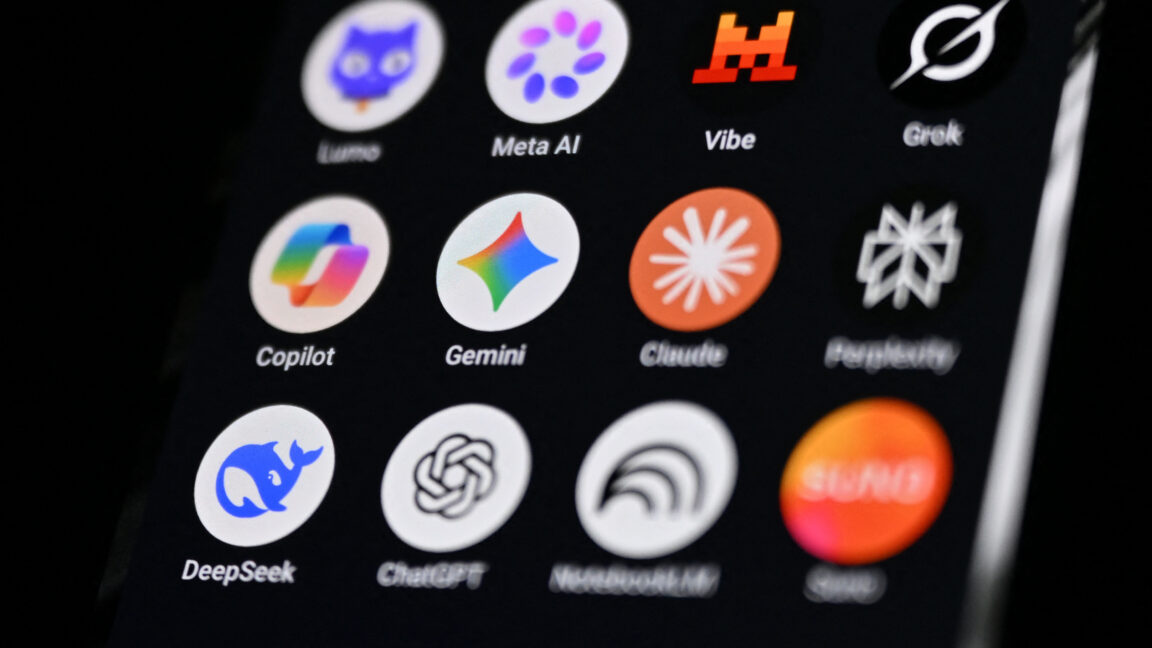
OpenAI and Anthropic in price war as Chinese AI rivals gain ground
OpenAI and Anthropic are engaged in a price war, releasing cheaper AI models as Chinese rivals like Moonshot and DeepSeek gain market share with cost-effective alternatives. OpenAI slashed prices for GPT-5.6 Luna by 80%, while Anthropic launched Claude Opus 5 at half the price of its top model Fable 5. Corporate customers such as DoorDash and Airbnb have begun using Chinese-made models to reduce AI costs, which have risen as US labs shift enterprise customers from flat subscriptions to usage-based billing. The price cuts target mid-tier products and come as both OpenAI and Anthropic pursue trillion-dollar IPO valuations while investors question whether massive AI spending can generate returns. Chinese open-source models have narrowed the performance gap with leading US models, intensifying competitive pressure.
Why it matters
This article paints a plausible and significant picture of the AI industry's maturation from a performance-driven race to a cost-driven competition. The pressure from Chinese open-source models forcing US labs to slash prices was arguably inevitable, and it's a healthy market dynamic that benefits end users. However, the tension between pursuing trillion-dollar IPO valuations while simultaneously cutting prices by 80% raises serious questions about the long-term business model sustainability of…
Guardian AI

A Queensland man enjoyed soaring profits from a crypto trading app. Then his money started disappearing
A 29-year-old Queensland man was lured by an online ad for a cryptocurrency trading app that showed impressive profits on his dashboard. After investing more money based on these apparent gains, his funds began disappearing. The article highlights how emerging technology, likely including AI, has drastically reduced the administrative effort required to run convincing investment scams, making them more scalable and harder to detect.
Why it matters
This story is a cautionary tale that underscores the growing sophistication of crypto investment scams, particularly as AI and other emerging technologies lower the barrier for criminals to create convincing fake platforms. The fact that a slick app and fabricated dashboard profits were enough to entice further investment speaks to how easily people can be deceived when greed meets polished technology. It's a reminder that regulatory frameworks and public education around crypto investments are…
TechCrunch AI

Kog is going deeper to squeeze more inference out of GPUs
French startup Kog is developing software optimization techniques to dramatically accelerate AI inference on existing GPUs like AMD MI300X and Nvidia H200, rather than relying on purpose-built AI chips. The company gained attention after a Hacker News demo showing 3,000 tokens per second with its small Laneformer 2B model, and claims to achieve 30x faster LLM inference. Founded by Gaël Delalleau, who has a background in solid-state physics and offensive cybersecurity, Kog is targeting customers frustrated by slow agentic AI workflows, particularly in software engineering where tools like Claude Code can take hours. The startup raised a seed round co-led by Varsity VC and is working to scale its Kog Inference Engine from small models to larger LLMs, believing that modern GPUs' increasing memory bandwidth is underutilized and can be unlocked through deeper software-level optimization.
Why it matters
This is a compelling and well-reported piece on an interesting technical bet. Kog's thesis that GPUs have untapped inference potential through software optimization is plausible — there's historical precedent for software unlocking significant hardware performance gains. However, the gap between their demo (a custom 2B parameter model) and their promise (30x faster inference on production-scale LLMs) is enormous, and the article rightly highlights this challenge. The cybersecurity/hacking minds…
The Verge AI

Apple trained its own AI model for China with help from Alibaba
Apple has reportedly developed a custom AI large language model for the Chinese market in partnership with Alibaba, according to Reuters. This rare US-China collaboration comes as Apple prepares to launch Apple Intelligence in China in the coming months. The custom model marks a shift from Apple's previous strategy of using existing domestic Chinese AI models, giving the company more control over its products. Apple officially registered its on-device generative AI service with China's cyberspace regulator last month, clearing a major regulatory hurdle. The partnership helps Apple navigate China's strict AI regulations, which require government approval before public release of AI models.
Why it matters
This is a strategically significant move by Apple that highlights the complex balancing act tech companies face between the US and Chinese markets. Building a custom model with Alibaba rather than simply licensing an existing Chinese model shows Apple is serious about maintaining quality control and competitive positioning in China, its second-largest market. However, this partnership could attract scrutiny from US lawmakers concerned about technology transfer and national security, especially…
From X/Twitter
- A full breakdown of the best-performing content formats on X for founders — updated for August 2026.
- Xcode 27 Beta 5 adds an MCP server that runs without an open workspace — here's how to set it up from the terminal.
- How does the market price exceptional AI talent today? A look at the current comp landscape.
- Notion shares a Knowledge Board — a live, ongoing eval of how models handle real-world tasks like support tickets and sales pipelines.
- Superdesign is a ChatGPT plugin that can extract a live brand and generate three landing page prototypes from a single prompt.
- Dan Wahlin uses agent summaries to create primer prompts that replace stale context when continuing work in a fresh session.
- Danny Postma says 95% of his work runs itself — he writes a spec, goes to the gym, and his phone only pings when an agent needs a decision.
- Cryptopunk7213 argues Cursor was always a frontier AI lab disguised as a wrapper — and Elon saw it before everyone else.
- Artem used Claude Code to create, build, and preview a SwiftUI project entirely without opening Xcode — full setup walkthrough included.
- Corey Haines built a skill that writes welcome sequences with skip conditions and ESP integration — three emails, only the last one sells.
- Simon Hoiberg built OpsLayer — an agentic team OS with a project board, secrets management, guardrails, and a desktop client.
- Your AI agent uses the same colored dot for three different things. That's why dense output takes a minute to read instead of five seconds.
- Elon Musk shares how to use @bot on X.
From Reddit/HN/YC
- [Hacker News] Bernstein lets you run 44 CLI coding agents from one deterministic scheduler.
- [Hacker News] GLM-5.3 shows how Chinese labs keep stride with the frontier despite export controls.
- [Hacker News] Man suspected a court was using AI, so he injected prompts into his legal filings to try to win the case.
- [Hacker News] How package resolvers get tricked into choosing the attacker's version via dependency confusion.
- [Hacker News] Open-source XDP/TC framework for DDoS filtering on 100G+ Linux networks.
- [Hacker News] Kenton Varda says Qwen 3.8 27B in Cloudflare OS built him a collaborative whiteboard from scratch.
- [Hacker News] A study catalogues the political falsehoods of leading AIs — and the patterns are consistent across models.
- [Hacker News] Codex hit 15M users four months ahead of schedule.
- [Hacker News] A PBS station fears losing 50TB of data after being ghosted by its cloud storage provider.
- [Hacker News] z486: a 486-class pipelined FPGA CPU with integrated floating-point, built from scratch.
- [Hacker News] Malaysia plans to launch palm oil-based immersion cooling fluid for data centers.
- [Hacker News] Turbopuffer explains how to ship a database every day with a lightweight control plane.