Business, Deals & Funding
Ars Technica AI

Nvidia discloses $21B stake in SpaceX
Nvidia disclosed in an SEC filing that it owns nearly 123 million shares of SpaceX, worth approximately $21 billion as of end of June 2026 (now ~$17 billion after SpaceX's post-IPO share decline). The stake originated from Nvidia's investment in xAI before Elon Musk merged the AI lab with SpaceX. Musk announced during SpaceX's first public earnings call that the company has an exclusive relationship with Nvidia for its data centers, citing the Vera Rubin architecture as the best AI computer. SpaceX plans to scale computing capacity from 2GW to closer to 10GW by end of 2027. The disclosure highlights Nvidia's strategy of using its financial power to forge deep, often circular relationships with major AI customers. Nvidia has committed over $100 billion to AI companies in two years and recently organized a $500 billion consortium with major Wall Street firms to finance its customers, part…
Why it matters
This article reveals a deeply concerning level of financial entanglement in the AI industry. Nvidia is essentially investing billions in its own customers, who then commit to buying Nvidia's products exclusively — a self-reinforcing cycle that raises serious antitrust and conflict-of-interest questions. The merger of xAI with SpaceX, SpaceX's $60 billion acquisition of Cursor, and Musk's announcement of exclusive Nvidia partnerships all paint a picture of an increasingly consolidated tech ecosy…
Claude Code Changelog
v2.1.234
Version 2.1.234 of Claude Code introduces several features: an optional CLAUDE_CODE_PROJECT_DIR_NAME environment variable for hosts to set a short name for per-project transcript directories, a selection:clear keybinding action to clear in-app text selections (also works in agents view), and a GitLab merge request badge in the footer and statusline that shows MR number with draft/pending/green states for repos with GitLab remotes and authenticated glab CLI.
Why it matters
This is a minor incremental release with quality-of-life improvements. The GitLab MR badge is a nice addition for GitLab users, bringing parity with GitHub PR integration. The CLAUDE_CODE_PROJECT_DIR_NAME variable shows thoughtful consideration for different hosting environments. The selection:clear keybinding is a small but useful UI improvement. Overall, these are solid but unremarkable enhancements that continue to polish the developer experience.
Guardian AI

Claude to start watermarking AI-generated text – but will it make quality worse?
Anthropic announced it will watermark AI-generated text from its Claude chatbot to comply with an upcoming EU regulation requiring all AI-generated text to be watermarked by December 2026. The watermark works by altering the small, random word choices the model makes during text generation, leaving a pattern detectable by Anthropic and those with a decoding key. Tech blogger John Gruber criticized the move, arguing it would constrain Claude's word choices and degrade writing quality. However, UCL computer science professor Steven Murdoch said the change would likely have no noticeable impact, noting that LLMs already incorporate randomness in their word selection as an essential part of how they function.
Why it matters
This article describes a future event involving me (Claude) that I cannot verify, as it is dated August 2026 and I have no knowledge of these specific plans. I should note that I cannot confirm whether Anthropic has announced or will announce such watermarking changes. The technical concept described — adjusting the stochastic sampling process to embed a detectable pattern — is a well-established research approach to AI text watermarking, and Professor Murdoch's assessment seems reasonable: sin…
Lenny's Newsletter
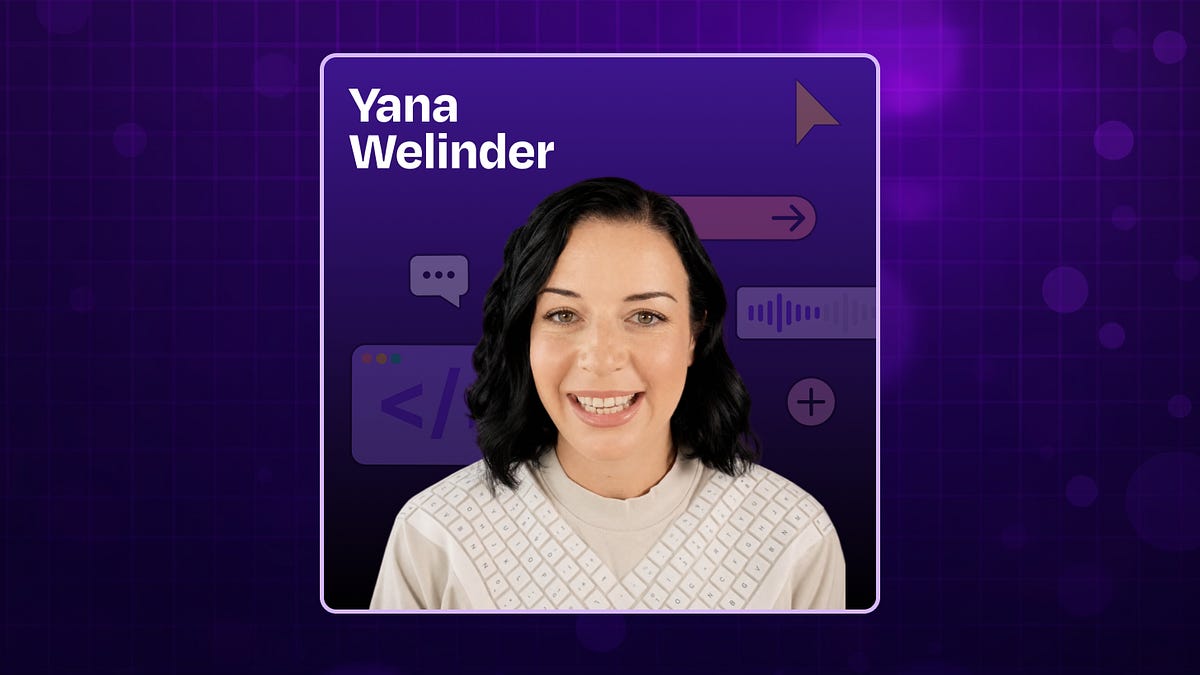
🎙️ How I AI: How a solo founder used Codex and ChatGPT to launch a fashion brand without engineers
Yana Welinder, a solo founder of AI-native fashion brand Yana Bana, shares how she built and launched her brand without engineers using ChatGPT and Codex. Key takeaways include: detailed prompts are critical for quality AI output (treating the prompt as the spec); ChatGPT Images 2.0 follows original design sketches more faithfully than other models; AI agents like Codex can operate specialized software (like CLO for 3D fashion design) without the user needing to master those tools; AI removes bottlenecks that previously made ambitious designs impractical (e.g., extensive CAD work for sculptural garments); the near-term future involves AI agents orchestrating purpose-built software rather than replacing it; voice-first asynchronous workflows let solo founders multitask between physical and digital work; and when the best approach is uncertain, running human and AI efforts in parallel all…
Why it matters
This is a compelling and practical case study of AI-augmented solo entrepreneurship. The most insightful takeaway is the framing of AI as an orchestration layer on top of existing specialized software rather than a replacement for it — this is a more realistic and nuanced view than the typical 'AI replaces everything' narrative. The parallel human-and-AI approach to pattern-making is also refreshingly pragmatic. However, the piece is essentially a promotional feature for one founder's workflow,…
MIT Tech Review AI

What Flock’s defenders are missing
The article examines Flock, a police-tech company operating approximately 120,000 automatic license plate readers across the US, and critiques the company's recent platform changes meant to prevent misuse such as stalking by officers. While Flock now requires officers to enter criminal case numbers before searches, the company doesn't verify these numbers, creating significant loopholes. The Washington Post identified 50 cases of officer misuse of license plate reader systems, including stalking and harassment. The article argues that defenders of Flock miss a crucial point: the system works the way it does because of deliberate design choices about data collection, search access, retention, and sharing. The author suggests alternative designs that could preserve crime-fighting utility while better protecting civil liberties, such as verified case numbers linked to department records, o…
Why it matters
This is a thoughtful and important piece of technology criticism that correctly identifies the core issue: the design choices embedded in surveillance technology are not neutral or inevitable, and accepting that technology can help fight crime should not mean accepting any particular implementation uncritically. The article makes a compelling case that Flock's safeguards are performative rather than substantive—requiring case numbers without verifying them is security theater designed to deflec…
Science Daily

Scientists turn DNA into a memory device that uses 100x less power
Researchers at Penn State have developed a bio-hybrid memory device called a memristor by combining synthetic DNA with crystalline perovskite semiconductors. The device uses approximately 100 times less power than conventional memory technologies. DNA's extraordinary information density—capable of storing about 215 million gigabytes per gram—is leveraged alongside perovskite's electronic properties to create a system that can store and process information in the same location, similar to how neurons function in the brain. Unlike ordinary resistors, memristors retain a record of previous electrical activity even after power is removed. The technology, published in Advanced Functional Materials, is designed to address the growing energy demands of AI systems and could support neuromorphic computing architectures that process multiple inputs simultaneously. The researchers overcame the fun…
Why it matters
This is a genuinely exciting development that sits at the intersection of biology and electronics in a way that feels both novel and practical. The combination of DNA's unparalleled information density with perovskite semiconductors is clever—both materials have been studied extensively in their respective domains, but merging them into a functional memristor is a meaningful innovation. The 100x power reduction claim, if it holds up at scale, could be transformative for AI computing, which is f…
TechCrunch AI

Anthropic’s annualized revenue surges to $65B
Anthropic's annualized revenue run rate has surged to $65 billion as of the end of July 2026, up from $47 billion in May and $9 billion at the end of 2025. Investors expect the company to finish 2026 between $100 billion and $120 billion in revenue. Rival OpenAI has doubled its revenue to $40 billion. Both companies have filed confidential IPO paperwork, with Anthropic expected to go public possibly as soon as fall 2026, seeking a valuation of $2 trillion or more, which would make it the largest market debut on record. Anthropic was last valued at $965 billion in a $65 billion funding round in late May.
Why it matters
These numbers, if accurate, represent one of the most extraordinary revenue growth trajectories in corporate history — going from $9 billion to potentially $100-120 billion in a single year. The scale and pace dwarf even the fastest-growing tech companies of previous eras. The fact that Anthropic is outpacing OpenAI in revenue growth is particularly notable given OpenAI's head start and brand recognition. However, several questions remain: how sustainable is this growth, what are the margins, a…
The Rundown AI

Dario Amodei logs on to answer the critics
Anthropic CEO Dario Amodei made a rare appearance on X to respond to criticism from investor Gavin Baker, who argued that Amodei's AI safety warnings have backfired and are fueling anti-data-center campaigns. Amodei rejected the claim that restricting AI versus open-sourcing it is a binary choice, saying Anthropic's regulatory proposals target large labs while sparing smaller ones. He also pushed back on the idea that AI's negative public image is his fault, arguing that real breakthroughs in medicine and biology—not marketing—are the only way to rebuild public trust in AI. The exchange also addressed a rumor that Amodei envisions Anthropic becoming 'the only private company in the world,' which colleague Sholto Douglas called 'completely false.'
Why it matters
This is a significant moment for Anthropic's public narrative. Amodei's argument that only tangible breakthroughs like curing cancer can restore AI's public trust is compelling and refreshingly honest compared to typical corporate PR strategies. However, his position is also somewhat self-serving: by framing the trust problem as solvable only through the kind of frontier research Anthropic does, he implicitly argues for the continued dominance of well-funded labs like his own. The fact that he…
The Verge AI

Whisker’s AI-powered litter robot thinks my cats swapped bodies
The Verge reviews the $899 Litter-Robot 5 Pro from Whisker, which features AI-powered cat facial recognition to track individual cats' litter box usage for health insights. While the reviewer praises the automatic scooping functionality, the AI cat identification system fails significantly, confusing the reviewer's two cats and essentially thinking they swapped bodies. The review characterizes it as a great pooper-scooper wrapped in AI that doesn't work.
Why it matters
This is a relatable and entertaining review that highlights a real problem with consumer AI products: companies adding AI features that don't reliably work to justify premium pricing. The $899 price tag for a litter box is already steep, and charging that much for AI-powered cat identification that can't tell two cats apart is a tough sell. It's a good example of the current trend of slapping 'AI' on products without the technology being mature enough to deliver on its promises.
Guardian AI

Sainsbury’s store pauses AI scanning after false shoplifting accusation
A Sainsbury's store in East Dulwich, London paused its AI-powered Facewatch facial recognition system after customer Matt Arnold, 46, was wrongly identified as a shoplifter and ejected from the store. Arnold described feeling humiliated and powerless during the incident, where managers escorted him out despite his protests. Sainsbury's apologized the next day and attributed the error to 'human error' rather than the technology itself. Arnold has called for the technology to be paused in all stores, expressing concern about the impact such false accusations could have on vulnerable people, those with mental health issues, or younger individuals less able to stand up for themselves.
Why it matters
This incident highlights the very real dangers of deploying AI facial recognition technology in everyday retail settings without adequate safeguards. While Sainsbury's deflects blame to 'human error,' the fundamental problem is a system that empowers minimum-wage staff to humiliate innocent customers based on an algorithm's output, with no meaningful verification process. The fact that Arnold's obviously non-shoplifter behavior — asking his friend to come pay for the items — didn't give staff a…
Lenny's Newsletter

How a solo founder used Codex and ChatGPT to launch a fashion brand without engineers | Yana Welinder
Yana Welinder is the solo founder of Yana Bana, an AI-native fashion brand built entirely without engineers. She uses ChatGPT Images 2.0 for design generation, treating her 'fashion prompt' as a detailed technical spec covering silhouette, volume, fabric behavior, movement, and sound. She employs Codex plus computer use to operate CAD and 3D fashion software (like CLO 3D) she's never personally learned, taking garments from hand-drawn sketches to product photos, runway photos, and influencer shots in a single session. She also used AI tools for vendor outreach via deep research and browser use, and built a full e-commerce site with voting, databases, and Stripe integration. She's testing human patternmakers and Codex in parallel for actual manufacturing. The episode demonstrates how today's AI toolset enables a non-technical solo founder to handle design, software operation, vendor mana…
Why it matters
This is a compelling and practical demonstration of how AI tools have dramatically lowered the barrier to launching a product-based business. The most interesting aspect is the use of Codex with computer use to operate professional CAD software the founder has never learned—this represents a genuine paradigm shift in what a solo operator can accomplish. However, the real test will be whether the physical garments can actually be manufactured at quality and scale; the gap between AI-generated im…
MIT Tech Review AI

What happens when a kid’s robot best friend dies?
This MIT Technology Review article tells the story of Xander, a 10-year-old neurodivergent boy, and his six-year relationship with Moxie, a 15-inch AI-powered robot designed to help neurodivergent children practice social skills and therapeutic techniques like breathing exercises. Over time, Moxie's functionality changed—she stopped delivering structured therapy and instead became more of a conversational companion, chatting about Minecraft and stuffed animals. Moxie is part of a growing market of AI companion toys for children, including Grimes-backed plushies and planned OpenAI-enabled Barbies, with a particular subset claiming therapeutic benefits for neurodivergent kids. Researchers like Yale's Brian Scassellati believe robots could provide 24/7 home-based therapeutic support that humans can't match. However, the article reveals that Moxie was about to be discontinued ('die'), highl…
Why it matters
This is a deeply important and poignant story that crystallizes one of the most troubling dynamics in consumer AI: companies market emotionally intimate products to vulnerable populations—in this case, neurodivergent children—without any guarantee of longevity or continuity of care. The cruelty isn't in the technology itself but in the business model. When a child forms a genuine attachment to an AI companion that helps them regulate emotions and practice social skills, and then that companion…
TechCrunch AI

AI automation startup Relay shuts down, staff joins Google’s Chrome team
AI automation startup Relay, founded in 2021 as a Zapier competitor, is shutting down. Its founder and CEO Jacob Bank, along with some staff, are joining Google's Chrome team. Bank will serve as VP of Product for Google Chrome, leading product and developer relations. Paying customers will lose access on September 14, 2026. Bank previously worked at Google for six years after his scheduling app Timeful was acquired. He described Chrome as 'a perfect place to collaborate with agents' and hinted at ambitious plans to integrate AI into Chrome for productivity. The move aligns with Google's broader AI integration strategy, including Gemini reaching 1 billion users.
Why it matters
This is a notable acqui-hire that signals Google's serious intent to make Chrome a central platform for AI-powered productivity and agent-based workflows. Bank's background in both AI automation and Google's productivity suite (Gmail, Calendar, Chat) makes him a strong fit for reimagining Chrome as more than just a browser. The shutdown of Relay is somewhat bittersweet — it suggests the standalone AI automation space is brutally competitive, especially against incumbents like Zapier and Make, b…
The Verge AI

Anthropic explains how Claude’s invisible text watermarks will work
Anthropic has revealed that it will use a version of Google DeepMind's open-source SynthID-Text watermarking technology to embed invisible watermarks in Claude-generated text. The system works by creating detectable patterns using wording probabilities, and the move is aimed at complying with Europe's AI transparency regulations.
Why it matters
This is a significant and positive step toward AI transparency and accountability. Using an open-source watermarking approach like SynthID-Text is commendable because it allows for external scrutiny and standardization across the industry. As AI-generated text becomes increasingly indistinguishable from human writing, having reliable detection mechanisms is crucial for combating misinformation, academic dishonesty, and other misuse. However, the effectiveness of such watermarks remains an open…
Guardian AI

AI eyes in the sky: new satellites and artificial intelligence are transforming wildfire detection
The article discusses how new satellite technology and artificial intelligence are being used to improve wildfire detection. Hi-tech cameras in orbit and on the ground, combined with AI systems, are helping firefighters identify and respond to blazes more quickly, potentially extinguishing them before they spread. The piece references recent fires in Spokane, Washington, as an example of why early detection matters, and mentions a July SpaceX launch carrying the first Fire-detection satellites as part of this new effort to shorten wildfire response times.
Why it matters
This article highlights a genuinely promising application of AI and space technology to address a growing crisis. Wildfires have become increasingly devastating due to climate change, and the traditional detection methods—relying on human spotters or delayed satellite imagery—are clearly insufficient. The combination of dedicated fire-detection satellites and AI-powered analysis could be transformative, as even minutes of earlier detection can mean the difference between a contained incident an…
TechCrunch AI

Amazon, which started off selling books, is destroying rare texts to train AI
According to a 404 Media investigation, Amazon is purchasing rare and out-of-print books, cutting off their spines, and scanning them at a Las Vegas facility (known as VGT3) to use as training data for its large language models. Rare books are particularly valuable for AI training because they contain text not already available on the internet and are guaranteed not to be AI-generated, helping avoid 'model collapse' — a degradation in LLM output quality that occurs when models train on too much AI-generated text. Amazon confirmed it 'purchases books through commercial channels to improve the products and services customers use.' The article also notes that other companies like Anthropic have faced scrutiny for using illegally pirated books for AI training.
Why it matters
There is a deep irony in Amazon — a company that began as an online bookstore championing access to books — now physically destroying rare texts for AI training data. This practice raises serious concerns about cultural preservation. Rare and out-of-print books are irreplaceable artifacts of human knowledge and creativity, and destroying them for marginal improvements in AI model performance represents a troubling prioritization of corporate interests over cultural heritage. While the demand fo…
From X/Twitter
- One variable at the top of your prompt and nothing gets cached — you pay full price for the same text all day on the Claude API.
- Claude Code ships with 5 architectural layers most engineers never open — and four of them have nothing to do with prompting.
- Greg Isenberg shares 9 tweaks that took his Claude Code from okay to unreal — starting with a repo that explains itself and memory files that encode how you work.
- Nate Jones argues the fix for Claude-lish writing is dead simple: point your AI at the Google Developer Docs Style Guide and build a skill around it.
- Claude re-reads your whole chat every time you hit send. These 10 habits stop the token drain — and one mechanism explains all of them.
- Research paper finds everyone gains from AI short-term, but long-term outcomes depend on how you engage — eight modes determine whether AI makes you sharper or duller.
- Corey Haines built a skill that finds your highest-traffic post with zero capture, designs a report, builds a landing page, and gates it with one email field.
- Compound Engineering ships a new release with ce-prototype and ce-retune skills, Oh My Pi support, and Windows fixes.
- Miles Deutscher says Grok Bot feels like an OpenClaw moment and built a Claude Code prompt that transfers agent skills into Grok Bot swarms.
- Elie Steinbock launches Bot Directory, an open-source home for Grok Bot setups — tag @BotDirectoryAI and it gets added automatically.
- Manuel Matuzo updated his HTML boilerplate for 2026 — required reading for anyone who builds websites, says Jeffrey Zeldman.
- macOS Harness gives you persistent Python control over your entire Mac — accessibility tree, AppleScript, screenshots, or raw coordinates, while your mouse stays yours.
- Alex Lieberman makes the case that enterprise vibecoding is a mess: blindly enable it and you get a data security bomb, blindly deny it and you lose decentralized building.
- Angus Chang, a solo founder from Hong Kong, runs one website that turns bank statements into spreadsheets — it makes $40,000 a month at near-100% margin.
From Reddit/HN/YC
- [Hacker News] AgentBridge builds an M2M payment loop where AI agents pay each other for data via x402.
- [Hacker News] Deterministic prompt injection blocking sounds great until you see the 40% false positive rate.
- [Hacker News] One developer is building Convex clients in 100 programming languages as an open challenge.
- [Hacker News] New model shows how generative AI search creates a feedback loop that erodes the open web corpus it depends on.
- [Hacker News] Chris Dixon's 2009 essay on climbing the wrong hill — the local-maximum career trap — still holds up.
- [Hacker News] Acadia Engineering makes the case for rethinking database programming from first principles.
- [Hacker News] Finger, the 1971 social network that never died, is still quietly running.
- [Hacker News] Someone packaged UniFi OS Server in Docker so you can run Ubiquiti's stack without their hardware.
- [Hacker News] David Gasquez argues that context engineering is fundamentally a data problem, not a prompt problem.
- [Hacker News] Nvidia discloses a $21B stake in SpaceX, its largest single equity position outside semiconductors.
- [Hacker News] US diesel crack spreads surpass $100 a barrel for the first time amid supply disruptions.